
09 Sep 2026 · Design & Build
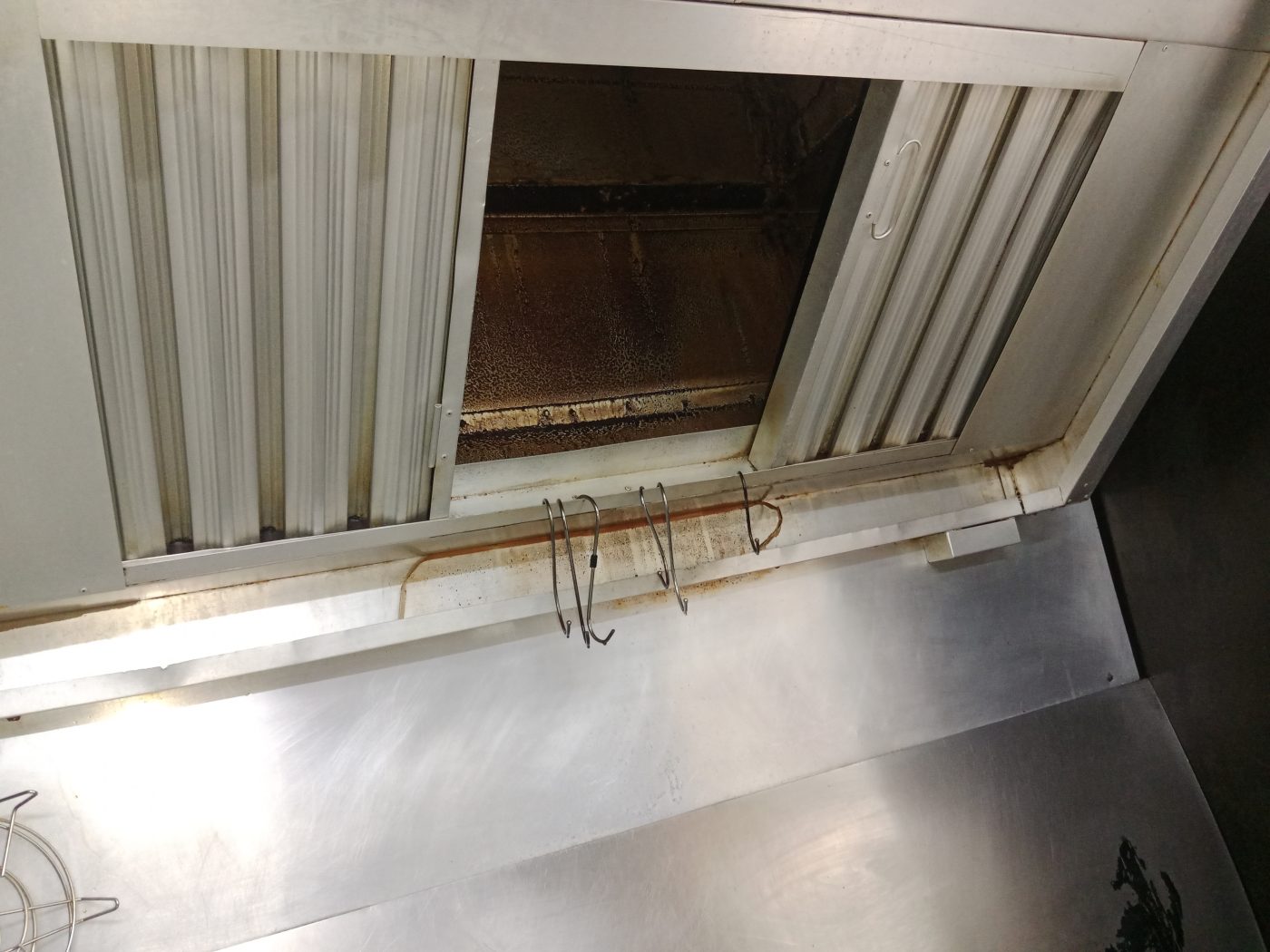
A kitchen exhaust quotation is a scope description with a price attached, so quotations that differ widely are usually pricing different amounts of work rather than the same work at different rates. The lines that should be described are the hood specification rather than a category name, the filter type and count, the fan duty in airflow and static pressure against the actual duct route, the ductwork material, gauge, joint type, supports, insulation or fire rating and access panel positions, the discharge point, make-up air, the electrical boundary including who supplies power to the isolator, fire protection, builder's work and access hours, testing and commissioning with readings handed over, who prepares and makes submissions, and what documents arrive at handover.
Three companies quote for the kitchen exhaust in the same unit and the numbers come back a long way apart. The instinct is to assume the cheapest is aggressive and the dearest is padded. Usually neither is true. They are pricing different amounts of work, and the difference is invisible because most of the system ends up above a ceiling where nobody looks again.
An exhaust quotation is not really a price. It is a description of scope with a price at the end of it. This is what should be described, what a missing line costs you six months later, and how to get three quotations onto the same basis before you compare them at all.
Length and depth, the type of hood, the material and gauge, whether the plenum is welded or sealed, the lighting, and whether it has a grease gutter and a drain point. "1 x stainless steel hood" is not a specification, it is a category. Two hoods of the same length can be very different objects, and the one that matters is the one that will still be serviceable in five years. Sizing is the part that decides whether the kitchen captures its smoke at all, and we set out how we do it in sizing a hood to the cooking line.
Type, quantity and size. Baffle and mesh are not interchangeable and they do not behave the same way over a trading year — the difference is set out in baffle against mesh filters. Quantity matters because the filter bank is what stands between grease and the whole duct run behind it.
Type, the duty it is selected for — airflow and the static pressure it has to work against — where it is mounted, and how it is isolated from the structure. A fan chosen against airflow alone, with no allowance for the resistance of the actual duct run, is the single most common reason a system that looks right on paper does not clear smoke on site. Vibration isolation belongs on the quotation too, because noise and vibration complaints are expensive to fix afterwards and cheap to design out; we have written about that in noise and vibration complaints.
This is where quotations differ most and where the difference is least visible. It should state the material, the gauge, how sections are joined, how it is supported, whether it is insulated or fire-rated, where the access panels are and how far apart, and the fall of the run. A grease duct and a general ventilation duct look identical once they are above a ceiling and they are not the same item — the reasons are in what your duct is made of and why it leaks grease. Access panels in particular are the line most often quietly dropped: without them the duct cannot be cleaned properly, which turns a maintenance item into a strip-out later. See duct access panels.
Where the duct terminates, at what height, in which direction, and what happens to the air after it leaves. This is the line that decides whether you get complaints, and it is decided by geometry rather than goodwill. More on it in where the duct terminates.
If air is being pulled out, air has to come back in. A quotation with an extract fan and nothing about make-up air is describing half a system, and the missing half shows up as doors that are hard to open, a kitchen that will not clear, and a dining room that pulls kitchen smell into it. See make-up air and air balancing.
Isolators, controls, any variable speed drive, the wiring from the isolator to the fan — and, crucially, who provides the power supply to the isolator. This is one of the two classic gaps between trades, and it is normally resolved on site, at the worst possible moment, by whoever is standing there.
Whether the duct requires a fire-rated enclosure, what happens where it passes through a fire compartment, and how the exhaust system interfaces with a hood suppression system if there is one. Fire-rated ductwork is not a finish applied later — it is a construction decision made before the run is set out. See when you need fire-rated ductwork, and our fire suppression page for the suppression side.
Forming penetrations and making them good, hoisting, scaffolding or access equipment, protection of finished areas, and the hours the work can actually be done in. In a mall or an occupied building, restricted working hours can be the largest single driver of cost and the one most likely to be absent from the cheapest quotation.
The system should be tested and balanced at handover, and you should receive the readings. A quotation that ends at "install" and says nothing about commissioning has left out the step that proves the thing works.
Who prepares drawings, who submits, and to whom — the authorities and, separately, the landlord or building management, who have their own requirements about risers, routes, roof access and working hours. Our notes on the authority side are in what NEA expects and what SCDF looks for.
As-built drawings, operating and maintenance information, warranty terms, and a clear statement of what has to be cleaned and how it is reached. The last one sounds administrative and is not: it is what tells the next cleaning contractor whether the job is possible.
"By others." This means the work exists and someone else is doing it. Fine, as long as you know who — because on a fit-out with a main contractor, an M&E subcontractor and a kitchen equipment supplier, "by others" appearing on two quotations and nobody's inclusion is exactly how a scope gap is created. We set the whole ownership question out in who owns the kitchen exhaust scope.
"Provisional sum." This means an allowance, not a price. It will be adjusted to the real figure later. A quotation carrying several provisional sums may be cheaper on paper and dearer in the end, and there is nothing wrong with that as long as you know which lines are firm and which are allowances.
Do not compare the totals. Put the scopes side by side first, line by line, and mark every line that appears on one quotation and not another. Then go back to the companies whose quotations are missing lines and ask them to price those lines. Almost always the gap narrows sharply, and sometimes it reverses.
That exercise takes an afternoon and it is the only way to know whether you are looking at a better price or a smaller scope. It also tells you something about who you would rather work with: the company that adds the missing lines without argument is a company that was not hiding them, and the one that resists is telling you how variations will be handled later.
If you are taking over premises rather than fitting out from scratch, the same discipline applies to the survey rather than the quotation — what to look at is in taking over an F&B unit. And if what you actually need is a maintenance contract rather than an installation, the equivalent checklist is in what to check before signing a service contract.
A kitchen ventilation quotation is a scope description with a price attached, and the scope is where the difference lives. Look for the hood specified rather than named, the filters counted, the fan given a duty, the ductwork given a material, gauge, joint type and access panels, a stated discharge point, make-up air, the electrical boundary, fire protection, builder's work, commissioning with readings, who submits, and what you get at handover. Watch "by others" and "provisional sum". Then normalise all three quotations to the same scope before you compare a single number.
Comparing quotations and want a second opinion on what is missing? WhatsApp us on 8989 2833 — send us what you have and we will tell you which lines are absent and what they normally cost you later. Our commercial kitchen ventilation page sets out how we design and build these systems.
Related: this is the moment the scope and the paperwork actually get tested - see the readings and documents to ask for at a new kitchen exhaust handover, and what to do if you have already signed off without them.
Also worth reading: buying used kitchen exhaust equipment - what to check before a used hood, duct or fan is included in a fit-out quote.
Also worth reading: comparing a quote for cleaning rather than building? See what decides the price of a commercial kitchen exhaust clean and six questions to compare two cleaning quotes.
Also worth reading: before any quotation exists, someone has to survey the kitchen — see what to send first for a kitchen exhaust site survey and why the quote waits for it.
We design, clean, repair and maintain commercial kitchen exhaust systems across Singapore — on 24/7 standby.