
22 Aug 2026 · Design & Build
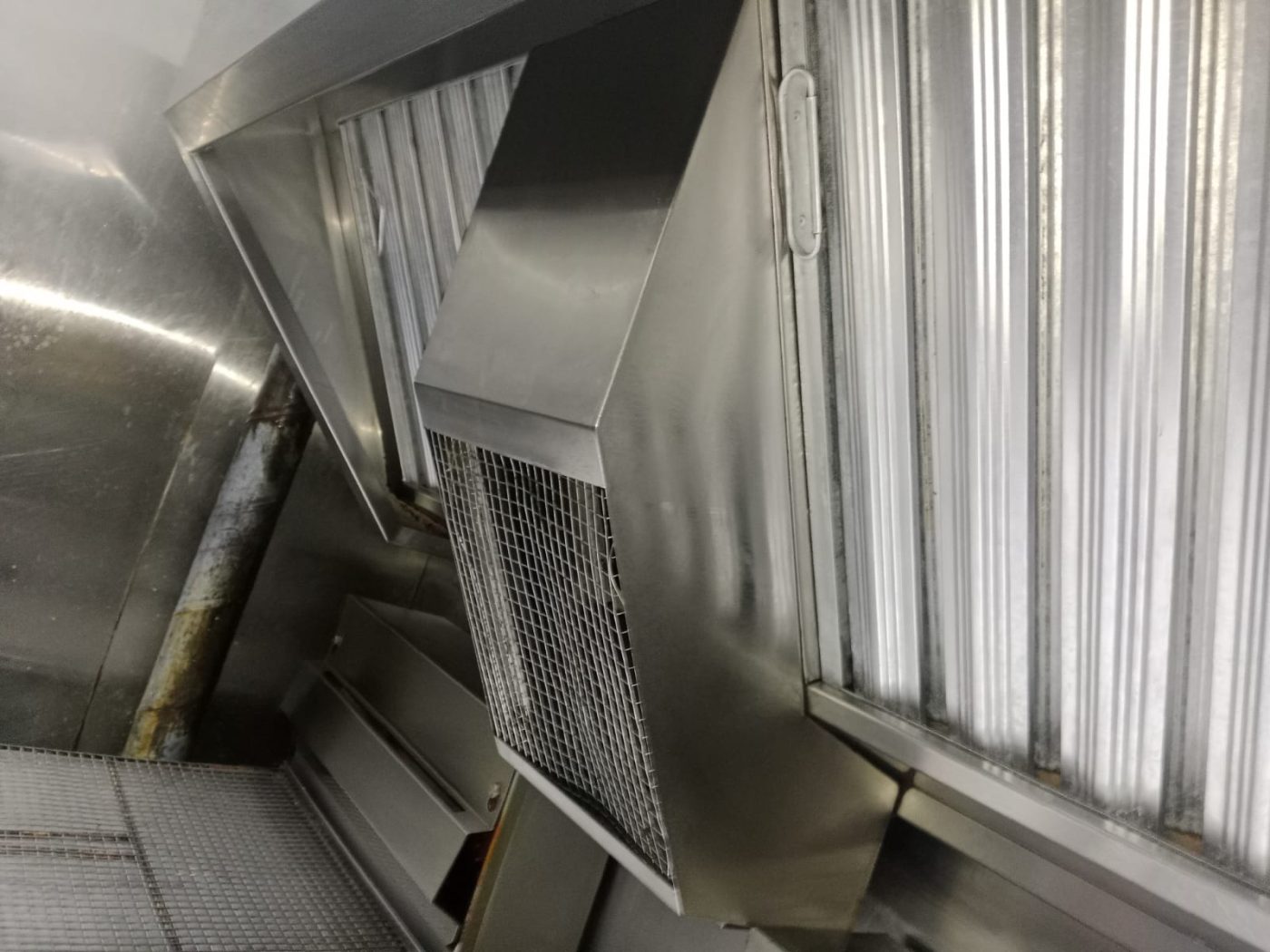
A commercial kitchen extract system is sized for a specific cooking line - particular appliances, producing a particular heat and grease load, in particular positions under the canopy - not for a kitchen in general. Adding a wok range, a fryer, solid-fuel cooking or a second service changes the thermal load, the grease loading and where the plume rises, so a system that was adequate becomes inadequate without anything failing. Extract cannot rise without make-up air rising with it, and fire suppression coverage is positioned around the appliances present at commissioning, so it stops protecting a hazard that has been moved or added.
The equipment changed and the ventilation did not. That is the single most common reason a kitchen that worked for years suddenly does not.
It rarely arrives as a failure. Nothing breaks. The hood is the same hood, the fan is the same fan, and they are both still running. What changes is that smoke now rolls out from under the front edge of the canopy instead of going up, the kitchen runs hotter than it used to, and somebody upstairs has started writing letters.
An extract system is not sized for a kitchen. It is sized for a cooking line — for particular appliances, producing a particular amount of heat and grease-laden vapour, at particular positions under the canopy.
Three things move when the menu moves, and they do not move together:
How a hood is matched to a line in the first place is set out in how we size a kitchen exhaust hood to the cooking line. The point here is that the sizing was an answer to a question, and you have quietly changed the question.
A wok line is the highest-duty item most Singapore kitchens will ever add. It produces intense heat and a heavy grease load, and it wants a hood with the right depth and overhang above it rather than whatever length of canopy is free. Adding one under a canopy specified for a general cooking line is the classic case of a system that was adequate becoming inadequate overnight. The grease side of it is covered in wok and deep-fry kitchens and grease loading.
Fryers are small, easy to slot in, and disproportionate in their effect. They are also the appliance most closely associated with fire risk under a canopy, which means adding one is not only an extract question — it is a question about whether the suppression coverage still reaches the appliance you have just installed.
This is the change that most often needs a different system rather than a modified one. Solid-fuel cooking behaves differently from gas or electric: it produces embers and a different particulate, and it is normally handled as a separate extract arrangement rather than shared with the rest of the line. If a charcoal item is on your new menu, treat it as a design question from the start, not as an appliance you slide under the existing canopy.
No equipment changes at all here, and the system still ages faster. A kitchen that goes from one service to two, or from six days to seven, roughly doubles the hours its ductwork is loading up. The cleaning interval that was correct is now wrong, and nothing on site tells you that except the grease itself. That case is covered in servicing a kitchen that never closes.
Extract only works if an equal volume of air can get into the kitchen to replace what is leaving. Raise the extract rate to cope with a new wok range and you have also raised the make-up air requirement, and a building will not simply supply it because you would like it to.
When it cannot, the symptoms do not look like ventilation problems at all. Doors become heavy. The extract underperforms even though the fan is working harder. Air gets pulled in from wherever it can — under a door from the dining room, or from a neighbouring unit, bringing whatever is in it. Odour complaints that seem to come from nowhere often start here. The mechanism is set out in make-up air and air balancing.
Two things change when the cooking line changes, and neither is optional.
Suppression coverage is appliance-specific. A kitchen fire suppression system is designed around the appliances that were under the hood when it was commissioned — nozzles are positioned and sized for those hazards, in those positions. Move a fryer, add a wok range, or reposition the line, and the coverage may no longer sit where the hazard now is. A suppression system that protects the position where the old equipment used to stand is not protecting anything. What that involves is covered in fire suppression system maintenance.
The discharge side may also change. A heavier grease and smoke load can turn a discharge arrangement that was acceptable into one that is not — particularly where the outlet is close to neighbours or to another unit's air intake. That is the usual origin of the odour complaints described in neighbour odour complaints.
The cheapest moment to deal with all of this is before anything is bought, and the questions are short:
It is not always a new system, and it is worth saying that plainly. Depending on what changed, the answer can be a fan or drive change, a filtration change, a hood modification, a rebalance, a shorter cleaning cycle, or a repositioning of the line so the appliances sit where the capture actually is. Sometimes it is a genuine redesign. What decides it is measurement on site, not a catalogue.
What is not a fix is running the existing fan harder and hoping. If the capture geometry is wrong, more velocity mostly means more noise and a higher electricity bill — the noise side of which becomes its own complaint, as in exhaust noise and vibration complaints.
Tell us what the hood was installed for and what you are cooking now, and we will tell you whether this is a modification or a redesign before anyone quotes anything. If the honest answer is that a fan change and a shorter cleaning cycle will do it, that is what we will say.
Message us on WhatsApp about a menu or equipment change, or see our kitchen exhaust design and build and commercial kitchen ventilation work.
Related: Cloud kitchens and shared kitchen facilities — when the menu that changes is your neighbour's.
In a canteen this happens repeatedly and quietly as stalls change hands — see kitchen exhaust in a school or institutional canteen.
If the smoke appeared without the menu changing, work through the exhaust is running but the kitchen is still smoky instead — it separates capture, restriction and fan faults.
Changing the fuel rather than the menu? Switching to induction or an all-electric line changes the heat, not the grease — see what going all-electric changes in your kitchen exhaust, and what it does not.
Cooking over charcoal or wood? Solid fuel changes the extract, the cleaning interval and the suppression design — see what solid fuel does to your kitchen exhaust.
Related: if a busy season is what is driving the change, see timing a kitchen exhaust clean before the festive rush.
We design, clean, repair and maintain commercial kitchen exhaust systems across Singapore — on 24/7 standby.