
24 Sep 2026 · Design & Build
Solid fuel changes a kitchen exhaust in four ways: it throws embers into the hood, adds soot and ash to the grease deposit, keeps burning after service, and produces carbon monoxide. A charcoal or wood-fired appliance normally gets its own extract rather than sharing the gas line's hood and duct, solid-fuel systems are cleaned monthly as a starting point, and the suppression design must cover the solid-fuel appliance by name, because shutting off gas and power does not put a charcoal bed out.
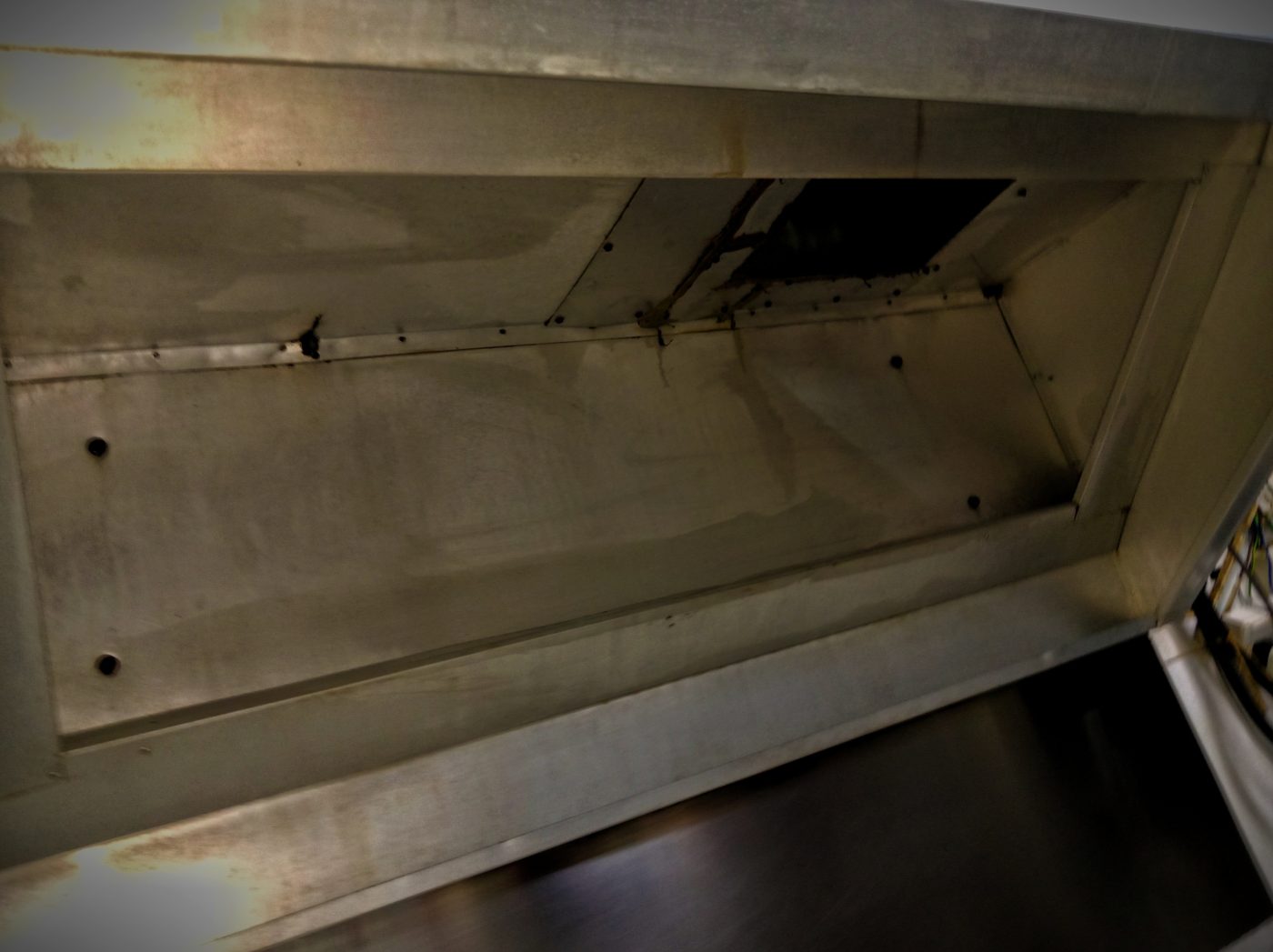
Pictured above: the inside of a hood on one of our projects (Tian Xin, Adelphi) with the filters out, looking up at the plenum and the opening into the duct. It is not a solid-fuel kitchen. It is, though, the space that embers, soot and grease reach first on one, which is why a charcoal or wood-fired kitchen's design starts here.
Charcoal grills, satay and yakitori lines, tandoors, wood-fired pizza ovens, steakhouses cooking over wood or charcoal: these are some of the best-loved kitchens in Singapore, and the exhaust behind them is the one most often designed as if the fire were gas.
The usual mistake is small and understandable. The concept is signed, the unit is found, and the charcoal grill is treated as one more appliance to slide under the canopy with everything else. On paper the hood is big enough and the fan is strong enough. What the paper does not show is that solid fuel puts things into the exhaust that a gas line does not, and a system designed for gas has no answer for them.
This is what changes when the fire is charcoal or wood, and the questions to settle before you sign a lease or order the grill.
A gas burner and a bed of charcoal can cook the same skewer. What comes off them is not the same.
Every one of those lands in the exhaust. That is why a solid-fuel kitchen is a design question from the start, not an appliance question.
In the kitchens we design, a charcoal or wood-fired appliance normally gets its own extract arrangement rather than sharing a hood and duct with the gas line. The reasons follow from the list above.
A shared duct carries embers from the grill into the same duct that is collecting grease from the wok range and the fryers. It also ties the whole system to the dirtiest appliance: the solid-fuel deposit sets the cleaning interval for every metre of shared duct, including the parts that would otherwise need far less. Separating them keeps the hazard and the cleaning where they belong.
If you are shown a design where the grill shares a hood or duct with the rest of the line, that is not automatically wrong, but it should be a decision someone made on purpose. Ask why, and ask who signed it off.
Baffle filters are the right filter over a cooking line, partly because their tight turns break up a flame front, which mesh does not. We went through the difference in baffle versus mesh hood filters. Over solid fuel, a mesh filter packed with grease and soot is simply fuel sitting above a live fire.
Embers are a separate problem from flame. A glowing fragment carried up the plume can lodge on the filters or pass into the plenum behind them, which on a neglected system is the most heavily coated surface in the hood. So ask the designer a direct question: what stops embers from this appliance reaching the filters and the duct, and how is that part cleaned? The answer should be specific to the appliance you are buying, not a general reassurance.
Two kitchen habits matter here too. A missing filter over a charcoal grill is an open path for embers straight into the plenum, so a filter bank with a gap is urgent rather than cosmetic. And the grill should sit under the part of the hood designed for it, with the designed overhang, not pushed to the end of the run because that is where there was space. We covered capture position in adding equipment to an existing hood.
This is the part that surprises operators most. On our cleaning frequency page we list systems serving solid-fuel cooking, charcoal and wood, at monthly. That follows the NFPA 96 framework the industry works to, which sets inspection intervals by cooking type and volume, and puts solid fuel at the top.
Monthly is a starting point, set after we have inspected the hood, duct and fan against how many hours the fire actually burns. A satay stall lit for an evening service and a steakhouse running wood from lunch to close do not load a system at the same rate. What does not change is that the deposit is harder than ordinary grease, so the clean needs chemical degreasing with proper contact time and mechanical work in the plenum, at the duct collar and at the fan. A wipe of what is visible does not touch it.
Two things to insist on from whoever cleans it:
Build the cost of that interval into the business plan before you commit to the concept. It is a recurring cost of cooking over fire, not an optional extra.
This is the point most often missed, and it follows from the fire you cannot switch off.
On a gas line, when a wet-chemical suppression system discharges, it closes the gas valve and cuts power to electric appliances. The fuel stops. We set out how that works in hood, fan, gas and suppression interlocks. A charcoal bed has no valve. When the system discharges over a solid-fuel appliance, the fuel is still there and still burning.
So a solid-fuel appliance has to be named specifically in the suppression design: which appliance, where it sits, and how that fire is covered. Do not assume the nozzles over the rest of the line cover it. Suppression requirements depend on your premises, cooking type and layout, and SCDF assesses them on that basis, which is exactly why "we are adding a charcoal grill" has to reach whoever designs the suppression before the grill arrives. If you are adding one to an existing kitchen, the system that was commissioned for your old line is not automatically right for the new one.
One question to settle with your team in writing: if the exhaust fan trips during service while the charcoal is lit, what do the staff do? A gas kitchen can stop cooking at the valve. A charcoal kitchen needs a plan, and the middle of a Friday service is the wrong time to invent one.
Charcoal and wood smoke is the one kitchen exhaust people can see from the street, and the one they can identify by smell from a distance. Where the duct ends matters more than usual: near windows, air intakes, residential units above or a busy walkway, solid-fuel smoke produces complaints faster than any other kitchen. We covered where the duct should terminate in the discharge point.
Where discharge demands it, air treatment such as electrostatic air cleaners and carbon banks is part of how we build these systems. For solid fuel, ask that any unit proposed is confirmed as suitable for the smoke and particulate it will actually see, and budget for its servicing, because air treatment that is not maintained stops working quietly. More on when it is worth it in electrostatic precipitators.
Adding charcoal to a kitchen that already trades on gas is the same list, with one more item: the existing hood, duct and suppression were commissioned for a different line. We set out why in when a menu change outgrows the exhaust.
Planning a charcoal, tandoor or wood-fired kitchen, or adding one to an existing line? WhatsApp BC Air on 8989 2833 with your location and the appliance you have in mind, and we will tell you what the exhaust needs before you commit. How we design and build systems is on the design and build page, suppression on the fire suppression page, and cleaning intervals on the cleaning frequency page. Scope and pricing follow a site survey.
Related reading: when a menu change outgrows the exhaust · hotpot and Korean BBQ table extraction · hood, fan, gas and suppression interlocks
We design, clean, repair and maintain commercial kitchen exhaust systems across Singapore — on 24/7 standby.