
04 Jul 2026 · Fire Safety
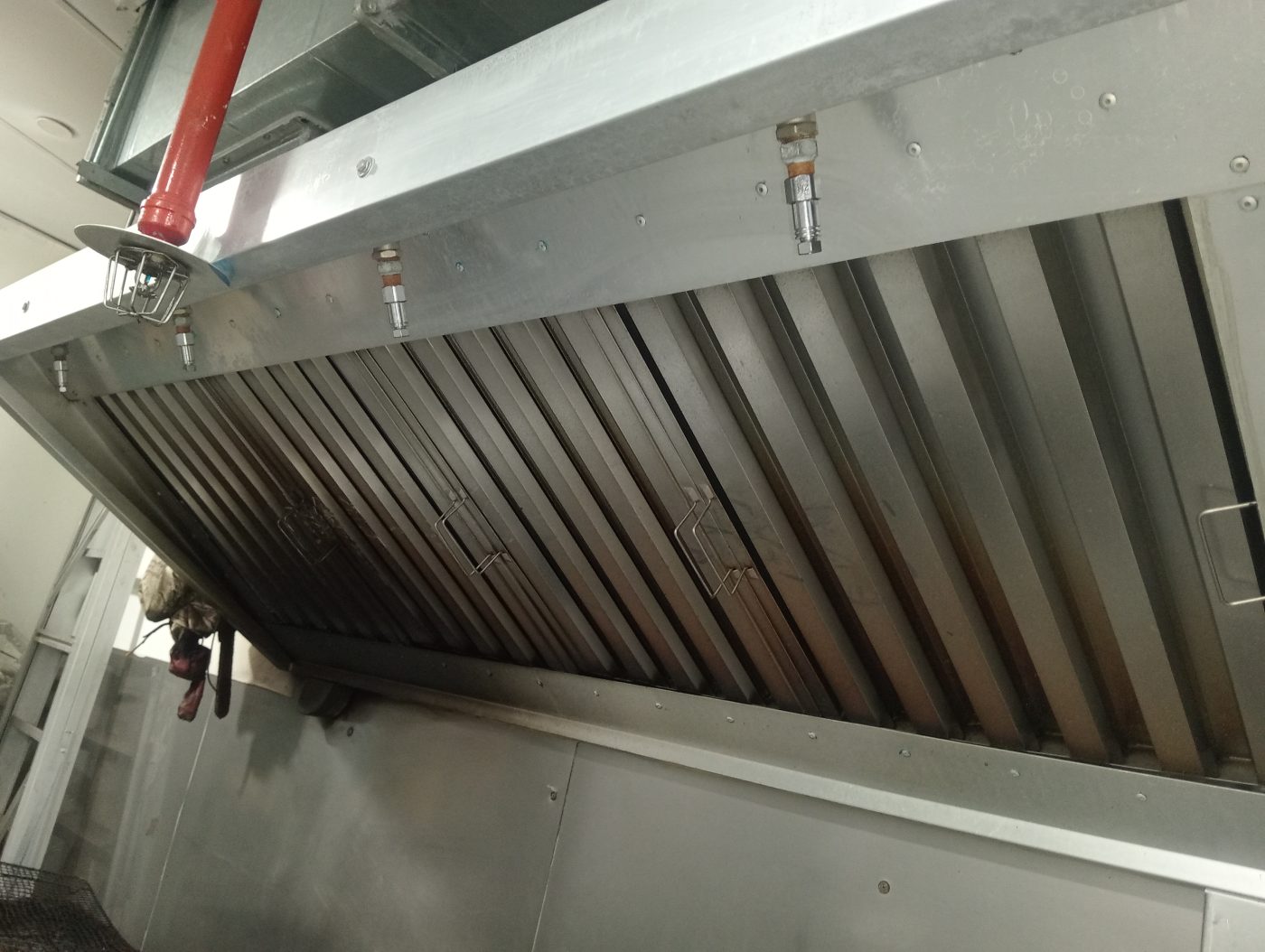
A kitchen fire suppression system only works if the exhaust hood, ductwork and grease filters feeding into it are clean and properly maintained. We see suppression systems fail not because of the system itself, but because neglected grease build-up compromises the entire installation around it.
We'll say this plainly: a fire suppression system that hasn't been properly maintained is not a safety system — it's a false sense of security. We've attended plenty of kitchens where the suppression nozzles were caked in grease, the fusible links were coated in cooking residue, and the exhaust ductwork feeding the same hood was a fire waiting for a spark. The suppression unit on the wall looked fine. Everything behind it was a problem. So let's talk about what it actually takes to keep this equipment genuinely ready.
This is the question most kitchen operators don't think to ask. They treat the suppression system as a standalone unit and the exhaust hood as something separate. In practice, they are one connected system.
Fire suppression in a commercial kitchen is almost always hood-integrated. The nozzles are positioned within the exhaust hood plenum and above cooking equipment. The fusible links — the heat-sensitive triggers that activate the system — sit inside or just above the hood. When grease accumulates on those components, two things happen:
We always tell our clients: you cannot maintain a suppression system in isolation. The hood, the grease filters, the baffle plates, and the ductwork all have to be part of the same maintenance programme.
There's no single answer that fits every kitchen, because grease load varies enormously. A char kway teow stall generates far more airborne grease than a sandwich prep kitchen. That said, here's how we typically structure it.
Grease filters need to be pulled, soaked and cleaned regularly — in many high-volume kitchens, that means monthly or more often. When we're on a maintenance contract, our team uses our own BC Air chemical series, which we've formulated specifically for the thick, polymerised grease that builds up in Singapore's commercial kitchens. We also check that the suppression nozzle caps are in place and that no nozzle is visibly blocked or misaligned.
This is where we go inside. We open access panels, check the plenum chamber, inspect the duct runs, and assess grease accumulation against accepted thresholds. If grease depth on duct walls has reached a level that poses a fire risk, we schedule a full chemical clean before the next service window. We also physically inspect every fusible link at this stage — looking for corrosion, grease coating, or signs of mechanical damage.
If we find a fusible link that's been heat-stressed but not activated — which can happen after a small flare-up that the operator didn't report — we flag it for replacement. A link that has experienced elevated heat once may have already compromised its rated response temperature.
We work alongside licensed fire suppression contractors rather than doing their certification work ourselves. What we bring is the exhaust and ventilation side: making sure the hood geometry, airflow, and duct condition are all correct before the suppression contractor does their pressure test and agent charge verification. If airflow through the hood has degraded — because of a failing motor, a blocked filter run, or an improperly balanced system — the suppression nozzle coverage pattern may no longer match the original design.
We've seen this happen after a client upgraded their cooking equipment without updating the exhaust design. The suppression system was certified for the old layout. The new equipment sat partially outside the nozzle coverage zone. That's the kind of thing a combined inspection catches.
SCDF sets the requirements for fire suppression systems in commercial kitchens, and NEA governs exhaust and ventilation. BCA's requirements come into play for the building and mechanical services. In practice, all three frameworks touch a commercial kitchen exhaust installation.
We always confirm the exact current requirement with the relevant authority before quoting any job, because guidelines do get updated and what applied two years ago may have been revised. What we can say with confidence is that regular, documented cleaning and inspection is not optional — it is a baseline compliance expectation for any kitchen operating commercially in Singapore. If you cannot produce maintenance records during an inspection, that absence itself becomes a finding.
We issue our clients with service reports after every job. Those reports document what was done, what condition we found, and any remedial recommendations. That paper trail matters.
Kitchen staff often notice the signs before anyone calls us. Here's what should prompt an immediate check:
Our 24/7 standby line exists precisely for these moments. If something looks wrong at 11pm before a morning service, you can reach us.
It depends on your cooking volume and the type of cooking you do. High-grease operations — wok cooking, deep frying, char grilling — typically need more frequent cleaning than low-grease kitchens. We assess grease load on your specific setup and recommend a cleaning frequency that keeps you within compliance thresholds. We'd rather tell you the honest interval than sell you more cleans than you need, or fewer than is safe.
Some basic checks — making sure nozzle caps are in place, checking that filters are clean — can be done by a trained kitchen supervisor. But anything involving the suppression agent, the detection circuit, or the fusible links needs a licensed specialist. On the exhaust side, we handle the hoods, ductwork, fans and motors. We work alongside the suppression contractor so both sides of the system are covered properly.
The suppression agent discharges at hood level, which can knock down a cooking-surface fire effectively. But if the ductwork above is carrying significant grease deposits, the fire can continue or reignite inside the duct, where the suppression agent doesn't reach. That's why duct cleanliness is not a separate issue from fire suppression — they are part of the same safety picture. We've seen duct fires that extended well beyond the kitchen because the ductwork hadn't been cleaned.
Almost certainly yes. Any change to cooking equipment — type, output, position — can affect both the exhaust airflow requirement and the suppression nozzle coverage. We can assess whether your existing exhaust system still performs correctly for the new setup, and we'll flag if the suppression design needs to be reviewed by your suppression contractor. It's a conversation worth having before you start service, not after an incident.
If you're not sure when your exhaust system and suppression system were last properly inspected together, that uncertainty itself is worth acting on. Reach out to us for a site assessment — we're available around the clock, including our 24/7 standby for urgent situations, and we'll give you a straight picture of where things stand.
Going deeper: servicing is only part of the picture - what drives the cost of a suppression system covers installation and the years after year one.
We design, clean, repair and maintain commercial kitchen exhaust systems across Singapore — on 24/7 standby.