
01 Oct 2026 · Maintenance
Clean the kitchen exhaust before a festive peak, but leave a clear gap before the busiest week, not the eve. Longer hours and heavier menus load the hood, duct and fan faster, and a deep clean is often when a worn fan or motor is found. Check your last clean record, schedule after hours, and have the airflow checked afterwards.
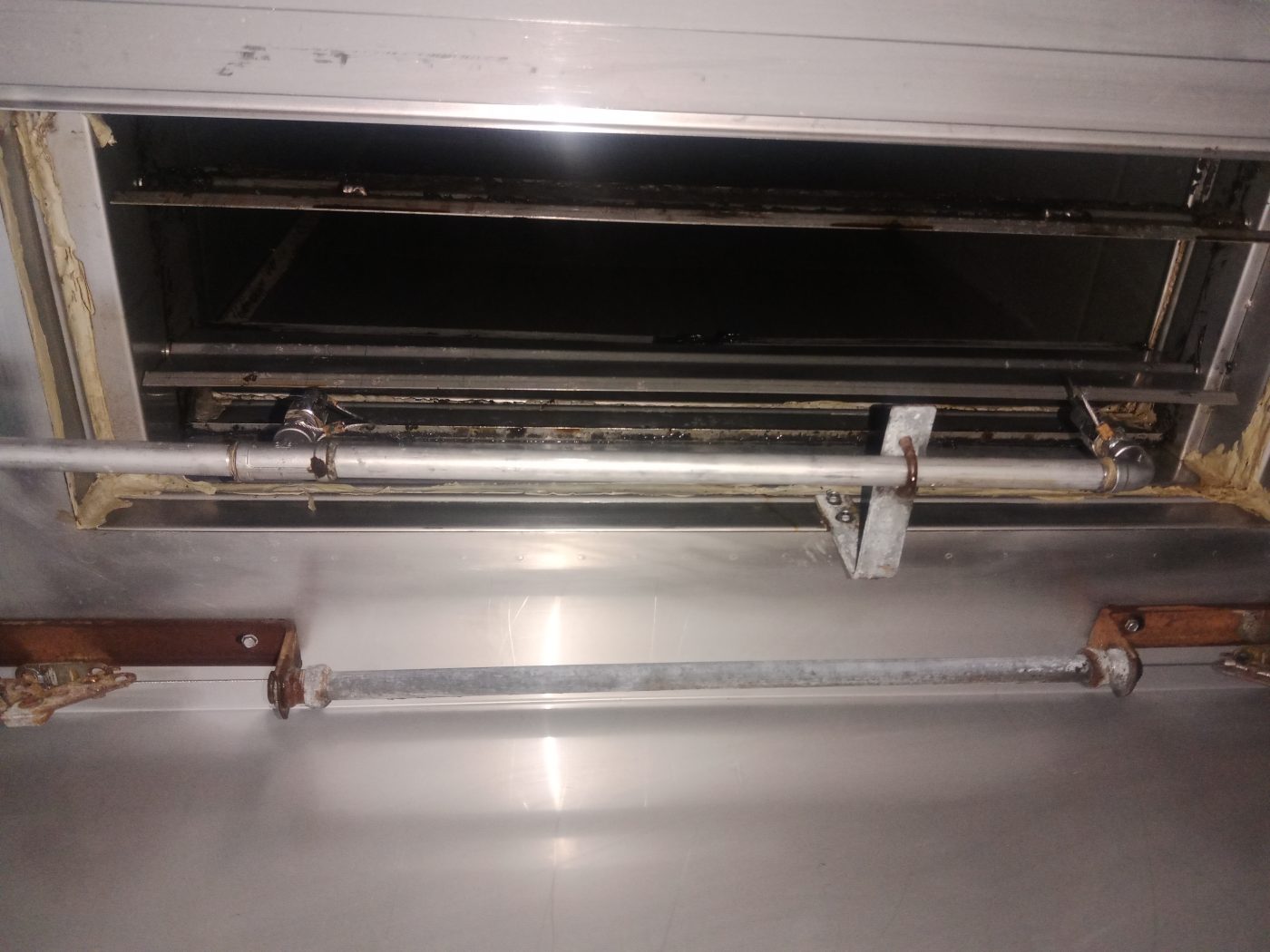
Pictured above: the inside of a hood from one of BC Air’s jobs, looking past the filter slot at the plenum behind it, with dark residue along the edges. This is a photo from our own work, reused here because it shows the part of the hood that loads up first. A festive week does not change where the grease goes. It changes how quickly it arrives.
Every F&B operator in Singapore knows the calendar: Chinese New Year, Hari Raya, Deepavali, Christmas, year-end dinners. Covers go up, hours stretch, the menu often gets bigger, and the wok line runs harder than any normal week. The kitchen exhaust runs harder with it. The question we get from owners is a practical one: should we have the exhaust cleaned before the rush, and how close to it?
This is how we would think it through, using what we already tell every customer about cleaning intervals, and what tends to go wrong when the busiest week is also the week nobody can afford a breakdown.
How often a kitchen exhaust needs cleaning depends on how much and how hard the kitchen cooks. On our cleaning frequency page, most commercial kitchens fall between every one and three months. Heavy wok, grill and deep-frying kitchens often need monthly cleaning, and lighter kitchens can run quarterly. NFPA-96, the international standard the industry works to, sets its intervals the same way, by cooking volume. It lists quarterly inspection for high-volume operations such as 24-hour cooking, charbroiling and wok cooking, and annual for low-volume ones such as seasonal operations. The system is then cleaned whenever grease is found to have built up to an unsafe level.
Put that beside a festive month and the problem shows up. A kitchen that was comfortably on a quarterly rhythm in a quiet season can start behaving like a high-volume kitchen for a few weeks. More hours with the burners on means more grease across the hood filters, along the duct and in the fan housing, in less time. The schedule you agreed in a quiet month may no longer match the kitchen you are running.
We do not apply a fixed rule here. As we say on the maintenance programs page, if your menu, volume or hours change, the frequency should be adjusted so you are neither over- nor under-serviced. A festive season is exactly that kind of change, even if only for a month.
The expensive failure is not a slightly greasy hood. It is the exhaust going down in the middle of service, on the night the restaurant is full. Our maintenance page describes the same thing: a neglected system fails at the worst possible time, mid-service, on your busiest night.
Two items on our 10-point servicing checklist matter most here:
A deep clean is often the first time anyone has looked closely at either. That is the real case for cleaning before a rush: not only the grease that comes out, but the fault that gets found while the fan is open, at a time when you can still deal with it.
If a clean turns up a worn part, you want time to act on it. Because we stock motors, fans, fan parts and control components in-house, a fault found during a clean can often be repaired or replaced on the spot rather than becoming a second visit. That helps, but it is an “often”, not a promise. Some faults need a proper look and a plan, and that is easier to arrange with a clear gap before your peak than on the afternoon before it.
So the order we suggest is:
If you are not sure what the night itself involves, our post on kitchen exhaust cleaning night walks through what to prepare and what to check before you cook again.
If your kitchen never really closes, the scheduling problem is different, and we cover it in servicing the exhaust in a kitchen that never closes.
If the season was a hard one, with long hours and a heavier menu, the system has carried more grease than your normal schedule allows for. We would not assume a second clean is needed, and we would not assume it is not. We inspect the system, look at your actual cooking volume and hours, and recommend the interval from that. Both NEA and SCDF expect the system to be kept clean and for you to be able to show it, which is where dated before-and-after photographs and a service record do their work. For the wider question of intervals, read how often a commercial kitchen exhaust should be cleaned.
The more we know about how your kitchen will run, the more useful the answer. A short message is enough:
Scope and pricing follow an inspection of the actual system. We do not quote a figure before we have seen it. The kitchen exhaust cleaning page sets out what the service covers: hood and filters, accessible ductwork, the exhaust fan and make-up air grilles.
Planning for a busy season and want the exhaust looked at first? WhatsApp BC Air on 8989 2833 with the details above.
Related reading: kitchen exhaust cleaning night · when a menu change outgrows your kitchen exhaust · how often should a commercial kitchen exhaust be cleaned?
We design, clean, repair and maintain commercial kitchen exhaust systems across Singapore — on 24/7 standby.