
17 Aug 2026 · Maintenance
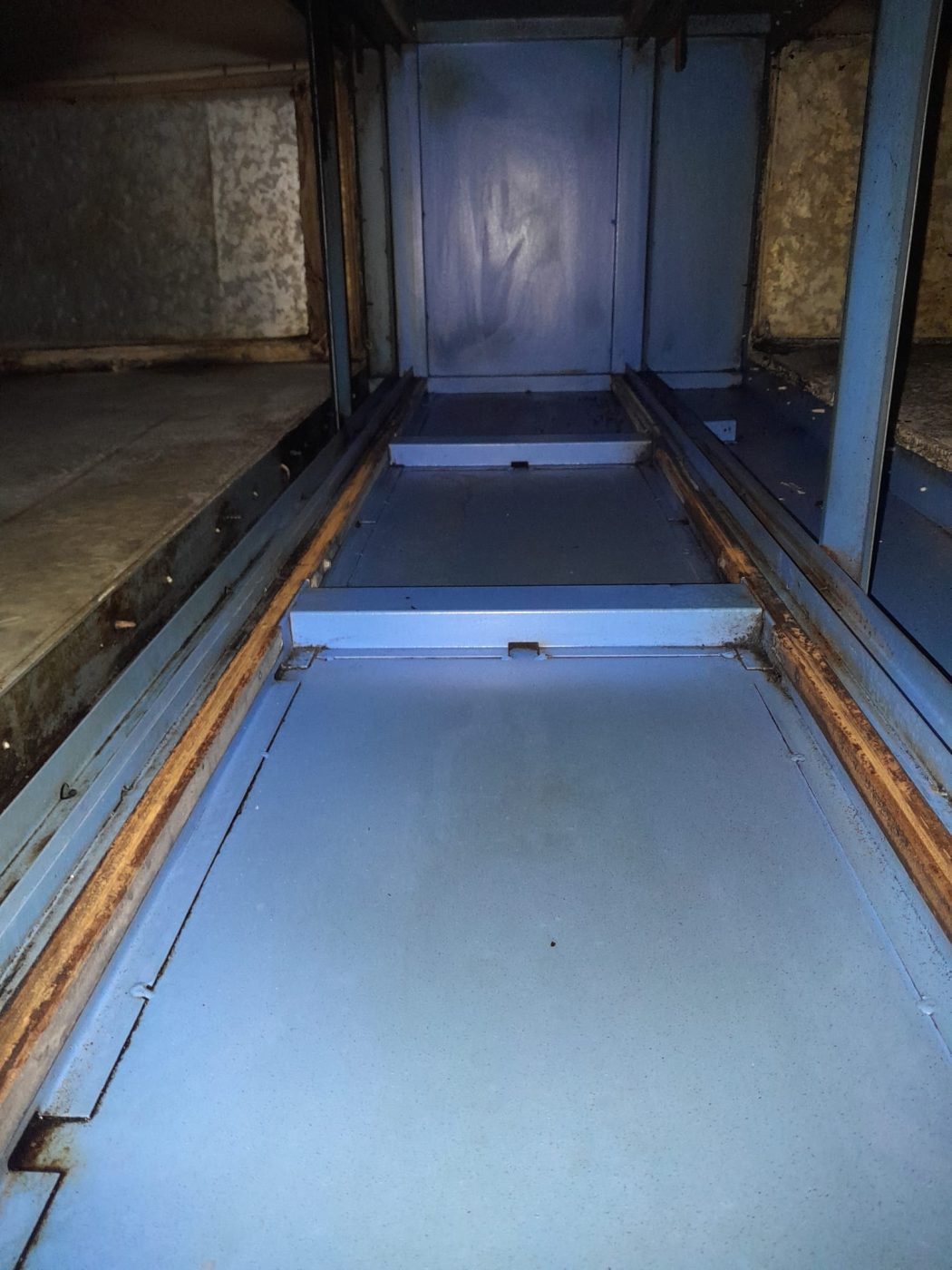
A kitchen that never closes cannot be cleaned the usual way. The system is cleaned section by section during measured cold windows rather than all at once; access panels must exist where the sections divide, or the first job is installing them; the fan serving each section must be identified as built, because stopping it can shut gas interlocks on sections still cooking; the fire suppression system over the hood must be isolated before work and re-armed and recorded before the section returns to service; and because a fan failure closes the operation rather than losing one service, spare motors and parts and a 24/7 response matter more than they would in a restaurant.
Most advice about kitchen exhaust maintenance quietly assumes the kitchen shuts. Clean it on a Sunday. Do the ductwork overnight. Book the fan replacement between lunch and dinner. That advice is useless to a hotel kitchen, a hospital or institutional canteen, a central kitchen feeding several outlets, or a food court where the stalls close in shifts but the shared fan never stops.
In those places the exhaust system is a piece of continuously running plant, and every maintenance decision has to be made around the fact that there is no natural gap. It is a different job from cleaning a restaurant on its rest day — not a harder version of the same job.
Grease deposition follows cooking hours, not floor area or seat count. A line running eighteen or twenty-four hours a day accumulates in the duct at roughly double the rate of the same equipment cooking a single service, and it does so without the cooling-down periods that let a system be inspected easily.
Our published guidance is that most kitchens need cleaning every one to three months depending on cooking volume. A continuously running kitchen sits at the short end of that range as a starting assumption, and the interval is then set properly from what the first two or three cleans actually reveal inside the duct — not from the calendar. If a system is being opened up and found heavily loaded at the scheduled visit, the interval is wrong and should be shortened before an inspection or an incident makes the point instead.
Duct and hood cleaning cannot be done with the fan running and the equipment live. Chemicals, hot surfaces, open access panels and a working cooking line do not belong in the same room at the same time. So the first question in a kitchen that never closes is not "how much" — it is "when, exactly, and for how long".
Three ways it usually gets solved:
In a kitchen with downtime, poor access is an inconvenience. In a kitchen without downtime it is a hard blocker, because the alternative to a properly placed access panel is dismantling ductwork, and dismantling ductwork is not a between-services job.
If a system serving a continuous operation has no access panels along the horizontal run, or has them only where the ceiling happens to be open, the first piece of work is not a clean. It is installing access at sensible intervals so that every future clean can be done in sections, in the time available. That is a one-off cost that pays for itself over a couple of years of not paying overtime rates for dismantling.
Taking a section out of service in a live kitchen is a controlled operation. Several things have to be settled before anyone opens a panel:
A restaurant with a dead exhaust fan loses a service. A hospital kitchen or a hotel loses the ability to feed people who have nowhere else to go, and a central kitchen loses every outlet it supplies at once. That difference should change how the system is specified and maintained.
In practice it means three things: knowing which single components would stop the whole operation if they failed, keeping the parts for those components available rather than ordering them when they fail, and having someone who will actually answer at three in the morning. We stock our own electric motors, MV fans, fan parts and control panels for exactly this reason, and run 24/7 standby — in a kitchen that never closes, the recovery time matters more than the failure rate.
It is also worth knowing, before it happens, what your fallback is if a section has to stand down: which appliances can be moved to another hood, what the menu becomes for a shift, and who decides. The kitchens that cope with a fan failure are the ones that had already answered that question.
Cleaning chemicals and food production are separated by procedure, not by hope. Equipment under and adjacent to the work is covered and, where practical, moved. Food is not prepared in the section being worked on, prep surfaces are cleaned down afterwards regardless of whether they look affected, and the work runs away from the direction of any live section rather than into it.
None of this is exotic — it is the ordinary discipline of working in an operating kitchen. But it takes longer than working in an empty one, and any plan or quotation that shows the same duration for both has not thought about it.
A continuously running kitchen is usually a kitchen with an inspection regime attached: NEA and SCDF expectations, and often a hotel group, hospital or institutional standard on top. Because the work is done in sections across different nights, no single visit shows the whole system — so the record has to.
What a useful record contains: which sections were cleaned on which date, before-and-after photographs from inside the duct rather than of the hood front, the condition found, what was isolated and when it was re-armed, and what was recommended and deferred. Deferred items in particular deserve to be written down, because in a kitchen with no downtime the deferral is often the reason a system quietly degrades.
Our comparison of what to check before signing a service contract covers the general version of this, and how often a commercial kitchen exhaust needs cleaning sets out how the interval is arrived at.
A kitchen that never closes is not a kitchen with a harder cleaning problem. It is a kitchen where the maintenance has to be designed around isolation, access and records instead of around downtime. Establish what can be isolated, put access where the sections divide, agree who re-arms the suppression system, and hold the parts for the components whose failure would stop everything.
Related reading: what to check before taking over an F&B unit, what to do when the exhaust fan stops, and what a maintenance contract should cover.
Tell us the operating hours, how many cooking sections share the system, and what your real cold window is, and we will tell you how it can be maintained without stopping the kitchen. Every scope is surveyed and quoted — never priced from a list. Message us on WhatsApp, or see kitchen exhaust cleaning, maintenance programmes and repair and replacement.
Related: a hotel is the hardest version of this, with several kitchens on different intervals — see hotel and banquet kitchen ventilation.
We design, clean, repair and maintain commercial kitchen exhaust systems across Singapore — on 24/7 standby.