
26 Jul 2026 · Cleaning & Compliance
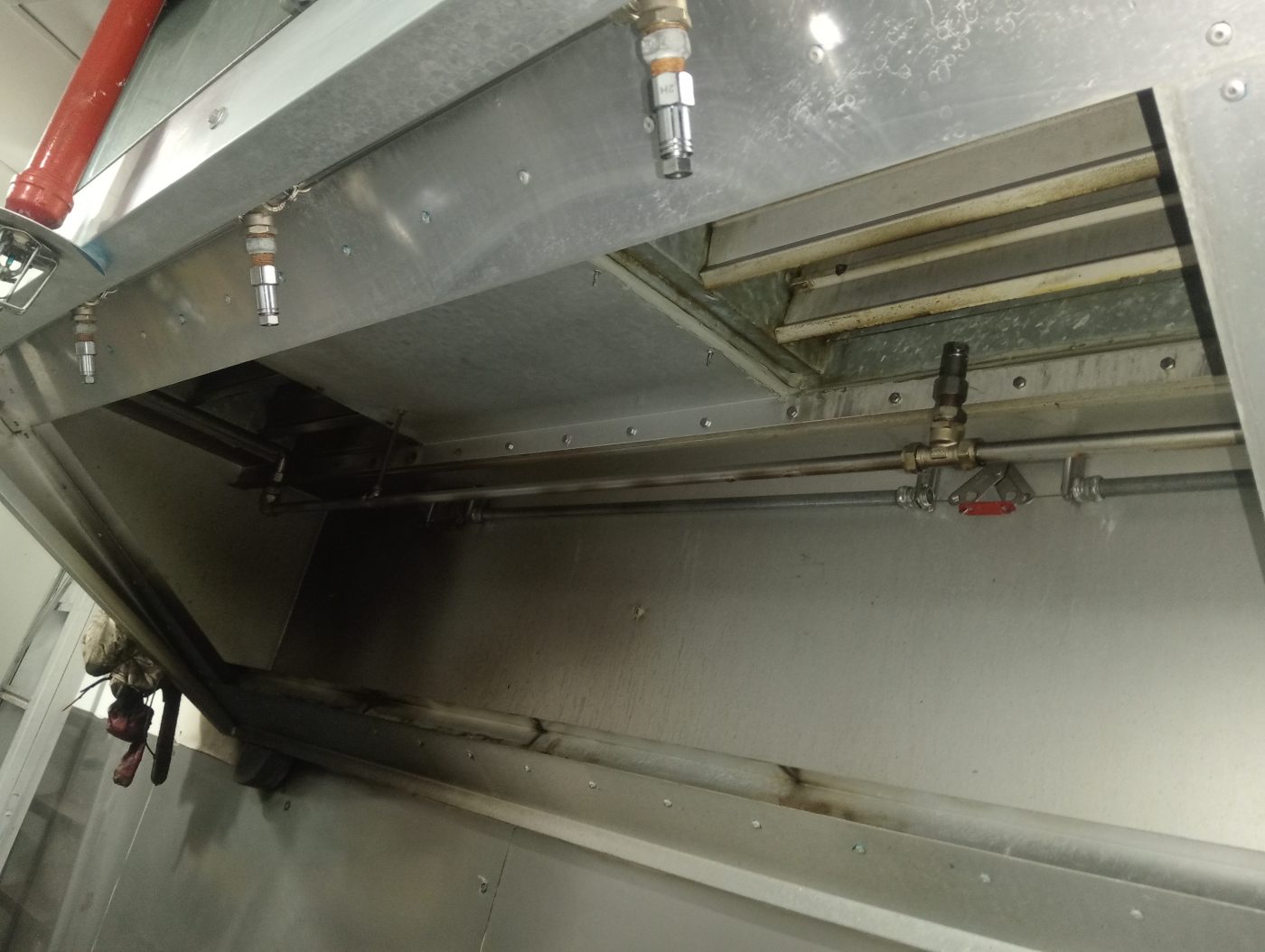
Wok and deep-fry kitchens generate far more airborne grease than standard cooking because of extreme heat, open flames, and high oil volumes. This grease condenses and builds up inside ducts and fans far faster than most operators expect — typically requiring cleaning two to four times more frequently than lighter-duty kitchens to stay safe and compliant.
If you run a wok station or a bank of deep fryers, your exhaust system is working harder than almost any other kitchen type — and it's accumulating grease faster than you probably realise. We've walked into kitchens where the operator genuinely believed their quarterly clean was sufficient, only to find the duct walls coated in a centimetre or more of solidified grease. That's not a hygiene problem. That's a fire waiting to happen. Here's what's actually going on inside your exhaust system, and why staying ahead of it matters more in your kitchen than most.
It comes down to three things working against you at the same time: high heat, large oil volumes, and turbulent airflow.
A wok burner in a busy zi char or hawker-style kitchen runs at temperatures that would stagger a Western chef. The intense flame doesn't just cook the food — it atomises the oil in the wok into microscopic droplets. Those droplets get swept straight up into the exhaust hood before they ever settle. Deep fryers do the same thing differently: the oil sits at a constant high temperature all service long, releasing a continuous plume of fine aerosol even when nothing is actually frying. By the time the extraction fan pulls that air through the system, you have a warm, oil-laden mist travelling through every metre of your ductwork.
In a lighter kitchen — a salad prep area, a steamer-heavy dim sum operation, or a pastry section — the grease load is relatively modest. In a wok kitchen running two or three stations through a long lunch and dinner service, it can be three to five times higher per hour of operation. We've measured the difference when we take on clients switching from a previous cleaning contractor who wasn't accounting for cooking type. The residue we find tells the story immediately.
This is worth understanding because it changes how you think about risk.
Grease filters (whether baffle-type or mesh) are designed to capture the heavier droplets before they enter the duct. In a properly maintained system, they do a reasonable job. But in a high-load wok kitchen, they saturate quickly. Once saturated, they stop filtering and start acting as a drip tray — and then as a fuel source. We always tell our clients: if your filters look visibly heavy and discoloured mid-week, they needed cleaning two days ago.
Beyond the filters, the finer aerosol carries on. As it travels through the duct — especially at bends, junctions, and any horizontal runs — it cools slightly and condenses onto the duct walls. Over weeks and months, this builds into a thick, sticky, eventually almost solid layer. On one kitchen we serviced after a change of management, the horizontal duct run had so much grease accumulation that the effective internal diameter had reduced noticeably. Airflow was suffering, the kitchen was hotter than it should be, and the fire risk was severe. The previous operator had simply not appreciated how fast that particular setup loaded up.
Grease that makes it past the ductwork reaches the fan wheel and motor housing. Grease on a fan wheel throws the unit out of balance, increases vibration, accelerates bearing wear, and reduces airflow efficiency. We stock and repair MV fans and motors in-house, so we see this damage regularly. Catching it early is always cheaper than replacing a seized motor at 10 pm on a Friday.
Yes. Grease inside a duct system is a fuel source that runs the entire length of your kitchen exhaust — often through walls, ceiling voids, and across multiple floors. A fire that starts at the cooking surface and reaches a grease-laden duct doesn't stay in the kitchen. It travels. SCDF requirements around duct construction, access panels, and suppression systems exist precisely because of this risk. We always confirm the exact compliance requirements with the relevant authority before quoting on any new installation or major rectification, because the specifics matter and they do get updated.
What we can say plainly: a wok or deep-fry kitchen that is cleaned on the same schedule as a light-duty kitchen is not a compliant kitchen. It may pass a casual inspection, but it won't pass a thorough one — and more importantly, it's genuinely dangerous.
There's no single universal answer because it depends on operating hours, number of cooking stations, oil volume used, and duct configuration. What we can tell you from our own experience servicing everything from single-stall hawker operations to hotel central kitchens is this:
We assess grease load as part of every job and give our clients an honest recommendation based on what we actually find — not a one-size schedule that suits a contractor's route planning. If your current provider is cleaning every kitchen on the same cycle regardless of cooking type, that should prompt a conversation.
Somewhat, yes — though nothing eliminates it in a wok or fry kitchen.
Properly sized and positioned hoods make a genuine difference. An undersized hood or one positioned too far above the cooking surface will miss a significant portion of the grease plume, letting it disperse into the kitchen instead of being captured. We design and fabricate hoods in-house and size them properly for the cooking equipment below — it's one of the most impactful things we do on a new installation.
Grease filters that are serviced frequently — ideally cleaned weekly in a heavy-load kitchen — do their job properly instead of becoming part of the problem.
UV and carbon filtration systems, which we design and supply, can reduce the fine aerosol and odour load that reaches the ductwork. They aren't a substitute for mechanical cleaning, but they are a useful part of a complete system.
Variable speed drives on extraction fans can help ensure the system is running at the right airflow for the actual cooking load at any given time — not too slow (grease settles) and not wastefully fast (energy cost). We install and commission VSDs as part of our design and build work.
A few signs we see regularly: filters that look dark and heavy after just a few days of service; a greasy film appearing on surfaces near the hood even with the extraction running; reduced airflow that makes the kitchen hotter and smokier than usual; and visible grease dripping or residue at duct seams or access panels. If you're seeing any of these, call us — we'll assess the system and tell you honestly what we find.
NEA has requirements around the maintenance of exhaust systems for food establishments, and SCDF requirements cover fire safety aspects including grease duct condition. The specific intervals and standards can depend on your premises type and setup. We always verify the current requirements with the relevant authority before advising clients, because getting this wrong creates real compliance and liability exposure. What we can say is that for wok and deep-fry kitchens, the legally compliant interval is almost always shorter than operators assume.
Possibly. A flash fire in the hood can char and weaken duct joints, warp baffle filters, and leave carbon deposits that accelerate future buildup. We've inspected systems after hood fires where the ductwork looked fine from outside but had compromised seams internally. After any grease fire, even a small one, we'd strongly recommend a full internal inspection before resuming normal service. We carry out those inspections as part of our cleaning work.
We work around kitchen schedules all the time — early mornings, late nights, split across non-service hours. For most jobs, full shutdown isn't necessary if we plan the access carefully. For major rectification or duct replacement work, we'll be upfront about what downtime is genuinely required. We run 24/7, so timing is rarely a barrier on our end.
It can be, because responsibility for grease management gets split. The hood and filters might be cleaned regularly, but if the duct crew isn't on a matched schedule — or if nobody owns the fan maintenance — things fall through the gaps. We prefer to take on the whole system: hood, filters, ductwork, fan, and motor. That way we know exactly what's been done and when, and our clients have one point of contact when something needs attention.
If your kitchen runs wok stations or deep fryers and you're not certain your current cleaning schedule matches the actual grease load you're generating, it's worth having us take a look. We'll give you a straight assessment and a quote — and if something needs urgent attention, our 24/7 standby means we can act on it without waiting for a convenient slot.
Related: the opposite case is worth reading beside this one - bakery and oven-heavy kitchens, where the load is heat and moisture rather than grease, and flour dust changes what is sitting in the duct.
Adding a wok or fry station to a system that was not designed for one is its own problem — see when a menu change outgrows your kitchen exhaust.
Also worth reading: hotpot and Korean BBQ table extraction — the same grease aerosol problem, but distributed across a dining room instead of one cooking line.
We design, clean, repair and maintain commercial kitchen exhaust systems across Singapore — on 24/7 standby.