
15 Nov 2026 · Fire Safety
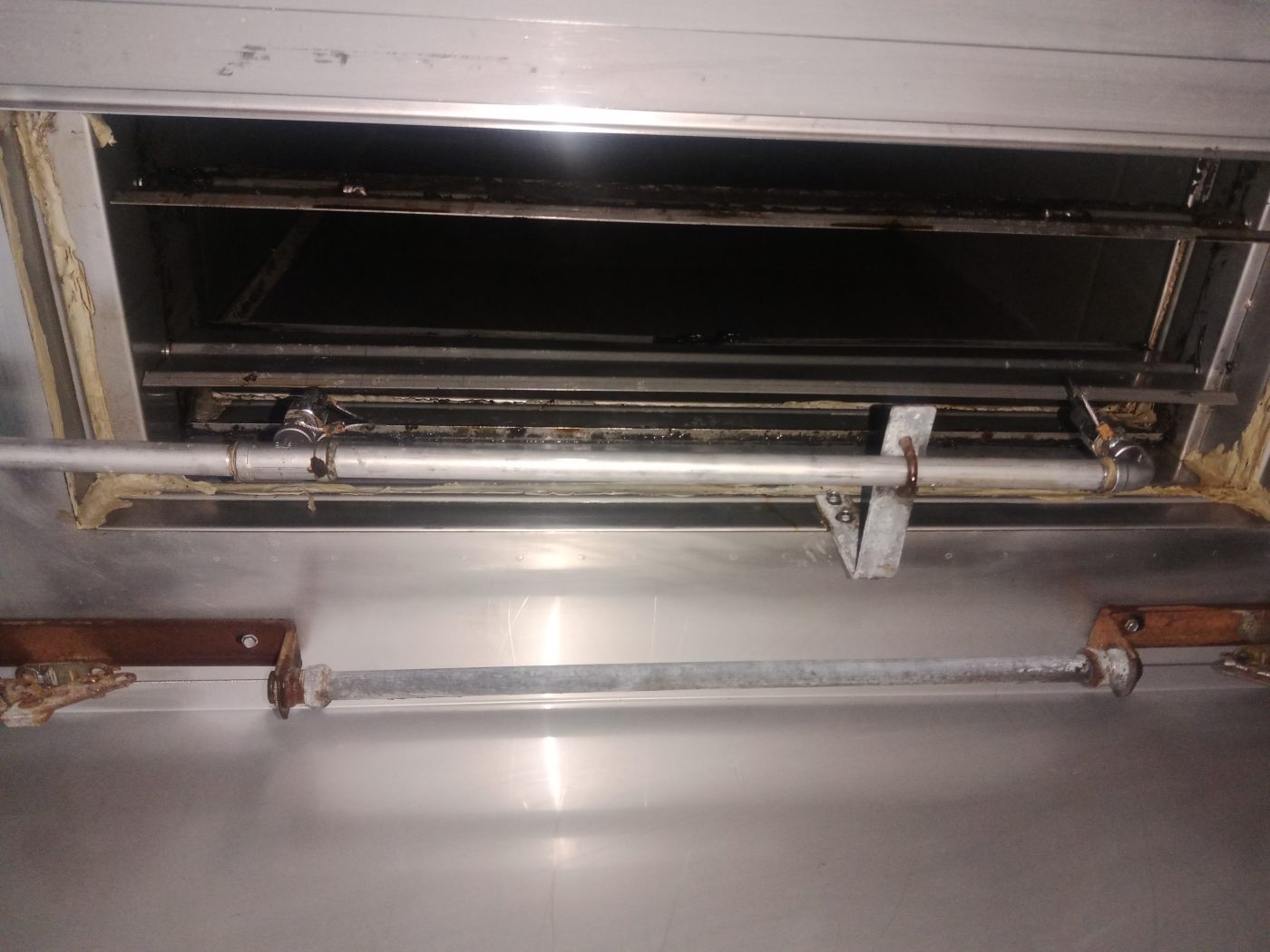
After a fire in a kitchen hood or exhaust, do not restart the fan, reset the suppression system or relight the cooking line until the equipment has been inspected. Photograph everything before clean-up, then have the whole path looked at: hood, filters, plenum, suppression nozzles and links, duct, fan and make-up air grilles. Repair or replace what the fire damaged, clean, then service the suppression system, and keep every record. Whether you may reopen is for the fire service, your landlord and your insurer to say.
Pictured above: the inside of a kitchen hood at one of BC Air’s projects in Yishun, with the suppression pipework running along the plenum and grease residue on the metal around it. It is reused here because this is the space a hood fire happens in, and the part you have to look at before you restart anything.
The fire is out. Perhaps the suppression system went off, perhaps staff used an extinguisher, perhaps the fire service came and left. The kitchen is full of smell and powder, everybody is shaken, and the owner’s first question is the practical one: when can we cook again?
That question has a wrong answer that is very easy to give: “tonight, once we wipe it down.” A fire that started at the cooking line or in the hood has usually touched more than you can see from the floor. This post is about what to sort out, in order, before the exhaust system is switched back on and the kitchen reopens. It gives no prices, because what a repair costs depends entirely on what was damaged, and we quote after an inspection.
We are a kitchen exhaust and fire suppression contractor. We are not the fire service, your insurer or your landlord, and we do not decide whether you may reopen. Who has to clear the premises, and what they need to see, is for them to say. What we can tell you is what the exhaust and suppression equipment needs before anyone should trust it again, and what to put in writing so those conversations go faster.
A hood fire does not stay at the hood. The grease we describe in how a grease fire travels up kitchen ductwork is a fuel that lines the hood, the filters, the plenum behind them and the duct above. Flame that starts over a wok or a fryer can reach the first filters in seconds and pull heat into the duct. Even when the fire itself was put out quickly, you cannot tell from the kitchen how far heat and flame went along the run, and you cannot tell what is now weakened.
That is why the inspection after a fire is not the same as a normal cleaning inspection. We are not only asking “how much grease is there?” We are asking “what has this fire done to the equipment?”
1. The hood and filters. Scorched or distorted metal, discoloured stainless, filters that have warped or fallen out of their seats, and any seam that has opened. A baffle filter that has been through a fire should not simply be washed and put back. Our note on replacing a damaged baffle filter says what to measure and what to send.
2. The plenum behind the filters. This is where heat and grease meet, and it is the part nobody normally sees. Behind the baffle filters describes it. After a fire it needs to be opened and checked for residue, burnt grease and damage, not assumed to be fine because the front looks acceptable.
3. The suppression system. Nozzles, blow-off caps, fusible links and detection over the cooking line, the cylinder, the release path and the gas and electrical shut-off interlock. This is the equipment that is meant to act in these minutes, and it has either operated or been exposed to heat. The checks are the ones our fire suppression maintenance visit covers: nozzles and caps, links and detection, cylinder pressure and agent, the discharge path, the shut-off interlock and the manual pull station. Servicing it after an event is not optional extra work. Until it has been done, the system cannot be assumed to be discharge-ready.
4. The ductwork. The accessible duct runs, joints, seams and access panels. Heat can warp a section, open a joint or burn a gasket, and a duct that now leaks will leak grease and smell into whatever it passes through. If a section has been damaged, the decision is the one in our note on whether to patch, replace a section or re-run the duct. Where a run has to be built or replaced, we fabricate ductwork in-house. Where the duct passes through other parts of a building, our fire-rated ductwork page explains what that is for.
5. The fan. Check whether it turns freely, whether the blades and housing show heat damage, whether the motor, belts and drive have been affected, and whether the sound is normal. We stock motors, fans, fan parts and control components in-house, so a fault found here can often be put right without a separate booking. See kitchen exhaust repair.
6. The make-up air grilles and anything else in the airflow path. Smoke and powder travel. These are the places people forget until the smell comes back.
Fire residue, suppression agent and the grease it burnt are all things that have to come out of the hood, filters, plenum, accessible duct and fan before the system goes back into use. Our kitchen exhaust cleaning covers the hood and filters, the accessible duct, the fan blades and housing and the make-up air grilles, documented with before-and-after photographs. After a fire, the order matters: look at the damage first, decide what is repaired or replaced, then clean, so you are not cleaning something that is about to be cut out.
It is also worth asking for the cleaning to be scheduled as one coordinated visit with the suppression servicing. The grease that fouls the exhaust also fouls the nozzles and links, and one team seeing the whole cooking line means neither job is skipped.
You will probably be asked by more than one party what happened and what was done. Keep one folder, and keep it from day one:
If you already keep a kitchen exhaust logbook, this goes in it. If you do not, this is a good day to start one.
After the event, ask why it happened. Grease build-up that was overdue for cleaning, a hood too small for the equipment under it, a filter that was missing, or a flare-up that was put out by staff and not followed up. Our note on a grease flare-up put out by staff covers the smaller version of this, and layered kitchen fire safety explains why clean, suppress and contain work together. The cleaning interval itself is a conversation about what you cook and how much; our guide to how often to clean is the place to start.
WhatsApp BC Air on 8989 2833 with the location, a few lines on what happened, whether the suppression system discharged, and photographs if you have them. We are on 24/7 standby, and scope and pricing follow an inspection.
Related reading: when the suppression system goes off · damaged duct: patch, replace or re-run · between suppression service visits
We design, clean, repair and maintain commercial kitchen exhaust systems across Singapore — on 24/7 standby.