
06 Nov 2026 · Maintenance
A kitchen exhaust logbook records every clean with its date and contractor, where the before-and-after photos are kept, the cleaning interval and why it was chosen, what the technician found, parts replaced, fire suppression service dates and incidents. Keep the latest service reports with it, name one owner and one backup, and hand it over when the manager or owner changes, so upkeep can be shown to NEA, SCDF, a landlord or an auditor.
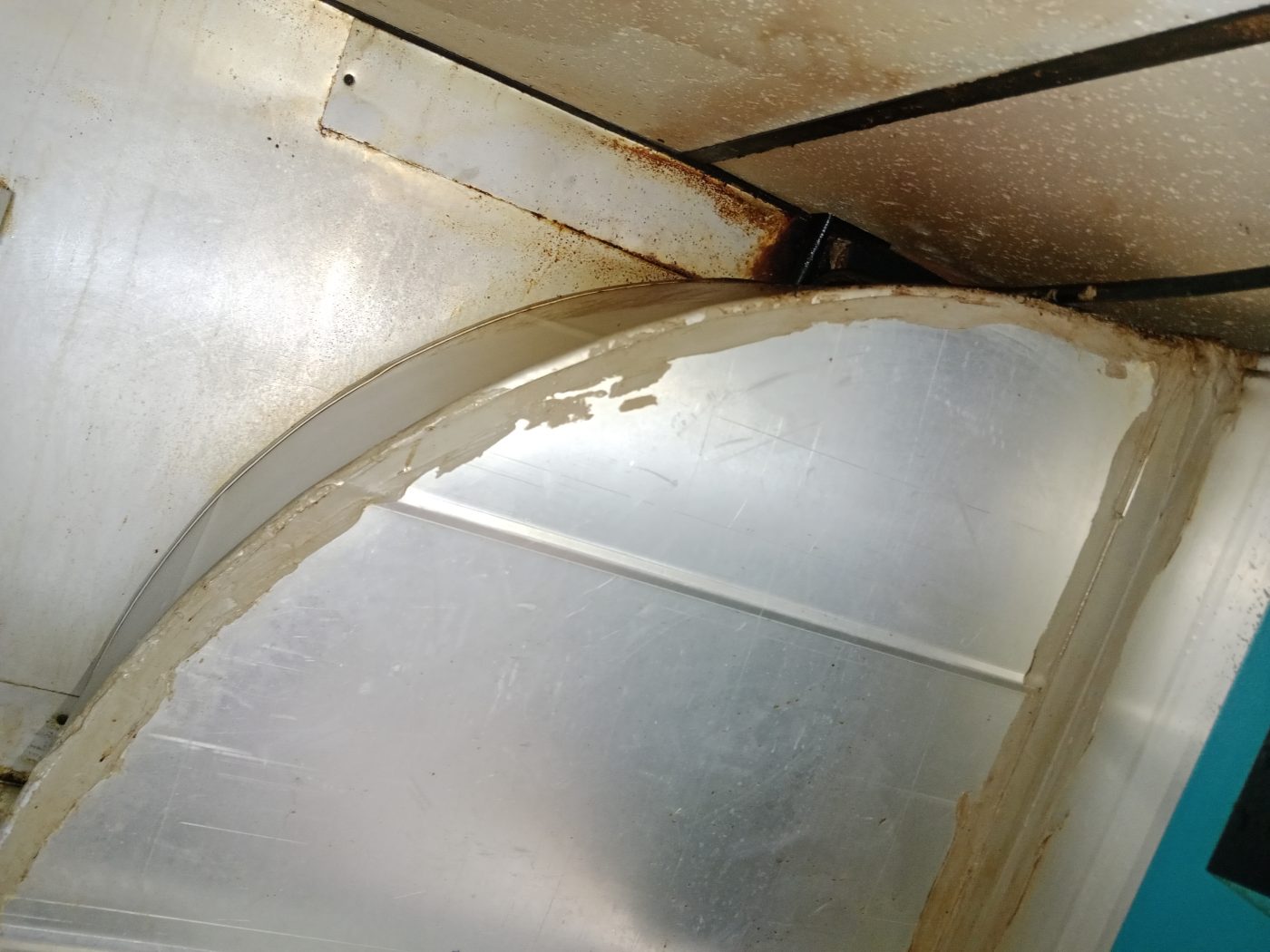
Pictured above: the inside corner of a kitchen hood on one of our jobs, with rust staining along a seam and old sealant lifting at the edge. It is not a logbook entry, but it is the kind of thing a dated note and a photo would have caught months earlier.
A kitchen manager leaves. Or the shop changes hands. Or the person who always dealt with the exhaust contractor is on leave the week the fan starts to squeal. Whoever is standing in the kitchen then asks the same questions: when was the exhaust last cleaned, what did the technician say about the fan, which filter was replaced, and is there anything we were told to watch? If the answers live in one person's head or in a WhatsApp thread nobody can find, the kitchen starts from zero.
The fix is dull and cheap: one logbook, kept by whoever runs the kitchen, that outlives any individual. This post sets out what to put in it, what to keep with it, and how to use it when an inspector, a landlord or a new contractor asks to see your upkeep. We give no price here. We do not need one to make the point.
An invoice tells you that something was paid for. It does not tell you what was found. Our published position is that both NEA and SCDF expect a commercial kitchen exhaust to be kept clean and safe, and to be able to show that it is. The word that matters is show. A kitchen that cleans every month but cannot produce a single dated record is, on paper, in the same position as a kitchen that never cleans.
There is a second reason, and it is practical rather than regulatory. Exhaust problems build slowly. A fan that is a little louder each month, a hood that lets a little more steam out at one end, a filter that is replaced more often than it used to be: nobody notices any single step. A page of dated entries shows the trend that memory smooths over.
1. Every clean, with the date and who did it. Write the date, the contractor, and which parts were covered: hood and filters, accessible ductwork, fan, make-up air grilles. Our cleaning scope covers those four, and we say what a clean should cover on our kitchen exhaust cleaning page. If a visit covered only the hood and filters, the entry should say so, because that is not the same as a full-system clean.
2. The before-and-after photos, or where they are kept. Every clean we do comes with dated before-and-after photographs, and that is the record you can hand to NEA, SCDF, your landlord or your auditor. Do not rely on a phone gallery. Put the photos in one shared folder and write the folder name in the logbook. We go into why in before-and-after documentation for exhaust cleaning.
3. The interval you have settled on, and why. Our guidance is that most commercial kitchens need cleaning every one to three months: monthly for heavy wok, grill and deep-frying kitchens, quarterly for lighter ones. NFPA-96, the standard the industry works to, ties the interval to how hard the kitchen works. Write down the interval you chose and the reason, such as "wok line, six days a week, monthly". When the menu or hours change, the entry reminds the next person to revisit it. Our cleaning frequency and compliance page has the tiers.
4. What the technician found and said. This is the entry most kitchens never make, and it is the most useful. Write down any remark about the condition of the fan, belts, bearings, the ductwork or the plenum behind the filters. "Fan belt showing wear, check next visit." "Access panel on the roof run was stiff." If a fault was found and fixed on the spot, record the fix. If it was found and left for a later booking, record that too, with a date to chase it. Our piece on a fault found during a clean explains how to decide between fixing now and booking it.
5. Parts replaced. Baffle filters, carbon banks, UV lamps, belts, motors. Date, which part, which position in the hood. A mismatched filter bank is easy to end up with, and a record of what was fitted where helps whoever orders the next one.
6. Fire suppression service dates. The suppression system is serviced on its own schedule and by its own visit, not as part of the exhaust clean. Put the dates side by side so nobody assumes one covers the other. Our fire suppression service visit post sets out what that visit should leave you with.
7. Incidents and complaints. A flare-up at the hood, a burning smell, a neighbour's odour complaint, smoke setting off an alarm, the fan tripping in heavy rain. Date, what happened, what was done, who was called. Looked at together, a month of these often points to the cause better than any single event.
The logbook is the index. A few documents belong in the same folder or cabinet:
One named person owns the book, and one named person covers when they are away. Everyone else tells that person. The aim is not a perfect system. It is that no clean, no repair and no remark goes unwritten because "someone" was going to do it.
Daily upkeep by kitchen staff is a separate job and has its own routine. We cover it in the daily routine for kitchen staff. Put a line in the logbook only for what is worth keeping, such as a filter that was damaged or a fault staff noticed, not for every routine wash.
An inspector or auditor. Open it at the last four entries and hand over the photos for the latest clean. The book shows regular upkeep and the photos show the condition. We keep records for customers on a maintenance programme, which our maintenance programmes page describes, but you should still hold your own copy.
A landlord or management office. The same, with the dates of the cleans and the contractor's name.
A new contractor. Before quoting, they will want to know what the system has been through. A logbook saves a round of questions. If you are comparing offers, the logbook also lets you hold each against the same facts. Our guide to what to check before signing a service contract lists the questions.
A new manager or a new owner. The logbook is the handover. Hand it over in person, and walk the new person through the last two entries.
You do not need software. A bound notebook, or one shared spreadsheet, works if every row has the same columns:
If you start today, start with what you know. Write the date of the last clean you can prove, the interval you want, and the name of the person who owns the book. The earlier entries can stay blank. Blank is honest. A reconstructed date is not.
If you are taking over a kitchen, or you have no records and want to start properly, WhatsApp BC Air on 8989 2833 with the location, what you cook, your hours and the date of the last clean if you know it. We are on 24/7 standby. We do not quote over the phone: the interval and the scope follow an inspection of the system.
Related reading: before-and-after documentation · the daily routine for kitchen staff · new kitchen handover documents
We design, clean, repair and maintain commercial kitchen exhaust systems across Singapore — on 24/7 standby.