
01 Aug 2026 · Fire Safety
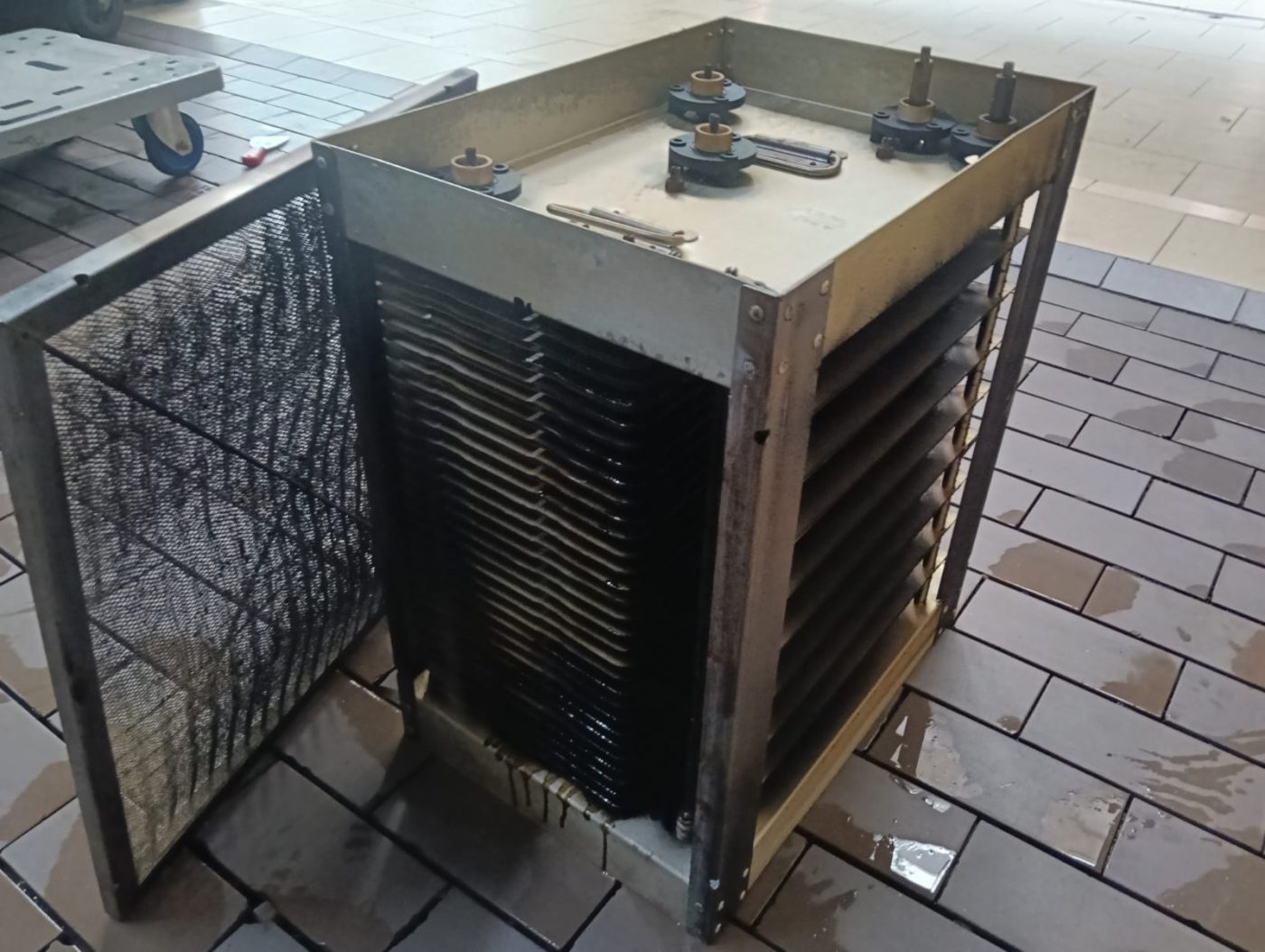
A grease fire travels up kitchen ductwork by igniting accumulated grease deposits on duct walls. Once lit, the fire follows the exhaust airflow, intensifying as it feeds on more grease. Regular chemical degreasing, correct airflow balancing, and compliant fire dampers are the only reliable way to stop it spreading.
A grease fire rarely announces itself politely. One moment the wok is flaring, the next, flames are feeding off years of baked-on grease inside your exhaust duct — and travelling fast. We've attended enough post-incident inspections to know that the ductwork almost always turns out to be the silent accomplice. The cooking equipment gets blamed, but it's the grease-lined duct above it that turns a small flare-up into a serious structural fire. Here's exactly how that happens, and what we do to prevent it.
Every time your kitchen cooks, hot air carries aerosolised grease particles into the exhaust hood and up through the ductwork. Not all of it makes it out the other end. A portion clings to the inner walls of the duct, cools, and solidifies. Over weeks and months, that film thickens into a waxy, then tar-like, then almost coal-hard layer.
The rate of accumulation depends on several factors:
In our experience, a high-volume zi char or prata stall running two shifts a day can coat a duct to a dangerous grease thickness in as little as eight to twelve weeks without regular cleaning. Central kitchens are even faster.
This is the part that surprises most kitchen operators. The fire doesn't need to be lit inside the duct — it just needs an ignition source close enough to the opening.
Here's the sequence we see time and again:
We've inspected ducts after incidents where the grease layer was thick enough that the duct itself became essentially a lined combustion chamber. That's not hyperbole — it's what heavy, uncleaned grease buildup actually creates.
A correctly installed and maintained fire damper is supposed to close automatically when duct temperatures exceed a set threshold, cutting off airflow and starving the fire. In practice, we find two recurring problems:
Access panels matter just as much. Without proper access, cleaning crews — including our own teams — cannot reach the interior of a duct run to remove grease properly. We always flag duct runs that lack adequate access during our inspection, because a duct you cannot clean is a duct you cannot make safe.
This is an area where our engineering background makes a real difference. An exhaust system that's moving too little air relative to the cooking load doesn't just perform poorly — it actively increases fire risk. Slow-moving air deposits more grease. An oversized fan running without a variable speed drive, on the other hand, can create pressure differentials that cause make-up air shortfalls, which leads to erratic flame behaviour at the cooking surface — increasing flare-up frequency.
We design and balance exhaust systems so that airflow is matched to the actual cooking load. Where loads vary across service periods, we install variable speed drives — which we stock and fit ourselves — so the system breathes correctly throughout the day rather than running at a fixed speed regardless of what's happening below the hood.
Our approach has always been to treat the exhaust system as a complete, connected system — not just a hood above the stove.
We manufacture our own BC Air chemical series specifically for commercial kitchen grease. Different formulations handle different grease hardness — fresh deposits need a different approach from carbonised, years-old buildup. We don't use one product for everything, because kitchen grease isn't one thing.
We access and inspect the full duct run — not just the visible hood interior. That includes riser shafts, rooftop fans, and discharge points. We document grease thickness and flag areas of concern in writing.
Baffle filters are your first line of defence. We clean, check, and replace them on a schedule matched to your cooking volume — not a generic calendar interval.
We test dampers for correct operation and free movement, and we clean the damper assembly itself as part of the service. We always confirm the exact testing and certification requirement with the relevant authority before quoting, because SCDF requirements can be premises-specific.
Where clients need an additional layer of grease capture — particularly in shophouse or mixed-use buildings where the discharge path is constrained — we design and install germicidal UV systems and carbon banks, both of which we fabricate and stock ourselves.
There's no single answer that applies to every kitchen, but as a starting point: high-volume cooking operations typically need a full chemical clean every one to three months. Lower-volume operations may go longer. NEA and SCDF set compliance expectations, and we always verify the specific requirement for your premises before confirming a maintenance schedule. What we never do is recommend an interval that we haven't matched to your actual cooking load — because an interval that's right for a hotel kitchen is almost certainly wrong for a hawker stall, and vice versa.
Yes, and this is exactly why it's taken seriously by SCDF. Ductwork runs through ceiling voids, risers, and shared building spaces. If a duct joint fails under fire conditions — which happens with compromised or grease-covered flanges — the fire exits the duct and can ignite surrounding materials. We've seen this cause damage well beyond the kitchen itself. Keeping the duct interior clean and the joints in good condition is the most direct way to contain any incident to the source.
Switching off the fan removes the airflow that's pulling the fire upward, which does help. But by the time a duct fire is established, the grease deposits are burning independently and don't need the fan to keep going. The right response is to suppress the source fire, activate your suppression system if fitted, and evacuate — then let SCDF handle the rest. The real answer to this question is: don't let it get to that point. Regular cleaning is the only reliable intervention.
Honestly, you often can't tell just by looking at the hood opening. The worst deposits tend to be further up the run — at bends, in riser shafts, and around the fan housing — where they're out of sight. Visible grease dripping back into the cooking area, a noticeable drop in extraction performance, and persistent cooking odours outside the kitchen are all signs worth taking seriously. The only way to know for certain is a proper inspection with access to the full duct run, which is something we do as part of every service call.
No, and we won't tell you otherwise. UV and carbon systems are excellent at reducing odour and capturing some grease aerosols before they enter the duct, which reduces the rate of buildup. But they don't eliminate it. Grease still accumulates on duct walls, on the UV lamp housings, and on the carbon bank frames themselves — all of which need regular cleaning and replacement. These systems complement a cleaning programme; they don't replace it.
The key bodies are NEA, SCDF, and BCA, with specific requirements depending on your premises type, cooking volume, and building classification. In our experience, the requirements that catch operators off guard most often relate to damper maintenance records, discharge point clearances, and the frequency of certified cleaning. We always confirm the exact requirements applicable to your premises before we quote — and we document everything so you have a clear compliance record if you're ever inspected.
If anything in this article has made you look up at your exhaust hood and wonder what's sitting in the duct above it, that's worth acting on. Call or reach out to us for a no-obligation inspection and quotation — we'll tell you exactly what we find, in plain language, with no pressure. And if something urgent comes up in the meantime, our 24/7 standby team is always on.
Related: if your hood suppression system has already gone off, what to do when a restaurant fire suppression system goes off · what stops it travelling further — fire-rated ductwork and the routings that require it.
We design, clean, repair and maintain commercial kitchen exhaust systems across Singapore — on 24/7 standby.