
16 Oct 2026 · Repair & Equipment
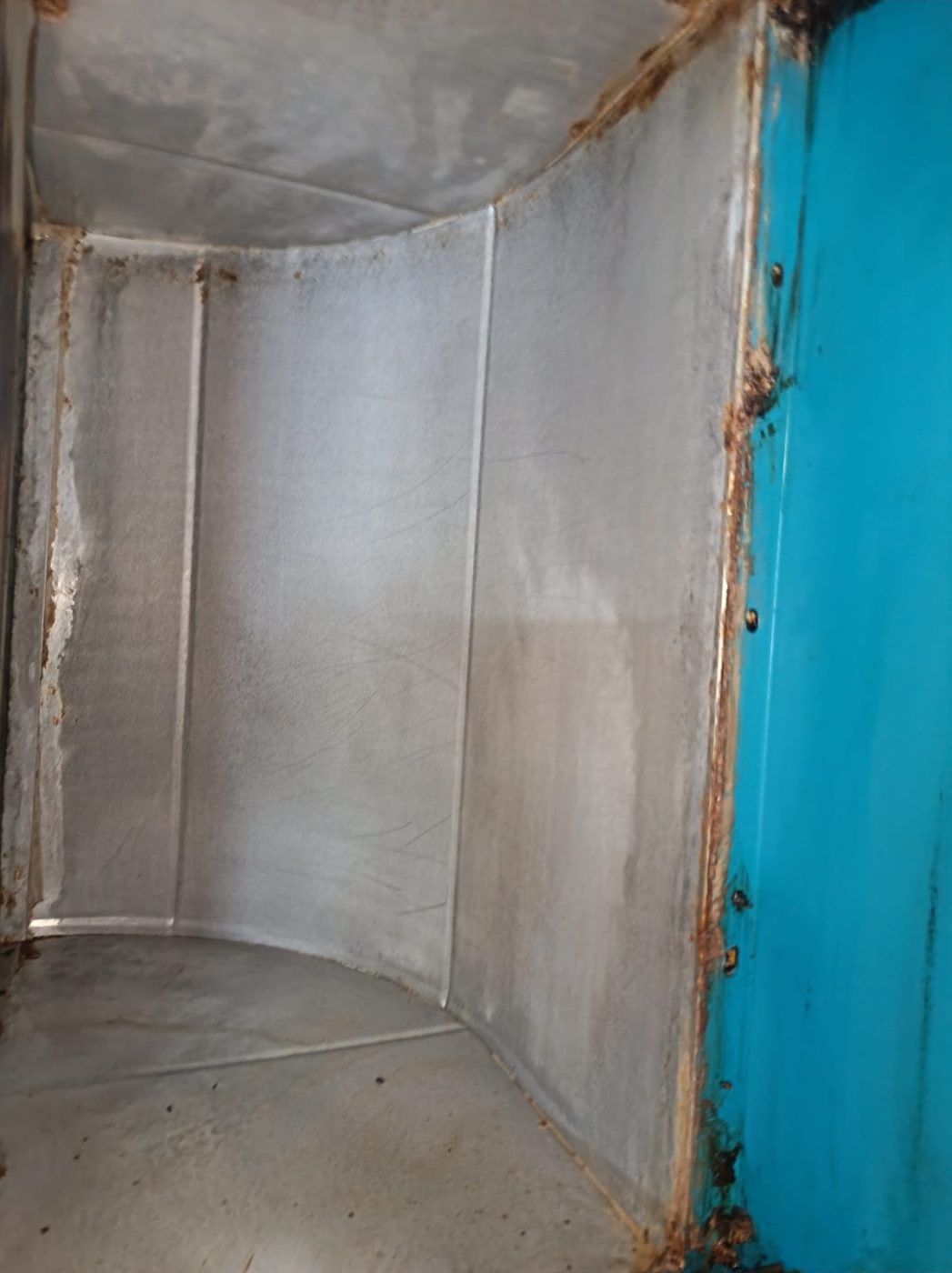
To choose between patching a damaged kitchen exhaust duct, replacing a section or re-running it, first find how far the damage goes by opening the access panels either side of the stain. A patch suits local damage on sound metal. A new section suits thin, perforated, sagging or repeatedly failing stretches. Re-running suits a route that keeps causing the same fault. Get the options and the cost in writing before the work starts.
A brown stain spreading on a ceiling tile. A joint weeping at an access panel. A rust-coloured seam that turns up the night the duct is opened for a clean. A stretch that has dipped between its supports, or a dent nobody can explain. The first question is nearly always the same: do we patch it, replace that section, or is the way the duct runs the real problem? This post is about telling those three apart, and what to ask before you approve any of them.
We do not publish a price for duct repair. The cost follows the length of duct, what it is made of, how its sections are joined and what sits above the ceiling, and none of that can be read from the kitchen floor. What we can give you is a way to read the damage and the questions that make two quotes comparable. The repair side of what we do is on our repair and replacement page, which lists ducting and hoods alongside motors, fans and control gear.
A stain shows where grease came out, not where the fault began. Grease runs along the inside of a duct and escapes at the first weak point it reaches, which can be some distance from the real problem. Before anyone says “patch” or “replace”, get a view of the whole stretch:
If the damage was found during a clean, our piece on a fault found during an exhaust clean covers how quickly it has to be dealt with: fix tonight, book it, or do not cook.
Patch. A patch makes sense when the damage is local and the metal around it is sound: one seam or joint that has opened, a frame at an access panel that no longer seals, a small hole, a dent in a single panel. The test is whether the patch removes the cause. Re-sealing a joint on a run that is otherwise tight can do that. Sealing the outside of a seam that is leaking because the run has sagged, or because grease keeps pooling against it, only hides the symptom, and the grease will find the next weak point.
Replace a section. A new section is the better answer when repairing would only buy a little time:
We fabricate ductwork in our own workshop, so a replacement section can be made to fit the run it joins rather than waiting on a stock item. That describes how we work, not a promise about timing: how long a section takes depends on access and on what is above the ceiling, and we would rather say so after seeing it. A new section is also the natural moment to put an access panel where the old run had none.
Re-run the duct. Sometimes the section is not the problem; the route is. A duct that dips around a beam or a pipe so grease keeps pooling in the same place, a stretch that cannot be reached from any access point, or a run over a neighbour’s ceiling in a construction that does not suit what the duct carries: replace the failed piece like for like and you rebuild the cause with it. That is a design conversation rather than a repair one, and it belongs with our design and build side, where hood, ductwork, fan, make-up air and controls are sized and matched as one system.
What the section passes through. Our fire-rated ductwork page lists where a rated duct is needed: exhaust runs through other tenancies or occupied areas, ducting through fire compartments, shafts or escape routes, and any routing where SCDF or BCA require rated containment. It also says joints, supports and penetrations are where rated ducting succeeds or fails. So if the damaged stretch is anywhere near a wall, a floor, a shaft or another tenancy, say so when you ask for a quote, so the new section is built to what that part of the run needs and not as ordinary duct. The same page says existing ductwork can in many cases be upgraded to fire-rated through rated wrap systems or replacement sections, depending on the existing installation, which makes a replacement a sensible time to ask the question. More in when you need fire-rated ductwork.
Whose ceiling it is. A stain in a neighbour’s unit, or below a landlord’s ceiling, means the repair has to be shown to someone who was not there. Photographs of the damage, the work and the finished joint give you something to hand over. Whatever access and working-hours rules the landlord has should be known before a date is set, not after.
A duct that has been leaking grease has grease in it. Ask how the grease in and around the section will be dealt with before anything is cut or welded, and who is responsible for that step. Then ask what else runs along or into the stretch: supports and hangers, sensors, wiring and, near the hood end, suppression pipework or nozzles. If the repair is close to the hood, tell the contractor who services your suppression system and ask for that company to be involved in writing, the same point we make in our guide to a damaged, leaking or rusted hood.
Ask for the options side by side, in writing; a message is fine if that is quicker. Seven lines are enough:
If the person quoting cannot say why one option beats the other, that is worth knowing before you pay for either.
Ceiling closed, joint sealed, and nobody has checked that air still moves the way it did. Our servicing checklist asks for airflow and capture to be verified at the hood after a clean, because a system that is clean but underperforming is still a problem, and the same check belongs after any work that opens the duct. Our piece on confirming the exhaust is actually moving the air after a fan or drive replacement shows what that check involves.
Then make sure the record follows the duct. A stretch that has been repaired once is one to open first at the next visit, and for a landlord or an auditor the repair record belongs in the same file as your cleaning reports. Our maintenance programs page explains how we keep those records.
Found a stain, a drip or a rusty seam? WhatsApp BC Air on 8989 2833 with photos of the damage and of the nearest access panel, where the duct runs and the date of the last clean, and we will tell you what we would want to open first. We repair and replace exhaust equipment regardless of who originally installed it, on a 24/7 standby line.
Related reading: what your kitchen exhaust duct is made of · access panels in a kitchen exhaust duct · a damaged, leaking or rusted kitchen hood
We design, clean, repair and maintain commercial kitchen exhaust systems across Singapore — on 24/7 standby.