24/7 Standby · Always At Your Service 💬 WhatsApp +65 8989 2833

Grease Flare-Up at the Hood, Put Out by Staff: What to Check Before You Cook Again

31 Oct 2026 · Fire Safety
Grease Flare-Up at the Hood, Put Out by Staff: What to Check Before You Cook Again
After a small grease flare-up in the hood that staff put out, keep the cooking line off until the hood has been looked at. Photograph everything before cleaning, check the filters, plenum, duct and fan for grease that took the flame, and ask your suppression servicer to check the detection elements. Cook again only when you know what burned and why.

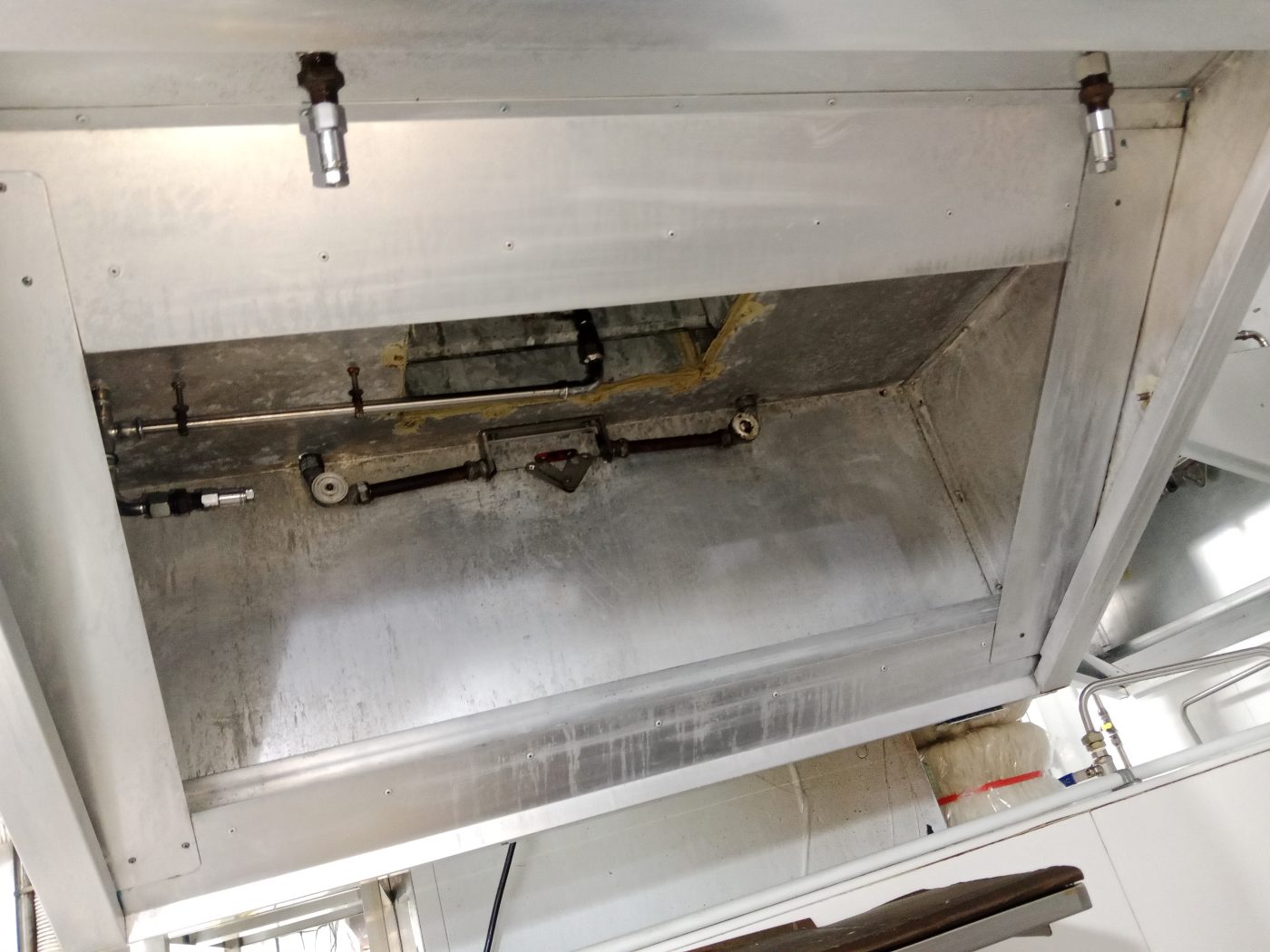
Pictured above: the inside of a kitchen hood on one of our projects (Heritage, Yishun), with the suppression pipework and nozzles in view. It is not a fire job. It is reused here because this is the part of the hood a flare reaches first, and the part people forget to look at afterwards.

It is a busy service. Oil in a wok or a fryer catches, flame climbs into the hood, and someone on the line grabs an extinguisher or a lid and puts it out in under a minute. The hood suppression system never goes off. Nobody is hurt. The orders keep coming, and within ten minutes the line is cooking again as if nothing happened.

That last step is the one this post is about. A flare that was put out quickly is not the same as a hood that is safe to cook under. Nothing has been checked yet, and whatever caught fire once has already shown you that the conditions for it were there. Here is what to do that night, what to look at before the next service, and what to ask whoever you call.

The short answer

After any flare-up in the hood, even a small one that staff put out themselves, do not treat the next service as routine. Make sure the fire is really out, leave the line off until the hood has been looked at, photograph everything before it is cleaned, and have the filters, plenum and the start of the duct checked for grease that took the flame. Have your suppression servicer check the detection elements if the flare sat under them. Cook again only when you know what burned and why.

The first hour

  1. Be sure it is out. If there is any doubt, get people out and call SCDF on 995. If SCDF attended, what they tell you comes before anything written here.
  2. Keep the gas and power off to the cooking line. Whatever fed the flame should stay shut until someone has looked at the hood. Do not light the line to finish the queue.
  3. Photograph before anyone cleans. The appliance, the underside of the hood you can see, the filters, any scorch marks, and whatever was cooking. Once the wipe-down starts, the evidence is gone. Your landlord, your insurer and whoever services the system will all ask what happened, and a few photographs taken in the first ten minutes answer better than memory.
  4. Write down the time, what was on the line, who was there and what was used to put it out. If an extinguisher was used, say so, so whoever cleans knows what is on the appliances and in the hood.
  5. Throw away food that was exposed. Anything open on the line or under the hood at the time goes in the bin.

Why a small flare is not always small

The flame you saw was the part you could see. The hood is built to draw heat and grease vapour upward, and the surfaces behind the filters are where grease collects: the plenum chamber, the fan and the duct. Grease deposits there can burn on their own, out of sight, which is why a grease fire travels up the ductwork instead of staying at the stove. We go through that in how a grease fire travels up kitchen ductwork.

So the useful question is not "did the fire go out?" It is "how much grease was waiting behind the filters, and did the flame reach any of it?" A kitchen that was recently cleaned and a kitchen that was overdue a clean can have the same flare and very different risks afterwards. If you are not sure when the system was last cleaned, that uncertainty is itself something to resolve before cooking again.

What to look at the next morning

None of this needs a tool, and none of it replaces a proper inspection. It tells you what to say when you call.

  • The filters. Are they all in place, seated without gaps, and all the same type? A missing or mismatched filter lets flame and heat past the first barrier. Note any that are discoloured, warped or soaked in grease.
  • The underside of the canopy and the area above the filters. Scorch marks, blistered paint or sealant, new brown staining along the joints.
  • Grease on the lip and drip tray. Is it heavier than usual, or running?
  • Smell. A burning smell that returns when the fan is switched on is a different problem from the one that was there last night. See burning smell from the kitchen exhaust fan.
  • The fan. Does it sound or run the way it did yesterday? Write down anything different.
  • What changed recently. A new or moved appliance, a pedestal fan blowing across the line, a filter taken out for washing and not put back, a delayed clean. A flare can follow a change in the kitchen, so write it down.

The suppression system: it did not go off, so is it fine?

Not automatically. The hood suppression system is a separate system with a separate job: detection elements in the hood and duct, nozzles over the appliances, a cylinder, and a release that cuts gas and electricity to the line. It can stay silent through a flare and still have been exposed to heat. Two things are worth checking.

First, the detection elements. Heat from a flare sitting directly under a detection link can fire it, and a link that has fired is spent whatever caused it. If the system did discharge, treat it as a full discharge and follow what to do when a restaurant fire suppression system goes off: the cylinder is empty, the kitchen is cooking with no suppression at all until the system has been cleaned up, recharged, re-armed and its shut-offs reset by whoever services it.

Second, if the flare happened and nothing discharged, ask your suppression servicer to look at the detection elements, nozzles and caps on their next visit, and sooner than scheduled. Grease also fouls nozzles and coats fusible links, and a link greased over can fail to release at the temperature it was rated for. That is the point of the servicing described on our fire suppression maintenance page. How the system is wired to the gas and the fan is covered in hood, fan, gas and suppression interlocks.

What a clean after a flare should cover

A wipe of the visible stainless does not answer the question. After a flare, the clean should go where the grease is:

  • the hood inside and out, and the baffle filters taken out and chemically cleaned;
  • the plenum behind the filters, which is where a flame goes next;
  • the accessible duct, from the hood and as far along as access allows, with sections that could not be opened written down as such;
  • the fan, opened and looked at, with bearings, belts and the motor connections checked, because heat and grease both load it;
  • airflow at the hood once the work is finished.

That is the same ten points on our kitchen exhaust servicing checklist, which we publish so that any contractor's scope can be held against it, including ours. If the clean was already overdue, this is the moment to bring the interval forward. Most commercial kitchens need cleaning every one to three months, heavy wok, grill and deep-frying kitchens often monthly, and our kitchen exhaust cleaning page sets out what a clean covers. Because the same grease fouls suppression nozzles and links, suppression servicing can be carried out on the same visit.

What you should have on paper afterwards

  1. The photographs from the night, with the time.
  2. Dated before-and-after photographs of the hood, filters, plenum and duct from the clean.
  3. What was found: scorching, damaged filters, grease in places it should not be, any section that could not be reached.
  4. What was done, what was replaced, and what was deferred, with a date for anything deferred and who agreed to leave it.
  5. If the suppression system was looked at, the record of that visit, filed with your exhaust cleaning records.

If your landlord, your insurer or an inspector later asks about the incident, a dated file is a very different answer from "we put it out and carried on."

Five questions to put to whoever you call

  1. Can the kitchen run tonight, and what is the risk if it does?
  2. Will you inspect the plenum and the start of the duct, or only the hood?
  3. If a section cannot be opened, will it be written down as not cleaned?
  4. Can the suppression detection and nozzles be looked at on the same visit?
  5. Will I get dated photographs and a record of what was found and done?

Getting it looked at

If you have had a flare in the hood, WhatsApp BC Air on 8989 2833 with what you cook, what was on the line when it flared, whether anything discharged, the date of the last clean and any photographs you took. We are on 24/7 standby, we service suppression systems whoever installed them, and we give no price in a post: every kitchen is different, and the quotation follows an inspection of the actual system.

The short version

  • A flare that staff put out is not a clearance. Keep the line off until the hood has been looked at.
  • Photograph everything before it is cleaned, and write down what was on the line and what put it out.
  • Check the filters, the canopy, the plenum and the fan, and the date of the last clean.
  • If a detection link was under the flare, it may have been exposed to heat: ask your suppression servicer to check it.
  • The clean should reach the plenum and duct, not only the stainless you can see, and the record should show what was found.

Related reading: when the suppression system has gone off · what a suppression service visit should leave you with · layered kitchen fire safety: clean, suppress, contain

Questions

Common questions

Is it safe to keep cooking after a small grease flare-up in the hood that staff put out?
Not until the hood has been looked at. Keep the gas and power off to the cooking line, photograph everything before it is cleaned, and have the filters, plenum and the start of the duct checked for grease that took the flame. A flare that was put out quickly is not a clearance.
Does the hood fire suppression system need checking if it did not discharge?
It is worth asking your suppression servicer to look. Heat from a flare sitting directly under a detection link can fire it, and grease can foul nozzles and coat fusible links, which may stop a link releasing at its rated temperature. If it did discharge, the cylinder is empty and the kitchen has no suppression until it is recharged and re-armed.
What should I photograph after a flare-up in the kitchen hood?
The appliance, the underside of the hood you can see, the filters, any scorch marks and whatever was cooking, before anyone cleans. Write down the time, who was there and what was used to put it out. Your landlord, insurer and servicer will all ask what happened.
Should I call SCDF for a small flare-up that is already out?
If there is any doubt the fire is out, get people out and call SCDF on 995. If SCDF attended, follow what they tell you before anything else. For a flare that is clearly out, the next step is to keep the line off and have the hood and exhaust inspected.
What should a clean after a hood flare-up cover?
The hood inside and out, the baffle filters, the plenum behind them, the accessible duct from the hood onwards, the fan with its bearings, belts and motor connections, and the airflow at the hood afterwards. It should come with dated before-and-after photographs and a record of what was found, done and deferred.
How much does an inspection after a hood flare-up cost?
There is no fixed price. Every kitchen is different, so the quotation follows an inspection of the actual system. Send the details on WhatsApp to 8989 2833.

Need This Sorted in Your Kitchen?

We design, clean, repair and maintain commercial kitchen exhaust systems across Singapore — on 24/7 standby.

Chat on WhatsApp