It usually happens in the middle of service. There is a flare at the wok range or the fryer, or someone leans on the wrong handle, and the hood fire suppression system goes off. The burners die, the cooking line loses power, and there is wet-chemical agent across the appliances and up inside the hood. Five minutes later the question in the kitchen is always the same: how soon can we cook again?
The honest answer is: not until the system that just went off can go off again. A suppression system that has discharged is empty. Until it has been cleaned up, recharged, re-armed and its shut-offs reset, the kitchen is cooking with no suppression at all, over a hood and duct that may have just had fire in them. This is what to do in the first hour, what reinstatement actually involves, and what to check before the line is lit again.
The first hour: make it safe, then write it down
- Make sure the fire is out. If there is any doubt at all, get everyone out and call SCDF on 995. If SCDF attended, what they tell you comes first; nothing below overrides it.
- Do not turn the gas or power back on to the cooking line. A discharge is designed to shut off the gas and electrical supply to the line at the same moment it releases the agent, so the fuel feeding the fire is cut. That shut-off is doing its job. Reopening the gas valve or resetting the supply yourself means cooking under a hood whose protection is already spent.
- Keep the line shut until the hood has been looked at. If the fire got past the filters, do not assume it stopped there. Grease deposits in the plenum and duct can burn on their own, out of sight, which is why a grease fire travels up the ductwork rather than staying at the stove.
- Photograph everything before anyone starts cleaning. The appliances, the inside of the hood you can see, the filters, the manual pull station, and whatever was cooking at the time. Once the clean-up starts, that evidence is gone. Your landlord, your insurer and whoever services the system will all ask what happened, and a set of photographs taken in the first ten minutes answers better than anyone's memory.
- Throw away the food that was exposed. Anything open on the line or under the hood when the agent discharged goes in the bin. It is a fire suppression chemical, not something to wipe off and serve.
- Write down the time, what was on the line, and who was there. Whether it was a real fire or went off without one changes what happens next.
A real fire or a false discharge: the difference is the duct
Kitchens tend to relax when a system goes off with no fire, and panic when there was one. In practice both need the same thing done to the suppression system. What differs is how much of the exhaust has to be checked around it.
If there was a fire, the hood, filters, plenum and at least the start of the duct have been exposed to flame and heat, on top of the agent. The system is built so that nozzles discharge into the hood plenum as well as over the appliances, precisely because that is where a grease fire goes next. Before the kitchen cooks again, the hood and the duct behind it should be inspected and cleaned, not just the stainless steel you can see. If the kitchen was already overdue a clean, this is the moment that matters most.
If it went off without a fire, find out why before it is reset, or it will happen again. The usual suspects are a manual pull station knocked or pulled by mistake, heat from a flare sitting directly under a detection link, or work carried out on or near the system. A detection element that has fired is spent whatever triggered it. And the agent has still gone through the nozzles and into the plenum, so the clean-up is not optional just because nothing burned.
Either way, the cylinder is empty. There is no version of this where the system is still protecting the line.
What getting the system back into service involves
Reinstating a discharged system is the same list we work through on a routine fire suppression maintenance visit, except that every item on it has just been used rather than merely checked:
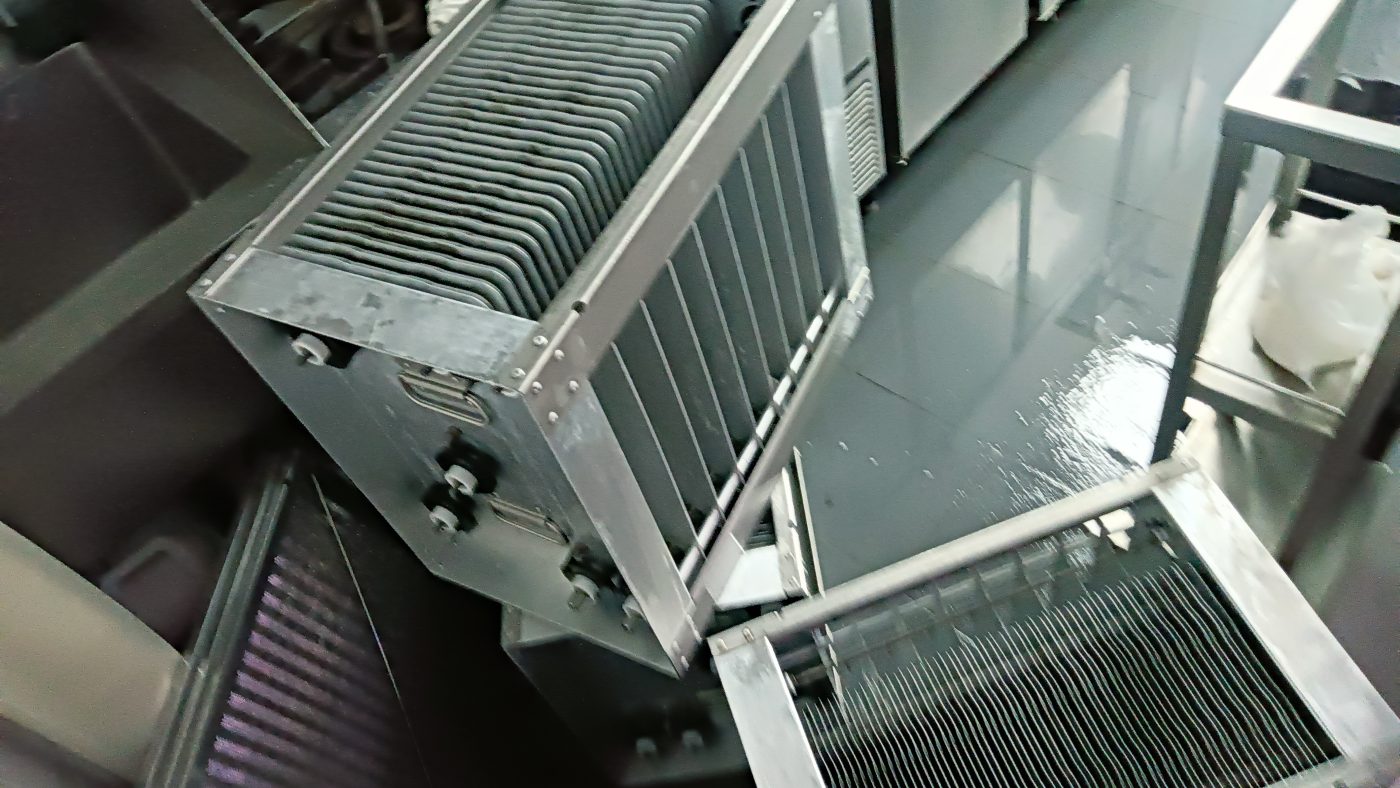
- Clean-up of the agent from the appliances, the hood canopy, the filters and the plenum behind them. The filters come out. The photograph at the top is from our project portfolio: filter units lifted out of an exhaust system and set down on a wet kitchen floor during one of our jobs. It was not a discharge clean-up, but those are the parts that come out and get cleaned after one.
- Nozzles and blow-off caps. The caps come off when the agent goes through. Each nozzle is checked for blockage and for correct aim over its appliance, and the caps are refitted.
- Fusible links and detection. A link that has released does not reset itself. It is replaced so that the system triggers at the right temperature next time.
- Cylinder and agent. The system is recharged and the cylinder pressure checked, so there is charge behind the nozzles again.
- Release path. The mechanical release is tested and the system re-armed.
- Gas and electrical shut-off interlock. Verified and reset, so a future discharge cuts fuel and power as intended. This is the step that should give the line its gas back, done by whoever serviced the system, not by a kitchen team with a spanner.
- Manual pull station and signage checked, so staff can still trigger it by hand.
- A dated record of the work, for your fire-safety file.
If the system was installed years ago by a company that no longer answers the phone, that does not leave you stuck. We service suppression systems we did not install, inspect them, and tell you plainly what condition they are in.
The call nobody plans for
The slowest part of a discharge is rarely the work. It is the hour spent finding out who services the system, where the last service record is, and whether the exhaust cleaner and the suppression contractor can both get to the kitchen before tomorrow's lunch. Ten minutes today saves most of that:
- Know who services your suppression system and how to reach them outside office hours.
- Know the brand and roughly how old it is, and where the last service record is kept. It should sit in your fire-safety file next to your exhaust cleaning records.
- Know the length of the cooking line and what is on it. A system is designed around the appliances under the hood, so anyone quoting to reinstate it will ask.
- Check what your lease or centre management rules say about incidents in the kitchen, so the landlord hears it from you with photographs rather than from someone else.
Split responsibility is where discharges drag on. If one contractor cleans the exhaust and another services the suppression, the kitchen often waits for one before the other can finish. The same grease that loads the duct also fouls nozzles and coats fusible links, so we cover both on one coordinated visit rather than as two separate contracts.
What it costs to reinstate
There is no flat figure, and anyone who gives you one over the phone has not seen the system. Recharging and reinstating a suppression system is a separate event with its own cost, which is worth knowing before the day it happens. What moves the number is the size of the system (the length of the cooking line and how many appliances it protects), how many detection elements and caps have to be replaced, and whether there was a real fire that means the hood, filters, plenum and duct need cleaning as well. The drivers of a suppression quotation are set out in what drives the cost of a kitchen fire suppression system. We quote a clear figure after inspecting the system.
Before the line is lit again
- The fire is confirmed out, and any instructions from SCDF have been followed.
- Agent residue has been cleaned off the appliances and food-contact surfaces, and exposed food thrown away.
- The filters, hood and plenum have been cleaned, and after a real fire the duct has been inspected and cleaned too.
- The system has been recharged, detection replaced, nozzles checked and capped, the release tested and the system re-armed.
- The gas and electrical shut-off has been reset by the technician, not bypassed.
- You have a dated record of the work, filed with your photographs.
- If the cause was a new or moved appliance, the coverage still matches where the hazards now stand. Suppression is positioned around the appliances present when it was commissioned; see when a menu change outgrows your kitchen exhaust.
Making the next one less likely
A suppression system is the layer you hope never activates. The layers underneath it decide how often it has to. A clean hood and duct give a flare less to spread into. Detection that is serviced on schedule releases at the temperature it was rated for rather than late, under a coat of grease. Staff who know where the pull station is, and what it does, are less likely to set it off by accident and more likely to use it when they should. How cleaning, suppression and fire-rated ductwork work together is in clean, suppress, contain, and installation is covered on our kitchen hood fire suppression systems page.
The short version
- A system that has discharged is empty. The kitchen has no suppression until it is recharged and re-armed.
- Make sure the fire is out. Do not restore gas or power to the line yourself.
- Photograph everything before the clean-up, and throw away exposed food.
- After a real fire, the hood, plenum and duct need inspecting and cleaning, not just the appliances.
- After a false discharge, find the cause before resetting, or it will happen again.
- Reinstatement covers agent clean-up, caps and nozzles, detection, recharge, release test, the gas and electrical interlock, the pull station and a dated record.
- Know today who services your system, how old it is and where its records are.
If your suppression system has gone off, WhatsApp us on 8989 2833 with what happened, whether there was a fire, and the brand and age of the system if you know it. We are on 24/7 standby, we service systems whoever installed them, and scope and pricing follow an inspection.
Questions
Common questions
Can we keep cooking after the kitchen fire suppression system goes off?
No. A system that has discharged is empty, and the discharge shuts off gas and electrical supply to the cooking line. Until the agent is cleaned up, the system is recharged and re-armed and the shut-off interlock is reset by a technician, the line would be cooking with no suppression at all.
What should we do in the first hour after a suppression discharge?
Make sure the fire is out and call SCDF on 995 if there is any doubt. Do not turn the gas or power back on to the line. Photograph the appliances, hood, filters and pull station before anyone cleans, throw away food that was exposed, and write down the time, what was cooking and who was there.
The system went off but there was no fire. Does it still need servicing?
Yes. The cylinder is empty, a detection element that has fired is spent, and the agent has gone through the nozzles into the plenum. Find out why it went off, such as a knocked pull station or a flare under a detection link, before the system is reset.
What does reinstating a discharged suppression system involve?
Cleaning the agent from the appliances, hood, filters and plenum; checking every nozzle and refitting blow-off caps; replacing fusible links; recharging and checking cylinder pressure; testing the release and re-arming; verifying and resetting the gas and electrical shut-off; checking the manual pull station; and recording the work for your fire-safety file.
Does the exhaust duct need cleaning after a kitchen fire?
After a real fire, the hood, filters, plenum and at least the start of the duct have been exposed to flame and heat as well as the agent, so they should be inspected and cleaned before cooking resumes. Grease deposits in the duct can burn on their own out of sight.
How much does it cost to recharge a fire suppression system?
There is no flat price. Recharging and reinstating is a separate event with its own cost, driven by the size of the system, how many detection elements and caps need replacing, and whether a real fire means the hood and duct need cleaning too. BC Air quotes a clear figure after inspecting the system.