
16 Jul 2026 · Cleaning & Compliance
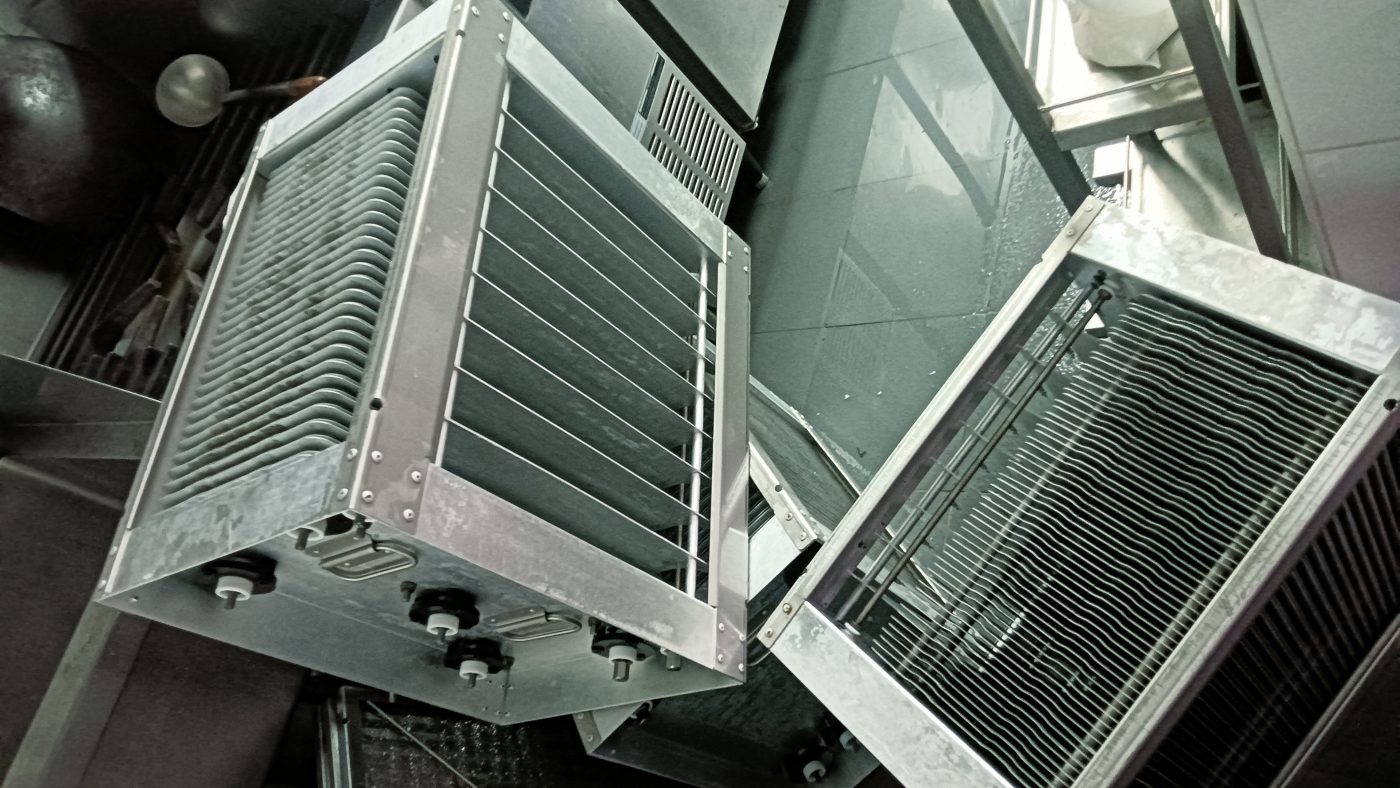
In Singapore, most commercial kitchen exhaust systems need cleaning every one to three months, depending on cooking volume and grease load. Heavy fryers and wok ranges can demand monthly cleans; lighter operations may stretch to quarterly. We assess each kitchen individually — because a blanket schedule often means either a fire risk or wasted money.
The honest answer is: it depends on what you're cooking and how hard you're pushing your kitchen. We've walked into ducting that looked clean on the outside but had a centimetre of congealed grease on the inside after just six weeks of wok cooking. We've also seen lightly used hotel banquet kitchens that were genuinely fine at three months. There is no single magic number — but there are clear principles, and getting it wrong is both a fire risk and a compliance issue under Singapore regulations.
Grease is fuel. When hot exhaust air carries grease-laden vapour up through your canopy, ductwork, fans and discharge point, some of that grease condenses and sticks to every surface it touches. Over time, that layer thickens. At a certain point, it becomes genuinely dangerous — a single spark or a sustained flame from a flare-up below can ignite the grease inside the duct and turn a contained cooking fire into a full duct fire that travels across your ceiling void and into adjacent tenancies.
Beyond fire risk, grease build-up also:
We always tell clients: the cost of a proper clean is a fraction of the cost of a duct fire, a pest infestation, or an NEA enforcement action. We've seen all three outcomes from neglected systems.
NEA requires commercial kitchens to maintain their exhaust systems — including hoods, filters, ductwork and discharge points — in a clean and serviceable condition. In practice, inspectors look for evidence of regular, documented cleaning. While NEA does not publish a single universal interval that applies to every kitchen, the general industry benchmark that inspectors work against is at least once every three months for moderate operations, with higher-frequency kitchens expected to clean more often.
SCDF's fire safety requirements add a further layer: grease accumulation in ducting is treated as a fire hazard, and building owners and tenants share responsibility for managing it. We always confirm the exact requirement with the relevant authority before quoting, because the enforcement position can vary by building type, occupancy class and tenancy agreement. What we can say from our own experience on-site is that quarterly cleaning is a floor, not a ceiling — for many Singapore kitchens, it is not nearly enough.
When a client comes to us — whether they're setting up a new kitchen or inheriting an existing system — we carry out a grease load assessment before we commit to a maintenance schedule. The factors we look at include:
Wok cooking, deep frying and charcoal grilling produce far more grease-laden vapour than steaming, boiling or light sauté work. A zi char stall running six wok burners at full heat all day is producing grease load at perhaps five to ten times the rate of a café kitchen doing sandwiches and eggs. We tailor cleaning intervals accordingly.
A kitchen open from 10am to 11pm, seven days a week, is pushing grease through that system continuously. Even with moderate cooking methods, the sheer volume of hours accumulates. We've found that daily operating hours are often a more reliable predictor of grease build-up than the menu alone.
A well-designed exhaust system with the correct face velocity at the canopy, properly sized ductwork and an efficient fan will capture grease more effectively and distribute it more evenly — making cleans more straightforward. An undersized or poorly installed system can concentrate grease in unexpected spots, like duct bends and transitions, where it builds up fast and is hard to reach. We flag these design issues when we see them.
Baffle filters, when cleaned regularly, intercept a meaningful portion of grease before it enters the ductwork. If your filters are being cleaned weekly (as they should be in a busy kitchen), your duct cleaning interval can be extended modestly. If filters are clogged or missing, grease passes straight through and the ductwork suffers accordingly.
A genuine clean is not a wipe-down of the visible hood surfaces. When we carry out a full exhaust system clean, we cover:
We photograph the system before and after every clean and provide a signed service record — which is exactly what you need if NEA or SCDF comes asking for documentation.
We advise all our maintenance clients to watch for these warning signs between scheduled visits:
If any of these appear, call us rather than waiting for the next scheduled date. Our 24/7 standby service exists precisely for situations like this — grease problems do not keep office hours.
For most busy kitchens — especially those doing wok cooking, deep frying or running long operating hours — quarterly is often not sufficient. In our experience, monthly or bi-monthly cleaning is more appropriate for high-volume operations. We've opened ducts at the three-month mark in active wok kitchens and found grease accumulation that we'd consider borderline unsafe. We assess each kitchen individually and recommend an interval that reflects the actual grease load, not just a standard default.
This depends on your tenancy agreement, but in practice the operating tenant is almost always responsible for maintaining the exhaust system serving their kitchen. The building owner may have obligations for shared riser ducts or rooftop discharge points. We've helped clients on both sides of this negotiation — when a client calls us to assess a system, we can clearly identify which sections fall under which party's responsibility and put that in writing.
Cleaning your filters is important and should be done weekly in a busy kitchen — but it does not replace a duct clean. Filters intercept some grease, but vapourised grease passes straight through and condenses on the internal duct walls regardless. The ductwork, fan housing and discharge point all need periodic professional attention. Skipping the duct clean while maintaining filters gives a false sense of compliance and security.
Yes. Every clean we carry out is documented with before-and-after photographs, a description of work done, grease depth observed, and a signed service record. We keep records on our end as well. This documentation is what you need to demonstrate compliance if NEA inspects your premises or if you need to show a building owner that maintenance is being carried out.
Absolutely, and we'd rather you call us now than after an incident. We've taken on kitchens that hadn't had a proper clean in well over a year — heavy accumulation, compromised airflow, fans struggling. We carry out an initial deep clean, assess the condition of the ductwork and components, flag any fire risk areas, and then set a realistic going-forward maintenance schedule. If components are damaged or the system needs upgrading, we handle that in-house as well, including fabrication and installation.
If you're not certain when your exhaust system was last properly cleaned — or you're setting up a new kitchen and want to start with a sound maintenance plan — get in touch with us for a site assessment and quotation. We're available around the clock, seven days a week, because we know kitchens don't stop when the working day does.
See also: coffee shop and hawker stall exhaust - what is different, and servicing the exhaust in a kitchen that never closes.
A production kitchen loads its ductwork far faster than an outlet, so an interval carried across quietly becomes inadequate: central kitchen and commissary ventilation.
The interval is not fixed by the calendar alone — it moves with what the kitchen team does between visits. See what your kitchen team does daily, and why grease kept on the filter is grease that never reaches the duct.
Also worth reading: behind the baffle filters - the part of the hood nobody looks at.
Related: a busy season can shorten the interval: timing a kitchen exhaust clean before the festive rush.
We design, clean, repair and maintain commercial kitchen exhaust systems across Singapore — on 24/7 standby.