
22 Sep 2026 · Maintenance
Before reopening a commercial kitchen after a long closure, check the exhaust in five steps: have the hood, filters, duct and fan cleaned if they were not cleaned before closing; run the exhaust and make-up air for a day with nothing cooking and listen for new noises or trips; put every baffle filter back, seated and the right way round; check the fire suppression nozzles, caps, links, cylinder, gas and electrical interlock and service date before any flame; then do a short deliberate cook on the heaviest appliances before the first full service.
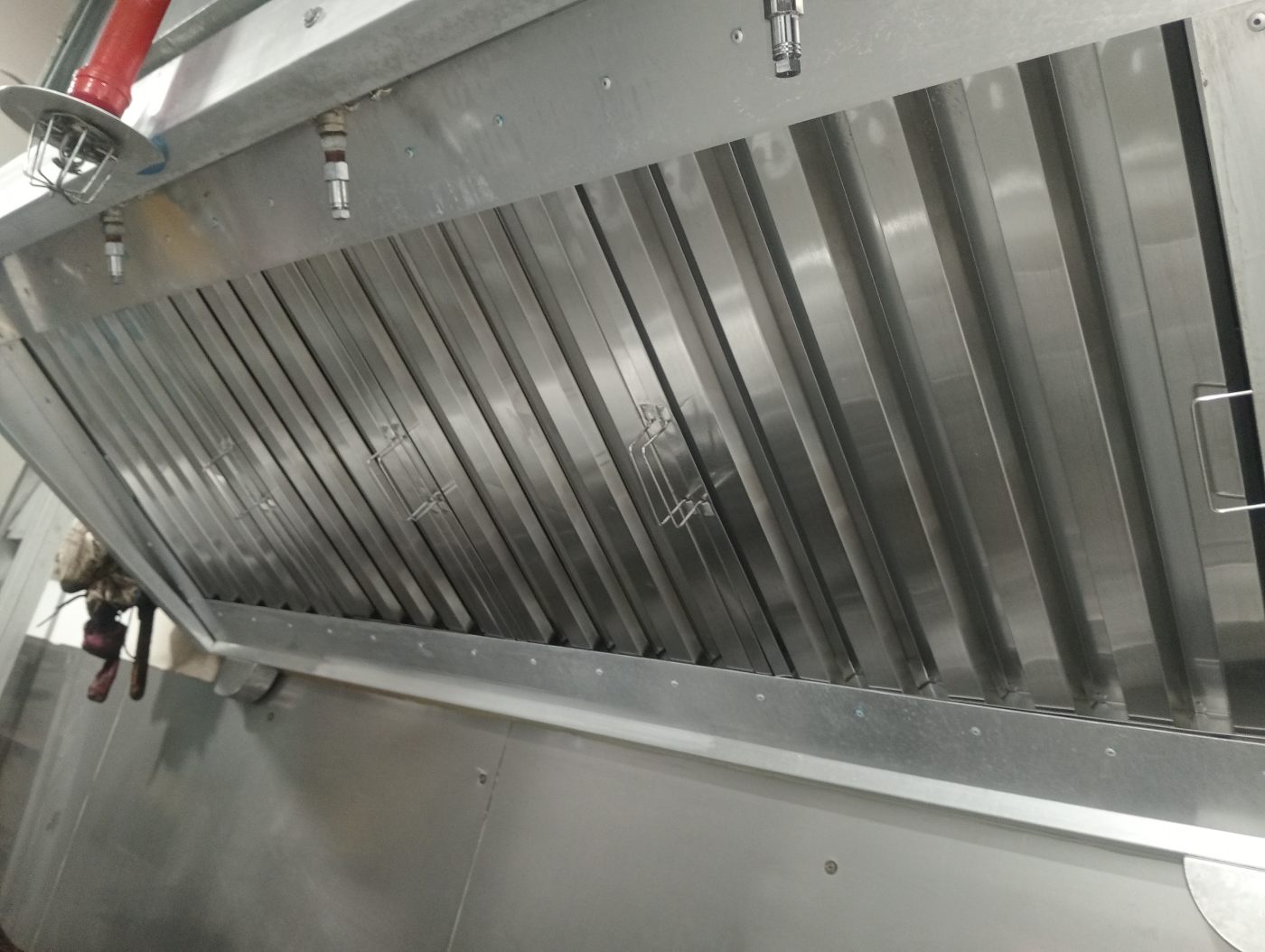
Pictured above: a clean hood from our project archive (Stirling Steaks, Capitol), baffle filters seated edge to edge, with the fire suppression nozzles and a sprinkler head on the canopy above them. That is what you want to see before the first burner is lit after a closure: every filter in place, nothing hanging loose, every nozzle where it was commissioned.
A kitchen that has been shut for weeks does not reopen the way it closed. The renovation finished late, the unit sat empty between operators, the outlet went dark for the festive break, or the owner simply paused trading for a month. Then the date is fixed, the staff are rostered, the food order is in, and the exhaust is the one system nobody thinks about until the first busy service fills the kitchen with smoke or the fan does not start at all.
The exhaust is not like a fridge that you plug back in and walk away from. It has a motor and belts that have not turned, a duct that has been sitting with whatever grease was in it, a roof fan that has been out in the rain, and on most cooking lines a fire suppression system that may have been knocked, isolated or simply left unserviced while the doors were shut. Here is what to check, in the order that saves you money, before you cook again.
Nothing in an exhaust system improves by sitting still. The common ways a stopped system lets you down:
None of this is exotic. It is simply what happens to a mechanical system that nobody has looked at for a while, in a building where other people were working.
The first question is not "does the fan run" but "when was the system last cleaned, and did anyone clean it before the doors closed". If the answer is no, or nobody knows, book the clean before reopening, not in the first week of trading.
The reasoning is simple. A duct carrying old grease is a fire risk the moment the first wok or fryer starts, and a kitchen in its opening weeks is the kitchen most likely to be pushing the line hard while staff are still finding their feet. Most commercial kitchens need cleaning every one to three months, with heavy wok, grill and deep-frying lines often needing monthly attention. If a closure has pushed you past that interval, you are already overdue on day one.
A closure also gives you something you rarely get in a trading kitchen: an empty space and time. That is the easiest possible moment to have the hood, filters, accessible duct and fan cleaned properly, with nobody waiting to cook. Our servicing checklist sets out the ten items a proper service covers, from the hood interior and the baffle filters to opening the fan and degreasing the housing and impeller blades.
Whether or not the system was cleaned, the mechanical side needs a look before the kitchen depends on it. On our servicing checklist, fan mechanicals and the motor are separate lines for a reason: bearings, belts, vibration and balance are how small wear gets caught before it becomes a mid-service breakdown, and motor condition and connections are the most common cause of a kitchen-down emergency.
What that means in practice for a reopening:
If a belt, bearing or motor does need replacing, it is much better to find out with a week to go than with a full dining room. We stock motors, fans and fan parts in-house, which is what makes a same-visit repair possible, but it is still a visit you would rather have before opening day than during it.
This is the step that gets rushed, and it is the one that matters most to the first service.
If there is a fire suppression system over the cooking line, treat it as the one item that must be right before anyone lights a burner. A suppression system is only ever judged in the seconds it has to work, and a closure is exactly the period when it can be disturbed without anyone noticing.
The points a proper suppression service covers are the ones to think about after a closure:
If the cooking line itself changed during the closure, with appliances added, swapped or moved, the suppression coverage needs reviewing against the new line, not just re-checked against the old one. Adding cooking equipment to an existing kitchen hood explains why. Our fire suppression maintenance page sets out what a service visit includes, and we service systems we did not install.
Once the system is clean, running and put back together, do not make the first real test a full dinner service. Run a short cook on the heaviest appliances, the wok range, the fryer or the grill, with the exhaust at its normal setting, and watch the hood.
A little dust smell on the very first run after renovation can happen. Smoke escaping the hood, a smell that keeps building, or a kitchen that never clears are not first-day quirks. The exhaust is running but the kitchen is still smoky works through what to check when the fan runs but capture does not.
A reopening is also the moment your records reset in the eyes of anyone who asks. If the last clean was before the closure, the next one is due by the clock, not by the reopening date. Get a dated service report with before-and-after photographs for any clean done before reopening, and keep it with the suppression service record. That is the evidence you show NEA, SCDF, your landlord or your insurer, and after a closure it is the only thing that shows the system was looked at rather than simply switched back on.
If the unit has changed hands during the closure, you are in a different situation: you are inheriting someone else's system and history. Taking over an F&B unit covers what to check before you sign.
Reopening soon? WhatsApp BC Air on 8989 2833 with your location, how long you have been closed and your reopening date, and we will tell you what needs doing before the first service. What a clean covers is on the kitchen exhaust cleaning page, mechanical and motor work on the repair page, and scheduled servicing on the maintenance page. Scope and pricing follow an inspection.
Related reading: kitchen exhaust cleaning night: what to prepare and check · kitchen exhaust after heavy rain · commercial kitchen ventilation troubleshooting
We design, clean, repair and maintain commercial kitchen exhaust systems across Singapore — on 24/7 standby.