
17 Sep 2026 · Repair & Equipment
Rain gets into a commercial kitchen exhaust at the discharge, at outdoor duct joints and fan connections, or through the seal where the duct passes through the roof or wall. Brown, greasy water dripping from the hood after rain means water came down the inside of the duct; clean water staining a ceiling beside the duct means it came down the outside, through the penetration. A fan that trips in heavy rain and runs again once dry usually has water reaching its isolator, cable entry or motor terminal box: reset it once at most, do not open wet electrics, and have the seals and motor checked before relying on it.
A commercial kitchen is sealed against the weather everywhere except one place: the exhaust. The duct runs from the hood straight out through a roof, a facade or a riser, and at the far end it is open to the sky. The fan that pulls the air is often out there too, on a roof or a bracket on an external wall, next to its isolator switch. So when a heavy storm comes through, the kitchen exhaust is the part of the kitchen that meets it first.
Rain usually shows up in one of two ways, often the morning after a storm: water where there should not be any, dripping from the hood or staining a ceiling tile, or a fan that has tripped and will not stay on. Both are worth understanding before anyone starts replacing parts, because the colour of the water and the way the fan fails tell you most of what you need to know.
The general order for any ventilation fault is in commercial kitchen ventilation troubleshooting. What follows is what is different when the weather is the thing that changed.
While the fan runs, air is leaving the discharge fast. Once the kitchen closes and the fan is switched off, the duct is simply a pipe open to the sky, and a Singapore downpour at night has hours to find its way in. The usual routes are:
Where the water appears, and what it looks like, points to the route.
Brown, greasy water dripping from the hood, the filters or the grease channel after rain. Rain came down the inside of the duct, picking up grease on the way. The entry point is somewhere upstream: the discharge, a roof joint or the fan connection. It is also a sign there is grease in the duct for the water to carry, which is worth knowing on its own.
Clean water, or a tide-mark stain on a ceiling tile beside the duct rather than under the hood. Water came down the outside of the duct, most likely through the seal where it passes through the roof or wall. That is a waterproofing problem at the penetration. Depending on your lease, fixing it may involve your landlord or building management as well as whoever maintains the exhaust, so find out who owns that seal before the next storm.
Water or a brown stain at one point along the duct run, well away from the hood. Water is collecting at a low point in the duct and escaping through a joint there. A horizontal run should have a slight fall back to a drain point; a run that dips around a beam holds whatever gets in. Why that happens is explained in what your kitchen exhaust duct is made of, and why it leaks grease.
Dripping that follows cooking, not the weather. If the drip is worst at the end of a busy service and the weather has been dry, it is more likely condensate and liquefied grease than rain. The test is simple: note the date and time every time it happens, and compare against when it rained. Two weeks of notes usually settle the argument.
An outdoor fan has electrical connections exposed to the weather: the motor's terminal box, the cable entry and the isolator beside the fan. Each is sealed against water, and each seal ages in the sun. When one fails, water reaches a live connection and the protection trips, which is exactly what it is there to do.
The pattern is what gives it away. A fan that trips during or just after heavy rain, and then runs normally once things have dried out, has not fixed itself. The water is still getting in each time it rains, and every wet trip leaves moisture and corrosion behind. It tends to get worse with each storm, until the day it does not come back on at all, usually in the middle of service.
So even when the fan is running again the next morning, report it. A technician should look at the isolator, the cable entry and the motor terminal box for water and corrosion, and check the motor and its connections are dry and sound before it is relied on. If the isolator enclosure or the seal is the problem, that is often a small repair. Left alone, it can become a motor.
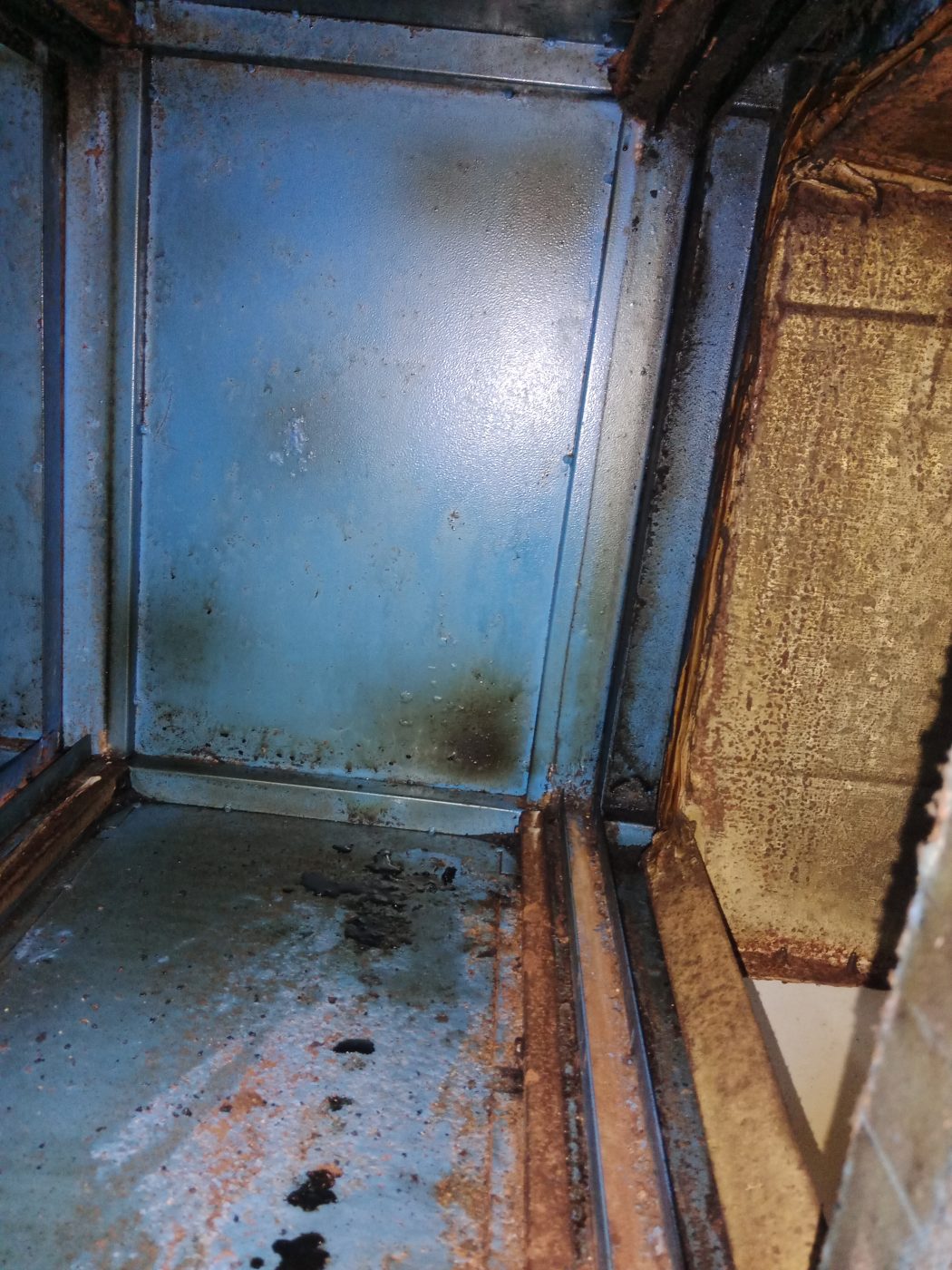
The photograph at the top is from our project portfolio: the inside of an exhaust duct section on one of our jobs, with rust and dark staining along the seams and the floor of the duct. Kitchen ductwork carries hot, moist air every day, so it is built to cope with some moisture. What it copes with badly is water that sits: at a seam, at a low point, against a layer of grease that holds it there.
That is where corrosion starts, and a corroded seam eventually leaks, first water and then grease. A duct that has been taking in rain for a few years can end up needing sections replaced, not just a clean. It is far cheaper to stop the water at the discharge or the roof joint than to replace the duct it has been sitting in.
Singapore gets heavy thunderstorms all year, but the inter-monsoon months, which include October and November, are known for heavy afternoon and evening storms, and the Northeast Monsoon that follows brings spells of prolonged heavy rain from December. If your exhaust has never been looked at with the weather in mind, the next few weeks are a good time. You do not need to climb anything to start:
A scheduled maintenance program is the natural place for these checks. Mechanical checks on motors, bearings, belts and control panels are already part of it, and a documented report with photographs means a weathered seal is caught while it is still a small job.
That lets the first visit arrive with the right parts. We repair and replace motors, MV fans and fan parts, control panels and starters, and ducting and hoods, whoever installed the system, and because we keep motors, fans and parts in stock, a common failure is often fixed on the first visit. If the fan has simply stopped and there has been no rain, start with kitchen exhaust fan not working instead.
For a kitchen exhaust repair after a storm, or to have the discharge, fan and roof connections checked before the wet months, WhatsApp us on 8989 2833 with what happened, where your fan sits and whether the kitchen is still cooking. We are on 24/7 standby for breakdowns. Scope and pricing follow an inspection.
We design, clean, repair and maintain commercial kitchen exhaust systems across Singapore — on 24/7 standby.