
06 Oct 2026 · Maintenance
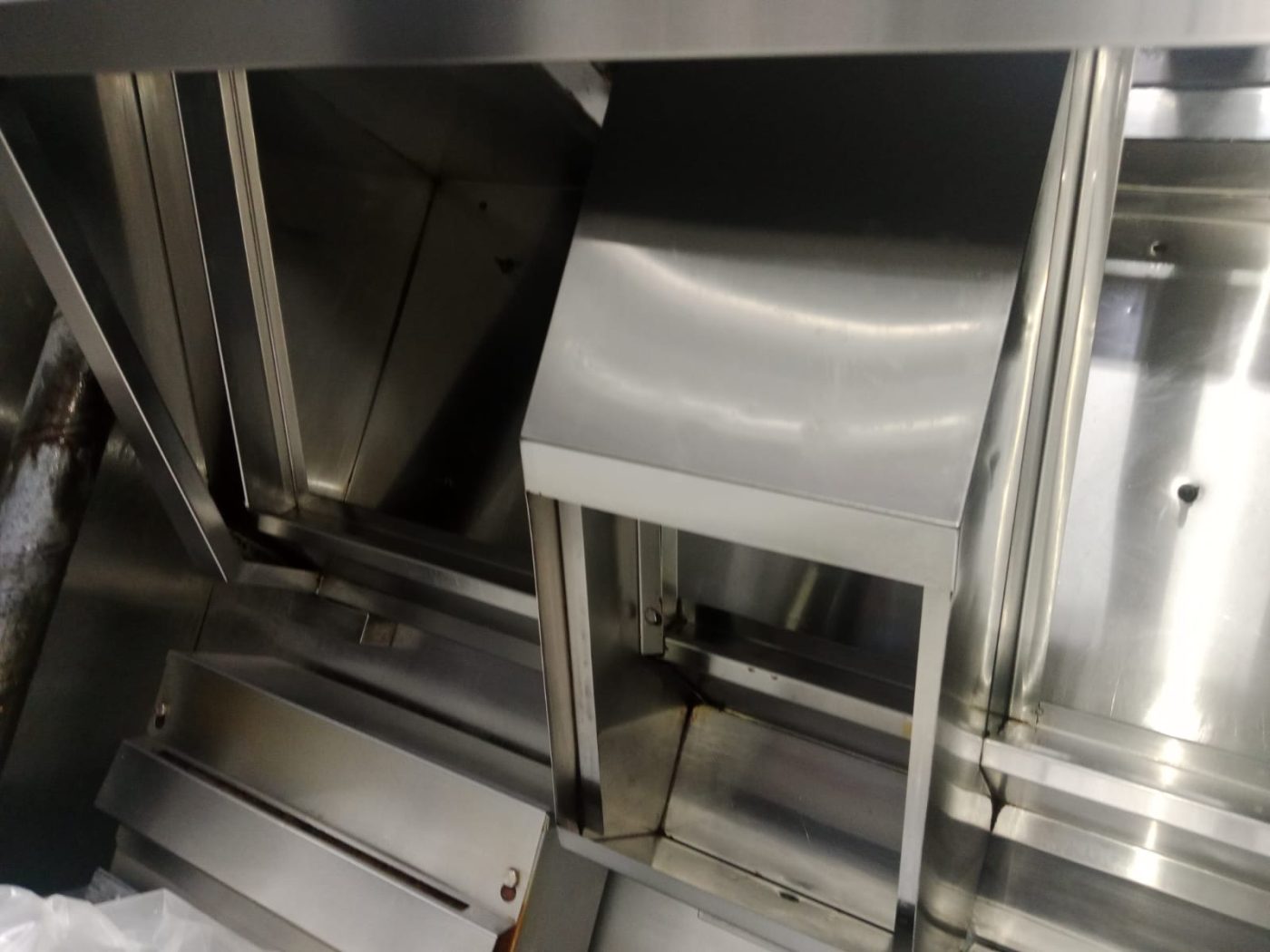
Before choosing between patching and replacing a damaged commercial kitchen hood, work out whether the metal itself is damaged or only stained, whether grease is escaping at the seams, and what caused it. A patch suits local damage on sound metal; a new section or hood wins when the corrosion is in the metal, the same seam keeps failing or the cooking line has changed. Ask for both options in writing with the cost before the work.
The hood has been in for years and it is starting to show. A seam is weeping brown grease onto the cooking line, a corner has gone rough and rust-coloured, a panel has a dent from a trolley, or the filter rail no longer sits true. Somebody says “just patch it”, somebody else says the whole canopy needs changing, and you have a kitchen to run on Friday night. This post is about how to tell which one you are looking at, and what to ask before you approve either.
We do not publish a price for hood repair or replacement. A hood is built to the size of the cooking line, so a figure given without seeing it would be a guess. What we can give you is the way to read the damage, and the questions that make two quotes comparable.
“The hood is spoilt” covers very different problems. They sort into four groups, and each group points to a different decision:
Stand under the hood with the cooking off and the filters out. Take a photograph of each problem with something in the frame for scale, and one wide shot of the whole canopy. Those photos are the most useful thing you can send anyone who is going to quote.
A patch makes sense when the damage is local and the metal around it is sound:
On our repair and replacement page we list ducting and hoods among the things we repair: patching, sections, and fabricated replacements where needed. The phrase that matters is “where needed”. A patch is the right answer when it fixes the cause. It is the wrong answer when it covers a symptom, such as sealing the outside of a seam that is leaking because the joint behind it has failed.
Replacement starts to win when repairing would only buy a little time:
We fabricate hoods, ductwork, control panels and fans in our own workshop, so a replacement section can be made to fit what is already there rather than waiting on a stock item from someone else. That is a statement about how we work, not a promise about timing: how long a given repair takes depends on the hood and on access to it, and we would rather tell you that after seeing it.
In our guide to choosing a commercial kitchen exhaust hood we say stainless steel is the standard for good reason: it survives degreasing chemicals and can be cleaned back to bare metal repeatedly. We also say the details that matter over a hood's life are continuous welded seams rather than riveted joints that trap grease, a properly formed grease channel with an accessible collection point, and filters that lift out without tools. Those same details decide how a hood ages. A hood that is damaged at a seam or channel is a hood where the grease path has been changed.
So when you look at damage, look at the grease path before the cosmetics. Where does the grease go after it hits the filters? Does it reach the channel and the collection cup, or is it finding another way out? Our piece on what is behind the baffle filters shows what to look for once the filters are out.
A fair comparison fits on half a page. Ask for it in writing, by message if that is quicker:
If the person quoting cannot say why one beats the other, that is worth knowing before you pay for either.
Hoods are rarely bare metal. Suppression nozzles and their pipework often run along the front, and there may be lighting, sensors or bracketry fixed to the canopy. Before any cutting or welding, tell the contractor what is attached and who services each system, and agree who will disconnect and reconnect them. If your suppression system is serviced by another company, ask for their involvement in writing rather than assuming it will be handled. Hood work that disturbs a suppression line and is never rechecked is the kind of thing that gets found at the worst moment.
Hoods do not leak and corrode for no reason. A hood that is cleaned late, over a heavy-grease cooking line, will have grease sitting against its seams for months. Damp from condensation or washing water that cannot drain can corrode joints faster. A hood that has been dented has often been knocked by a trolley, a ladder or a mop bucket in the same place for years. When you get a quote, ask what caused the damage and whether anything will be done to stop it happening again. A regular hood, duct and fan clean also gives you a fixed night each cycle on which the hood is opened up and looked at, so an early fault is caught before it becomes a leak.
If you are not sure whether the duct above the hood is part of the same problem, our guide on what the kitchen exhaust duct is made of and why it leaks covers the joints higher up, and finding the failing link before anyone replaces a part helps you separate a hood fault from a fan or airflow fault.
We repair and replace exhaust equipment regardless of who originally installed it, on a 24/7 standby line, and for a larger rework the design and build page explains how we handle hood, duct and fan as one job.
Not sure whether to patch or replace? WhatsApp BC Air on 8989 2833 with photos of the damage, where the outlet is and roughly how old the hood is.
Related reading: repair or replace the kitchen exhaust fan · baffle vs mesh hood filters · access panels in a kitchen exhaust duct
We design, clean, repair and maintain commercial kitchen exhaust systems across Singapore — on 24/7 standby.