
01 Jul 2026 · Design & Build
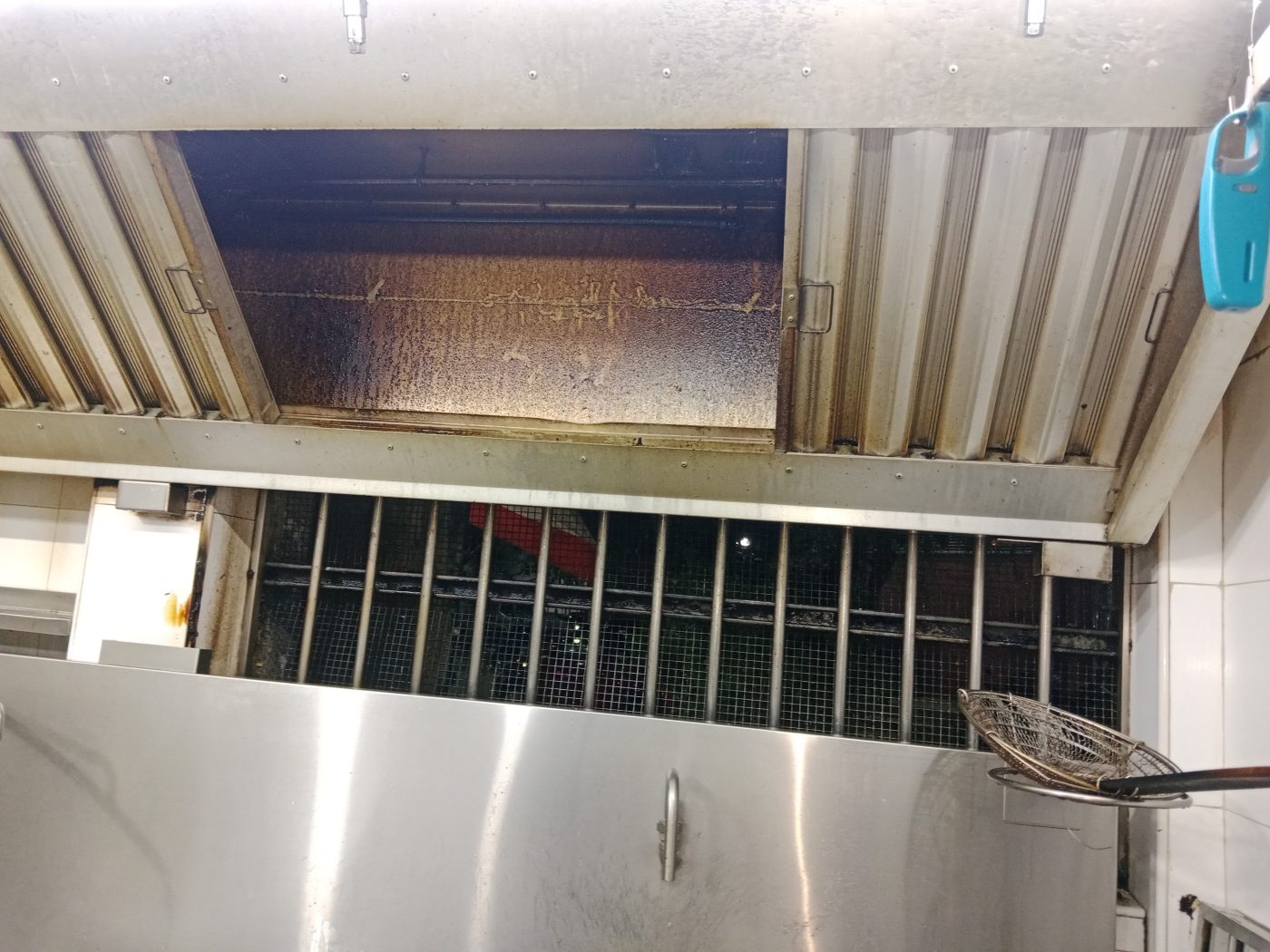
We size a kitchen exhaust hood by calculating the cooking line's heat and grease load, setting the correct overhang on all open sides, then working backwards from the required face velocity to determine duct size and fan capacity — all in line with NEA and SCDF requirements.
When a client asks us to design a kitchen exhaust hood, the first thing we tell them is this: hood sizing is not guesswork, and it is definitely not "bigger is always better." Get it wrong in either direction and you end up with a kitchen that is either smoky and non-compliant, or one that is freezing cold, noisy, and burning energy it does not need to. We size every hood based on the actual cooking equipment underneath it, the layout of the space, and the ventilation requirements set by the relevant authorities here in Singapore.
Before we put a single number on paper, we need to understand what is happening at the cooking line. The key inputs we gather are:
The core calculation centres on face velocity — the speed at which air enters the hood opening — and the capture volume needed to contain the thermal plume rising off the cooking equipment.
We work from two directions simultaneously. First, we establish the minimum exhaust volume (in cubic metres per hour) required to contain the plume based on cooking type and equipment heat output. Second, we check that the resulting face velocity across the hood opening falls within an acceptable range — high enough to capture grease and vapour, but not so high that it creates turbulence, drags conditioned air out of the kitchen wastefully, or makes a noise nuisance for kitchen staff.
For most commercial wok lines in Singapore, the face velocities and exhaust rates we work to are meaningfully higher than those used in, say, a European-style kitchen, because the cooking style generates intense, rapid bursts of heat and smoke. We have seen under-sized imported hood specifications fail on local cooking conditions more than once.
Overhang is the distance the hood extends beyond the edge of the cooking equipment on each open side. This is one of the most commonly under-specified dimensions we encounter when we are called in to correct someone else's installation.
A general rule of thumb we apply is a minimum overhang on all unobstructed sides, with the exact figure depending on the mounting height and cooking type. Wall-canopy hoods need overhang on three sides; island canopy hoods need it on all four. When a hood is installed flush with the cooking equipment edge — which we see more often than we should — grease-laden air rolls out from the front and sides rather than being captured. That means grease on walls, smells in the dining room, and a hood that will fail any NEA or SCDF inspection.
The hood and the duct are one system, not two separate items. Once we have the exhaust volume, we size the ductwork to keep air velocity within a range that prevents grease from depositing on duct walls at low spots, while also avoiding excessive noise and pressure loss at higher speeds. We fabricate our own ductwork in-house, which means we are not constrained by off-the-shelf sizes that may not suit the space or the airflow requirement.
The fan — one of our own MV fans or a specified unit from our stocked range — is then selected to overcome the total system resistance: the hood pressure drop, the duct length and bends, the grease filters, any carbon banks or germicidal UV systems fitted, and the discharge point. We do not select the fan in isolation; we model the whole system.
In Singapore, commercial kitchen exhaust systems must satisfy requirements from NEA (environmental and odour control), SCDF (fire safety, particularly where grease ducts pass through fire-rated compartments), and BCA (building envelope and structural penetrations). We always confirm the exact requirement with the relevant authority before quoting, because the applicable standard can vary depending on the building type, occupancy and tenure.
What we can tell you is that our designs are prepared with all three agencies in mind from the first sketch. We have handled the submission and compliance process for everything from hawker centre stalls to large hotel banquet kitchens, and we know where the common sticking points are before they become your problem.
Yes, and we do this regularly. When a kitchen changes its cooking concept — switching from a noodle operation to a charcoal grill concept, for example — the original hood specification may no longer be adequate. We assess the existing installation, identify what can be retained, and design the modifications needed. On one kitchen we serviced, a simple extension of the hood overhang and an uprate of the fan motor resolved persistent smoke complaints that had been going on for over a year. It does not always require a full replacement.
Once we have done a site visit and gathered the equipment schedule, we can usually turn around a detailed sizing proposal within a few working days. For larger or more complex projects involving multiple cooking lines or compliance submissions, we will be upfront with you about the timeline from the start.
Not necessarily. We handle the full design and sizing in-house, including the airflow calculations, duct routing and fan selection. For projects that require a stamped M&E drawing for submission purposes, we work alongside the appointed consultant and provide our technical inputs directly. We will advise you at the quoting stage what level of formal submission your project requires.
Because the hood is capturing a thermal plume, not ventilating a room. The plume rises directly from the cooking surface, and its volume and temperature are determined by the equipment type and cooking intensity — not by the room's floor area. Sizing to room area rather than cooking load is one of the most common mistakes we correct when we are brought in to troubleshoot a poorly performing system.
An oversized hood exhausts more air than the cooking load demands, which means your makeup air system has to supply more conditioned air to compensate. In Singapore's climate, that translates directly into higher chiller and air-conditioning running costs. It can also cause excessive negative pressure in the kitchen if the makeup air supply has not been matched to the exhaust volume — pulling conditioned air out of the restaurant floor and creating uncomfortable draughts. Right-sizing saves energy and keeps the environment comfortable for your kitchen team.
Yes. We design, fabricate, install and commission every system ourselves — no sub-contractors involved. We also stock the components: fans, motors, control panels, variable speed drives, grease filters, carbon banks and UV systems. That means we are accountable for the whole system, and if something needs attention after handover, our 24/7 standby team is the same team that built it.
If you are planning a new kitchen, refitting an existing one, or dealing with a hood that simply is not doing its job, get in touch with us for a no-obligation site assessment and quotation. Our team is on standby around the clock — call us any time.
Related: Designing a compliant commercial kitchen ventilation system — how cooking type, capture velocity, duct sizing, makeup air and the NEA/SCDF/BCA requirements fit together.
We design, clean, repair and maintain commercial kitchen exhaust systems across Singapore — on 24/7 standby.