
24/7 Standby · Always At Your Service 💬 WhatsApp +65 8989 2833

Kitchen Smoke Keeps Setting Off the Fire Alarm: What the Exhaust Has to Do With It

08 Oct 2026 · Troubleshooting
Kitchen Smoke Keeps Setting Off the Fire Alarm: What the Exhaust Has to Do With It
When kitchen smoke repeatedly sets off a building fire alarm, the alarm is the symptom and failed capture at the hood is usually the cause. Do not cover or disable the detector. Find out whether the building alarm or the hood suppression activated, note the time, appliance and recent changes, ask building management which device triggered, then have replacement air, hood capture, grease build-up and the fan checked.

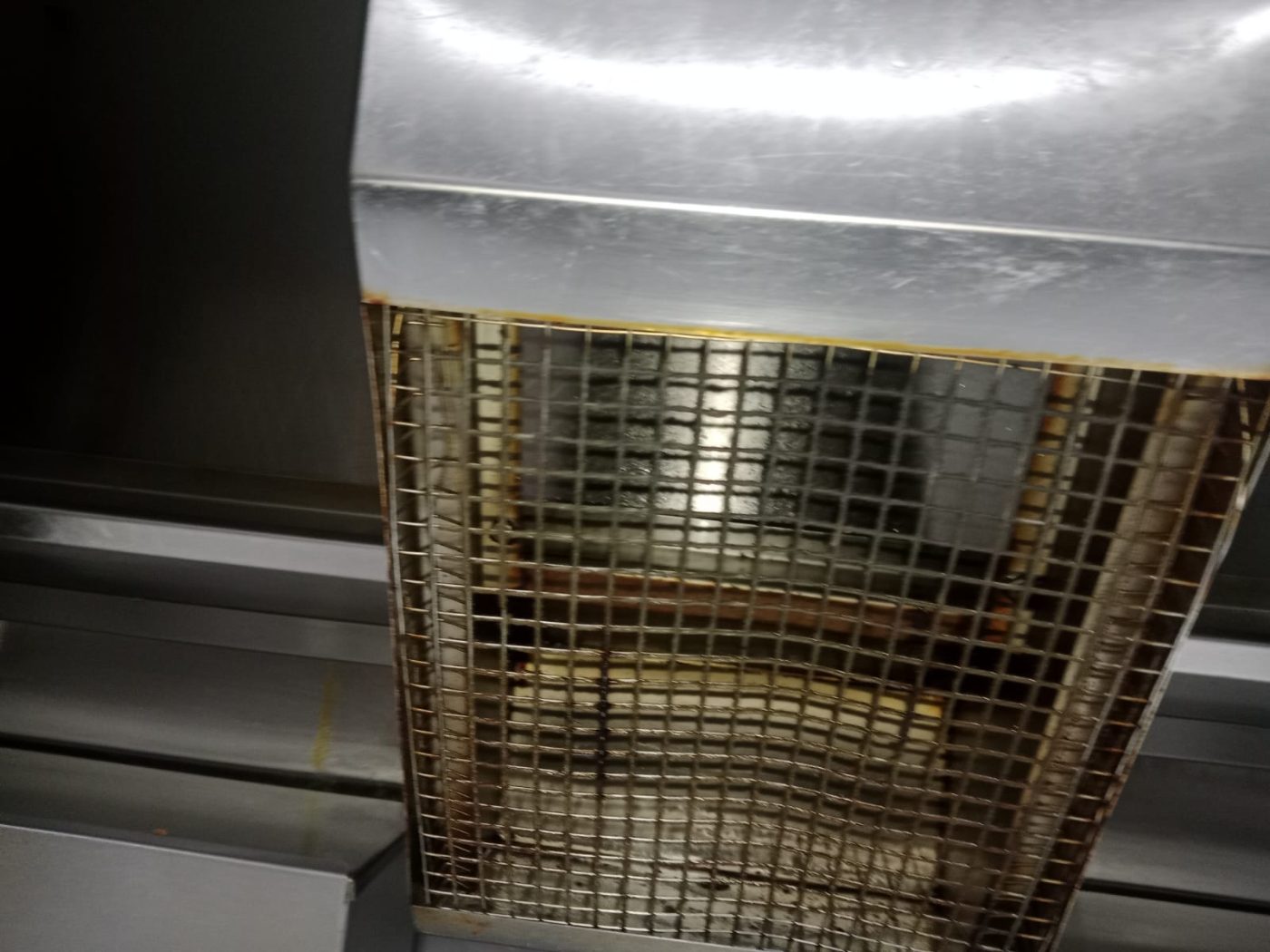
Pictured above: a mesh grease filter and the hood opening behind it on one of BC Air’s jobs, with grease staining along the edges. This is a photo from our own work, reused here because it shows the kind of build-up that stops a hood holding its plume.

It is a busy Friday service and the building fire alarm goes off. Staff stop, the dining room looks up, building management calls, and ten minutes later it turns out to be nothing: just the kitchen. A week later it happens again. The natural reaction is to blame the alarm, or the detector, or the cooks. Often the alarm did exactly what it was built to do. The question worth asking is why kitchen smoke and vapour were able to reach a detector at all, and that is very often an exhaust question.

This is a practical guide to working out whether your exhaust is the cause, what to note down so the cause can be found, and what to leave alone. We look after kitchen exhaust and hood suppression systems, not building fire alarm panels, so part of this article is deliberately about who owns what.

Two different systems, and only one is yours to fix

People say “the fire alarm” for two separate things, and mixing them up wastes a lot of time.

  • The building fire alarm. Smoke or heat detectors on the ceiling, a panel, and the building’s own response. It belongs to the landlord or building management, who have their own fire-alarm contractor. The detectors in your unit, where they sit and what type they are, are decided and maintained by them.
  • The hood’s fire suppression system. The detection, nozzles and release inside the hood and duct, which protect the cooking line. It is a separate system with a separate job, and it is what a suppression service visit checks. We cover what that visit should leave you with in kitchen hood fire suppression maintenance: what a proper service visit should leave you with, and what to do if it discharges in restaurant fire suppression system went off.

A building alarm going off does not mean the hood suppression has tripped, and the reverse is not automatically true either. Find out which one you are dealing with before anyone calls out the wrong contractor.

What not to do

Leave the detector alone. Do not cover it, bag it, tape over it or ask staff to switch it off, even “just for the service”. Those devices are part of the building’s life-safety arrangements, they are not yours to disable, and a kitchen that has covered a detector to avoid false alarms has traded an annoyance for a real risk. If the detector is in the wrong place for a working kitchen, that is a conversation with building management and their fire-alarm contractor, and it should be had openly.

The other tempting mistake is to ask for a bigger exhaust fan. In a kitchen that is already starved of replacement air, a bigger fan mostly deepens the problem. Establish why smoke is getting out first.

Why the exhaust is usually behind it

A kitchen detector does not go off because the cooking is hot. It goes off because smoke, steam or grease vapour has left the hood and travelled to the ceiling outside it. In other words, capture failed, at least for a while. The usual reasons, roughly in the order they tend to turn up:

  • The kitchen is starved of replacement air. Every cubic metre the fan removes has to come in from somewhere. When it cannot, the kitchen goes negative, the hood loses its grip and the plume rolls out at the front edge. A quick test is to open a back door at the smokiest moment and see whether it clears. The full explanation is in make-up air and air balancing, and the one-minute test is in the exhaust is running but the kitchen is still smoky.
  • The hood no longer matches the cooking line. A deeper fryer, a wok range added at the end, a prep table pushed forward, a pedestal fan aimed at a hot cook. Any of these lets the plume miss the canopy. We look at that in adding cooking equipment to an existing kitchen hood.
  • Everything in the chain is loaded with grease. Filters, the plenum behind them and the duct all narrow as grease builds, and the fan responds by moving less air. The kitchen still sounds the same. The effect shows up as smoke that used to be captured and now is not.
  • The fan is not doing what you think. A tripped starter, a drive left on a low setting, a slipping belt or a fan that has failed. Where interlocks have been bypassed the kitchen can keep cooking regardless, which is a separate worry we cover in hood, fan, gas and suppression interlocks.
  • The air goes out and comes straight back in. If the discharge sits close to a fresh-air intake or an open window, the kitchen’s own air returns to the building. See where your kitchen exhaust actually discharges.

Read the pattern before you spend anything

The timing of the alarms usually narrows the cause down faster than any inspection. Write down, for every alarm:

  • The time and the trading period. Only at the peak of service points at make-up air or total load. Only first thing in the morning at start-up points somewhere else.
  • Which appliance was running hardest. A single wok range or grill each time suggests a capture problem at that station.
  • What had just changed. New equipment, a replaced filter, a fan or drive repair, a door propped open, a new aircon unit blowing across the line. Repeat alarms often begin the week something changed.
  • Which detector triggered. Building management can usually tell you which device in their system activated, and where it is. Ask them for it, along with the date and time. A detector directly above the pass, or near the kitchen door, tells a different story from one in the dining room.
  • Whether anyone was working in the kitchen. Cleaning, chemical work and anything that makes steam, mist or dust near the ceiling should be flagged to building management before it starts, so a planned job does not become a call-out.

Keep the list. Whoever looks at the system, you or us, can match it to what the kitchen was doing instead of guessing.

What a useful check looks like

Once the pattern points at the exhaust, the check is the same boring sequence as any smoky-kitchen call: is the hood right for the cooking line, are the filters and plenum clear, is the duct clear, is the fan moving what it should, where is the replacement air coming from, and what is the pressure relationship between the kitchen and the dining room. We go through it step by step in commercial kitchen ventilation troubleshooting.

The difference with an alarm complaint is the paperwork. Building management will want to know it will not happen again, so ask whoever does the work for something you can hand over: what was found, what was changed, and the airflow and pressure readings taken afterwards. Our air balancing work is exactly that measurement, taken at the hood and between kitchen and dining. If grease has built up, a proper exhaust clean is part of the answer. If the suppression system needs a look at the same time, it makes sense to do both on one visit; the fire suppression maintenance page explains what is covered.

The short version

The alarm is the symptom, not the fault. Do not touch the detector. Find out which system actually activated, write down when and what was cooking, and ask building management which device went off. Then look at capture: replacement air first, then the hood against the cooking line, then grease and the fan. A kitchen that holds its smoke inside the hood does not need anyone to cover a detector.

If the alarm keeps going off and you want the exhaust checked, tell us the unit, how often it happens and what is running when it does. We look after the exhaust and the hood suppression, not the building alarm, and we will say so plainly if the cause turns out to sit outside our part of the system. Every kitchen is different, so there is no fixed price: we quote after seeing the system, with a clear, no-obligation quotation. WhatsApp BC Air on 8989 2833 and we are on standby 24/7.

Related reading: the exhaust is running but the kitchen is still smoky · make-up air and air balancing · hood, fan, gas and suppression interlocks

Questions

Common questions

Why does my kitchen keep setting off the building fire alarm?
Usually because smoke, steam or grease vapour is escaping the hood and reaching a ceiling detector. The common causes are not enough replacement air, a hood that no longer matches the cooking line, grease build-up in the filters, plenum and duct, a fan not moving what it should, or discharge air returning to the building. The alarm is the symptom; the capture failure is the fault.
Can I cover or switch off the smoke detector in my kitchen?
No. Detectors are part of the building's life-safety arrangements and belong to building management and their fire-alarm contractor. Covering or disabling one trades a nuisance for a real risk. If a detector is badly placed for a working kitchen, raise it openly with building management.
Is the building fire alarm the same as the hood fire suppression system?
No. The building alarm is the landlord's detectors and panel. The hood suppression is the detection, nozzles and release inside the hood and duct that protect the cooking line. One going off does not mean the other has. Find out which one activated before calling anyone out.
What should I record each time the alarm goes off?
The date, time and trading period, which appliance was running hardest, anything that changed recently (equipment, filters, fan or drive work, a door propped open), whether anyone was doing cleaning or chemical work, and which device building management says triggered. That pattern usually narrows the cause quickly.
Does BC Air work on the building fire alarm?
No. BC Air looks after the kitchen exhaust, the hood and the hood fire suppression, not the building's alarm panel or detectors. We check the exhaust side of the problem and will say plainly if the cause turns out to be outside our part of the system.
How much does it cost to have the exhaust checked for this?
There is no fixed price. Every kitchen is different, so BC Air quotes after seeing the system. Send the unit, how often the alarm goes off and what is running at the time on WhatsApp for a clear, no-obligation quotation.

Need This Sorted in Your Kitchen?

We design, clean, repair and maintain commercial kitchen exhaust systems across Singapore — on 24/7 standby.

Chat on WhatsApp