
02 Oct 2026 · Safety
A proper kitchen hood fire suppression service covers six things: nozzles and blow-off caps, fusible links and detection, cylinder pressure and agent, a discharge or functional test, the gas and electrical shut-off interlock, and the manual pull station. It should leave a dated record showing the condition found on each item, what was replaced and when the next visit is due.
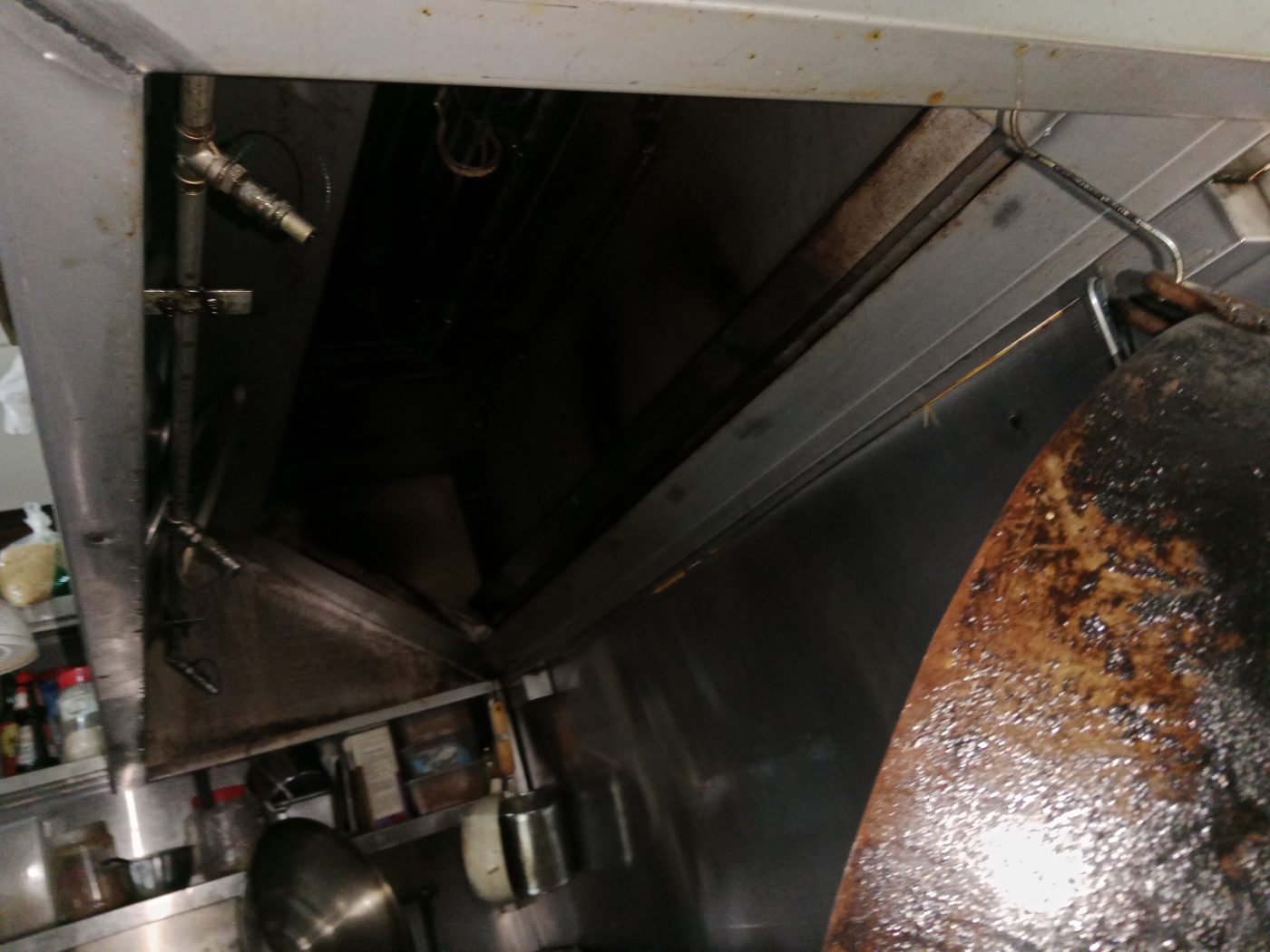
Pictured above: the inside of a hood on one of BC Air’s projects (Timbre, Yishun), with pipework and fittings running down the plenum wall beside a wok. This is a photo from our own work, reused here because it shows the part of the hood a suppression system lives in. Almost none of it is visible from the cooking line.
Ask most kitchen managers when the fire suppression system over the wok line was last serviced and you get one of two answers: “there’s a sticker somewhere” or “the landlord handles it”. Ask what the visit actually covered and the room goes quiet.
That gap is what this post is about. A hood suppression system sits idle for years and is judged in the few seconds it has to work. You cannot test it yourself, so the only evidence you can hold in advance is the record of what was checked, what was found and what was fixed on each visit. Here is what a proper visit covers, what the paper should say afterwards, and what should make you ask questions.
A suppression system fails quietly. Nozzles clog with grease. Fusible links foul. Cylinder pressure drifts. Detection drifts out of position. None of it is visible until the day it matters, which is exactly why a visit that leaves you with only a sticker leaves you guessing.
The grease is the link to everything else in the hood. The same build-up we remove during an exhaust clean also fouls suppression nozzles and coats fusible links, and a link that is greased over can fail to release at the temperature it was rated for. A suppression system is not a box on the wall that stays clean on its own. It lives in the dirtiest part of the kitchen, and it needs to be looked at as part of the hood, not apart from it.
This is the list we work through on a servicing visit. For each item there is a question worth asking whoever does your service, us or anyone else.
If your last visit did not cover all six, that is not a reason to panic. It is a reason to book one that does.
A receipt says someone came. A record says what they found. After a visit you should be able to point to paper that gives:
We document every service visit this way. Whoever you use, the test is simple: if the paper does not name the items, you hold a receipt, not a record.
The record matters because it is what you show. SCDF, your landlord, your insurer or an auditor may each ask for it, and a documented service history is the strongest evidence you have that the system has been maintained. Kept beside your exhaust-cleaning records, it covers the fire-safety picture for the whole cooking line.
One more: if there has been a flare-up or a discharge, do not wait for the next scheduled visit. Read what to do before the kitchen cooks again, and call someone to look at the system.
This is common when a kitchen changes hands. The new operator gets a system and no certificate, no drawing and no service history. We service suppression systems whoever installed them. Where the history is unknown, we inspect the system, report its condition honestly, and set a servicing schedule from there. If you are in that position, what to check about the existing kitchen exhaust before you sign covers the rest of the unit.
Because grease is the enemy of both systems, suppression servicing and exhaust cleaning belong on one coordinated visit. One team sees the whole cooking line, the nozzles and links get looked at while the hood is open, and neither job gets skipped. The fire suppression maintenance page sets out what we cover, and the kitchen exhaust cleaning page sets out the cleaning side. If a night clean is already booked, what to prepare for that night will tell you what to have ready.
There is no flat price. Servicing depends on the size of the system and your cooking line, so we quote a clear recurring rate after inspecting it. How often a system needs servicing depends on the system, the type of cooking and how hard the kitchen runs, and we set that after the inspection too, not by phone. For the install side and the years after it, see what drives the cost of a kitchen fire suppression system and the main fire suppression systems page.
A short message is enough to start:
Want a suppression service that leaves you with a proper record? WhatsApp BC Air on 8989 2833 with the details above. We are on 24/7 standby, and scope and pricing follow an inspection.
Related reading: when the suppression system goes off · hood, fan, gas and suppression interlocks · what drives the cost of suppression
We design, clean, repair and maintain commercial kitchen exhaust systems across Singapore — on 24/7 standby.