
14 Aug 2026 · Fire Safety
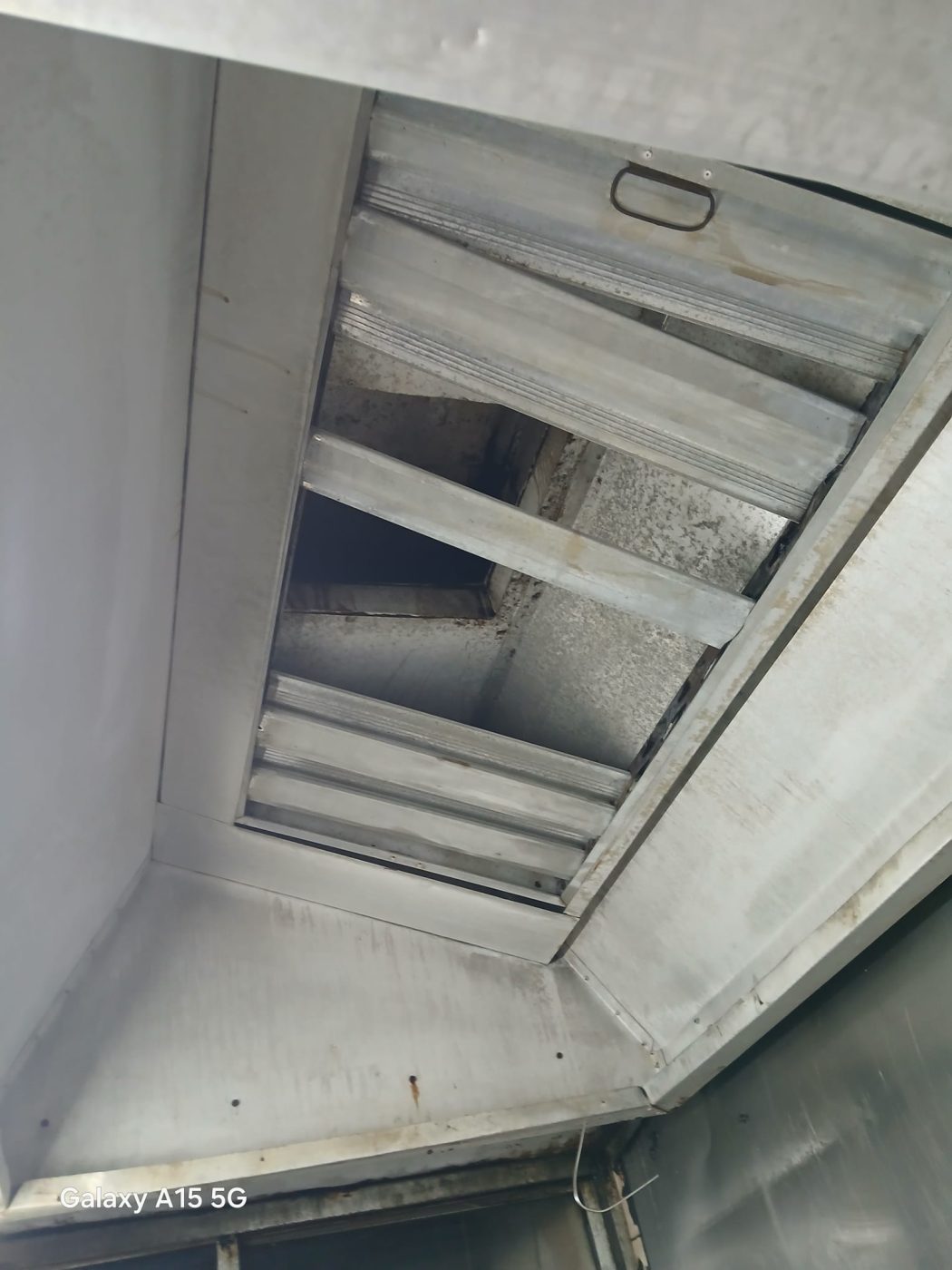
A kitchen fire suppression quotation is driven by six things: the length of the cooking line, the number and type of appliances under the hood (each protected individually, with deep fryers treated most carefully), whether it is a new fit-out or a retrofit into a working kitchen, how accessible the gas and electrical shut-offs are, the condition and sizing of the existing hood, and the ongoing servicing and recharge arrangement after installation. Restaurant seat count and how new the kitchen looks are poor predictors - suppression follows the cooking, not the dining room.
"How much is a fire suppression system?" is the most common first question we get about them, and the honest answer is that nobody can give you a figure over the phone without describing a kitchen they have not seen.
That sounds like an evasion. It is not. A suppression system is not a product you buy off a shelf in one size — it is a set of components sized to your cooking line, your hood and your building, and the same restaurant chain with two outlets in Singapore will get two different figures for two different units. What we can do, and what this article does, is set out exactly what moves the number, so that when you receive a quotation you can see why it says what it says.
This is the single biggest driver. A suppression system protects the appliances under the hood, the hood plenum itself and the start of the duct. The longer the cooking line, the more of everything: more detection along the line, more nozzles, more pipework running the length of the hood, and beyond a certain point, more agent than one cylinder holds.
It is worth understanding that the relationship is not smoothly proportional. Costs step up rather than climb evenly, because at some point the design crosses a threshold — a second cylinder, a larger cylinder, an additional detection zone — and everything before that threshold cost the same as a shorter line would have.
Two kitchens with identically sized hoods can need very different systems, because what sits underneath matters more than the width of the canopy.
Appliances are protected individually. A wok range, a deep fryer, a griddle, a chargrill and a range top each present a different hazard, a different geometry and a different nozzle requirement — and deep fryers in particular are treated carefully, because hot oil is the hardest fire in a kitchen to put out and the easiest to re-ignite. A line of six appliances therefore costs more to protect than a line of three under the same hood, even though nothing about the hood changed.
This is also why an accurate appliance schedule is the most useful thing you can send with an enquiry. It tells us more about the eventual figure than the floor area does. The same logic drives the exhaust side of the design, which we cover in how we size a hood to a cooking line.
A system designed into a new fit-out is the cheaper case. The hood is not yet in place, pipe routes are open, the gas and electrical contractors are still on site, and the shut-off interlocks can be wired as part of first fix rather than chased in afterwards.
A retrofit into a working kitchen is dearer for reasons that have nothing to do with the equipment. Access is worse, the work usually happens outside service hours, existing finishes have to be opened and made good, and the interlocks have to be integrated into gas and electrical installations that were never designed with them in mind. The equipment might be identical. The labour is not.
Taking over an existing unit is its own case, and one worth checking carefully before you sign a lease — see what to check in an existing kitchen before taking over an F&B unit.
When a suppression system discharges, it is supposed to remove the fuel as well as the fire. That means the gas supply and, depending on the installation, the electrical supply to the appliances have to shut down automatically on activation.
The cost of that varies enormously by building. A gas valve sitting a metre from the hood in an accessible riser is straightforward. The same valve behind a fixed wall, in a shared services duct, or in a position controlled by the building's own management is a different job — sometimes involving the landlord's contractor, sometimes involving permits and out-of-hours access. It is not unusual for the shut-off arrangement to be the part of a quotation that surprises people most.
Suppression is mounted into and around the hood. If the existing hood is sound, well fabricated and correctly sized for the line beneath it, the system goes in as designed.
If it is undersized, poorly fabricated, corroded, or was modified at some point by someone who added a section, the honest answer may be that the hood should be addressed first. Nobody enjoys hearing it. But mounting a suppression system onto a hood that does not properly capture over the appliances protects a hood that is not doing its own job, and the underlying capture problem is still there afterwards. That is a design conversation rather than a suppression one — it belongs with design and build.
The install is not the whole cost of owning a system, and it is the ongoing part that gets left out of comparisons.
A suppression system needs periodic servicing to stay operational and compliant, and the records of that servicing belong in your fire-safety file. Cylinders have their own maintenance requirements over time. Detection elements are consumable. And if a system ever discharges, recharging and reinstating it is a separate event with its own cost — which is worth knowing in advance rather than discovering on the worst day of your year. What that day involves, step by step, is in what to do when a restaurant fire suppression system goes off.
When you compare two quotations, compare what each says about the years after year one. A cheaper install with no service arrangement is not cheaper; it is the same cost arranged to look smaller. We set out what a maintenance arrangement should contain in fire suppression system maintenance.
Two things people expect to matter usually do not.
The first is the size of the restaurant. A 40-seat unit with a heavy wok line can carry a larger system than a 120-seat restaurant doing mostly cold and oven work. Suppression follows the cooking, not the dining room.
The second is how new the kitchen looks. A well-presented front of house says nothing about the hood, the duct route or where the gas valve is. We have quoted immaculate units that turned out to be difficult, and tired-looking ones that were straightforward.
We could give a range. Most enquiries would sit inside it, and it would be useless — wide enough to be safe, wide enough to tell you nothing, and wide enough that whichever end you planned around would probably be the wrong one.
Worse, a phone figure invites the wrong comparison. If another contractor quotes lower on the same phone call, the difference is almost always in what was assumed: fewer nozzles, a simpler shut-off, no making good, no service arrangement. The honest version of that conversation happens after somebody has stood in your kitchen and looked at the line, the hood and the valve.
What you can expect from us is a clear figure after inspection, itemised so that you can see which of the drivers above is doing the work in your case — and if something we find should be dealt with before suppression, we will say so rather than quote around it.
Six answers, and the quotation stops being guesswork.
Send the appliance list, the rough line length and whether the kitchen is running. We will tell you what the system will need to cover before we visit, and quote a clear figure after inspecting.
WhatsApp 8989 2833 about a fire suppression system →
Related reading: why hood suppression matters · clean, suppress, contain · what SCDF looks for
We design, clean, repair and maintain commercial kitchen exhaust systems across Singapore — on 24/7 standby.