
07 Aug 2026 · Design & Build
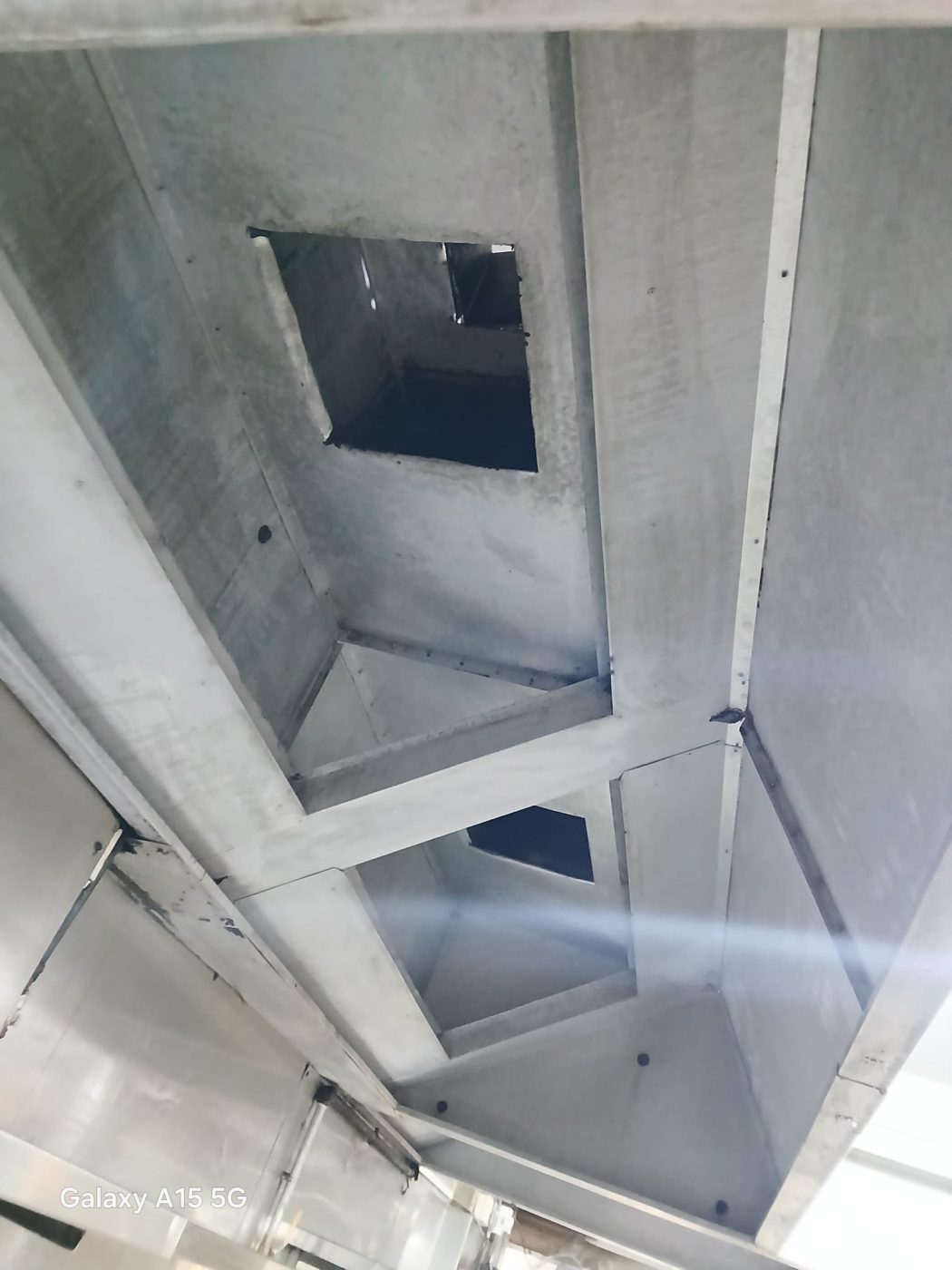
A compliant commercial kitchen ventilation system in Singapore must address capture velocity, grease-laden airflow, duct fire resistance, makeup air balance, and approvals from NEA, SCDF and BCA. Getting any one of these wrong can mean a failed inspection, a fire risk, or both — which is why design has to be engineered, not guessed.
When a client calls us about a new kitchen build or a failing ventilation system, the first thing we tell them is this: a compliant kitchen ventilation system is not a product you pick off a shelf. It is a piece of engineering that has to be designed around your specific kitchen, your cooking load, your building, and a set of regulatory requirements that do not forgive shortcuts. We have been doing this work across Singapore for years, and the kitchens that give owners the fewest headaches are always the ones where the design was done properly at the start.
A commercial kitchen exhaust system has to do several things at once. It needs to capture heat, grease-laden vapour and combustion gases at the source before they spread into the kitchen or the building. It needs to transport those contaminants safely through the building to the discharge point without creating a fire hazard along the way. It needs to discharge at a location and in a manner that satisfies NEA's environmental requirements. And it needs to do all of this while keeping the kitchen comfortable enough to work in.
Get any one of those things wrong and you are either looking at a regulatory problem, a fire risk, or a kitchen that simply does not function properly — often all three at once.
Everything starts at the hood. The hood has to be sized and positioned so that it can capture the thermal plume rising from the cooking equipment beneath it. This is not simply a matter of making the hood big — the geometry matters, the overhang on each side matters, and the capture velocity at the hood face matters.
We calculate the minimum capture velocity based on the type of cooking equipment involved. High-intensity cooking — wok burners, charcoal grills, solid fuel equipment — generates a far more vigorous and turbulent plume than, say, a bain-marie or a combi oven. Under-sized hoods on heavy-duty cooking equipment are one of the most common problems we are called in to fix. By that point, the kitchen has usually been running with grease deposits building up on walls and ceilings for months.
Once we know the required airflow, we design the ductwork to carry it. Duct sizing is a balance between velocity and static pressure: too slow and grease drops out and deposits on the duct walls; too fast and you generate noise, increase energy consumption, and put stress on the system.
For grease-laden exhaust, the duct also has to meet fire-resistance requirements set by SCDF. This typically means specific construction standards, clearances from combustible materials, and access panels at intervals for inspection and cleaning. We fabricate our own ductwork and components in-house, which means we can control the quality and specification of every section — including the gauge of steel and the integrity of the joins.
The fan is the heart of the system, and choosing the wrong one is an expensive mistake. We stock and supply our own MV fans and electric motors, so we are not beholden to whatever a distributor happens to have available. We select the fan based on the required airflow and the total static pressure of the system — the resistance created by the ductwork, bends, filters, and discharge arrangement.
We also factor in whether a variable speed drive (VSD) is appropriate. In kitchens where cooking intensity varies significantly across the day — a hotel kitchen running breakfast service, lunch service and late-night room service, for instance — a VSD allows the fan speed to be adjusted to match the actual load. This saves energy and extends the life of the fan.
The exhaust stream from a commercial kitchen carries grease, moisture and odour. Before any of that reaches the fan or the duct, it needs to pass through a filtration stage. We design and supply baffle filter arrangements sized to the airflow, and where odour control is a requirement — and in Singapore, NEA takes this seriously — we incorporate carbon banks and germicidal UV systems from our own range.
UV systems in particular do two things: they break down grease aerosols that pass through the filters, which keeps the duct significantly cleaner between services, and they address odour compounds that carbon alone may not fully neutralise. We have fitted these systems in food courts, hotel kitchens and central production kitchens where odour complaints to NEA were a real operational risk.
Yes — and this is the area where we most often see designs that fall short. Every cubic metre of air you exhaust from a kitchen has to be replaced. If it is not, the kitchen goes into negative pressure: doors become difficult to open, the hood loses capture efficiency because air is being drawn in around it from all directions, and cooking conditions deteriorate.
We design the makeup air supply as part of the same calculation as the exhaust. The two have to be balanced. In most commercial kitchens we design for a slight negative pressure in the kitchen relative to adjacent spaces — this prevents cooking odours migrating into dining areas — but the margin has to be controlled, not accidental.
Makeup air can be introduced through ceiling diffusers, low-velocity supply plenums, or short-circuit supply arrangements integrated into the hood itself. The right approach depends on the kitchen layout and the available ceiling height.
In Singapore, a commercial kitchen ventilation system typically has to satisfy NEA, SCDF and BCA — and sometimes additional requirements from the building's landlord or management corporation. These requirements touch on discharge location and height, duct fire resistance, separation from air intakes, and maintenance access.
We always confirm the exact requirements with the relevant authority before we finalise any design. The rules can vary depending on the building type, the location of the discharge, and the nature of the cooking operation. We have managed the submission and approval process for many kitchen projects, and we know what documentation the authorities expect to see.
On one kitchen we designed and built for a high-volume food court operator, the brief seemed straightforward — replace an underperforming system that was causing grease complaints from neighbouring tenants. When we surveyed the site, we found the original hood was undersized for the cooking equipment that had been added over the years, the duct run had several sharp bends that were throttling airflow, and there was no meaningful makeup air supply at all.
We redesigned the hood geometry, re-routed the duct to reduce pressure losses, installed one of our MV fans with a VSD, added a UV system for grease and odour control, and introduced a properly sized makeup air supply through ceiling-mounted diffusers. The difference was immediate — the kitchen stopped smelling in the dining area, and the grease accumulation in the duct between services dropped substantially, which we confirmed at the next quarterly clean.
That is what a well-designed system actually delivers: a kitchen that works, that stays cleaner, that is safer, and that does not generate complaints or compliance notices.
In our experience, most commercial kitchens need to satisfy at least three authorities: NEA for environmental discharge and odour control, SCDF for fire safety requirements around grease exhaust ducts, and BCA for building services compliance. Depending on your premises, there may be landlord or MCST requirements on top of those. We always confirm the exact requirements with the relevant authority before we finalise any design.
Hood sizing and fan selection are driven by the cooking load — what equipment you're running, how intensively, and what pollutants each appliance generates. A wok range running at full tilt produces far more heat and grease-laden vapour than a combi oven. We calculate the required capture velocity at the hood face, work out the total airflow in cubic metres per hour, then size the fan — typically one of our in-house MV fans — to deliver that flow against the static pressure of your duct run. Guessing on fan size is one of the most common and costly mistakes we see.
It matters enormously, and it's the part most often skimped on. If you exhaust 8,000 m³/h of air from a kitchen but only supply 5,000 m³/h back in, the kitchen goes into negative pressure. Doors are hard to open, the hood struggles to capture fumes, and cooking conditions deteriorate quickly. We size makeup air supply as part of the same calculation as the exhaust — they are two sides of the same equation.
Sometimes, but not always. Swapping in a bigger fan sounds straightforward, but if the ductwork is undersized, adding fan power just creates noise and heat without improving airflow — and in some cases it can increase fire risk by raising duct pressures beyond what the system was built for. We always assess the full system before recommending any change. A site survey costs far less than replacing ductwork that has been damaged by running it wrong.
Compliance is not a one-time event — it is an ongoing condition. Grease accumulates in ducts and on fan blades, reducing airflow and creating a fire hazard. NEA and SCDF both have expectations around maintenance intervals, and your own fire insurer will want to see records. We typically recommend quarterly cleaning for high-volume kitchens, with six-monthly intervals for lighter operations, but we assess each kitchen individually. We also carry out post-clean inspections and issue service records you can present to the authorities.
If you are planning a new kitchen, upgrading an existing system, or simply not sure whether what you have is up to standard, we are ready to take a look. Reach out to us for a quotation — and if something goes wrong in the meantime, our 24/7 standby team is always available.
Two kitchens of identical floor area can need completely different ventilation systems, because what decides the design is what is being cooked and how hard. This is the single most useful thing to understand before anyone quotes you.
A commercial cooking ventilation system that was sized for the equipment on day one, then grew a wok range or a second fryer three years later, is the situation we are called to most often. The hood did not change; the cooking did. If your line has changed since the system was installed, that is worth a survey on its own.
You will get a far more useful answer — from us or from anyone else — if you can put three things on the table:
Full scope for design-and-build work is on our commercial kitchen ventilation system page, and how we run a project from survey to handover is on kitchen exhaust design and build. Ventilation design is quoted after a site survey — there is no price list for it, because there is no standard kitchen.
If your immediate question is the hood rather than the whole system, sizing a commercial kitchen exhaust hood and choosing a commercial kitchen exhaust hood go into the geometry. For the approval side, what NEA expects from your kitchen exhaust system and what SCDF looks for cover the two authorities that most often send a design back.
Tell us the location, what you cook and when you need to be running. We will arrange a site survey and come back with a design and a quotation — and if something goes wrong in the meantime, our 24/7 standby team is available.
Related: when a CFD ventilation study is worth paying for, and when it is not — the four situations where modelling pays for itself at design stage, and the honest case for skipping it.
WhatsApp BC Air 8989 2833 about your kitchen ventilation →
Related: Choosing a commercial kitchen exhaust hood in Singapore — sizing to the cooking line, filters, duct sizing and make-up air.
Hood running but the kitchen is still smoky? Make-up air and air balancing explains why a correctly sized hood stops capturing when replacement air is missing — and why a bigger fan makes it worse.
Related: settle this at design stage, not at inspection — when your exhaust duct has to be fire-rated.
Related: if the unit is in a shopping centre, the constraints come from the landlord rather than the cooking line — see kitchen exhaust in a mall F&B unit: shared risers and landlord rules.
Also worth reading: the ventilation timeline for a new F&B outlet — the order a fit-out should run in so the extract does not delay the opening.
We design, clean, repair and maintain commercial kitchen exhaust systems across Singapore — on 24/7 standby.