
29 Jul 2026 · Fire Safety
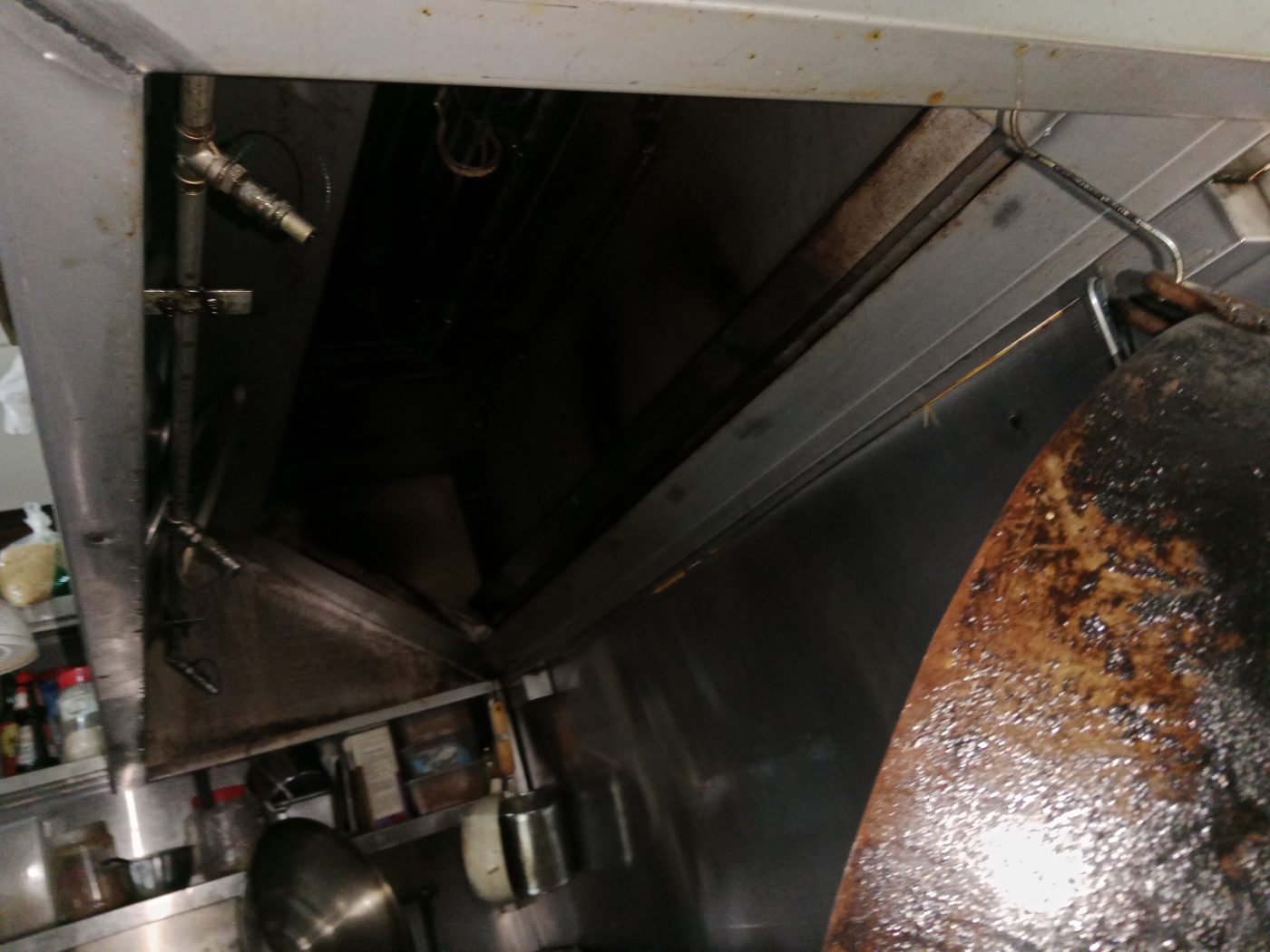
A kitchen hood fire suppression system protects your commercial kitchen by automatically detecting and suppressing a fire at the exhaust hood — where grease buildup makes ignition most likely. Integrated with your exhaust and gas interlock, it is your first and fastest line of defence before a stovetop fire becomes a structural one.
When a kitchen fire starts, it almost always starts at the cooking surface and travels straight up into the exhaust hood. That is exactly where grease accumulates, and grease burns fast and hot. A properly designed and maintained kitchen hood fire suppression system is your first and fastest line of defence — activating automatically, suppressing the fire, shutting off gas, and alerting your team before the situation becomes uncontrollable. We've built, integrated and maintained these systems across Singapore, and we've seen first-hand how much difference the right setup makes.
A kitchen hood fire suppression system is a fixed automatic system installed within or directly above your exhaust hood. When it detects a fire — typically through a fusible link or heat detector — it discharges a suppression agent (wet chemical is the standard for commercial cooking) directly onto the hazard area. At the same time, it triggers a series of interlocks.
This all happens in seconds, without anyone needing to press a button. That automatic response is the point — a grease fire can flash over in under a minute, and relying on a human to react in time is not a system, it is a gamble.
In our experience, operators often think of grease as a cleaning problem. It is, but it is also a fire problem. Every time you cook on high heat, vaporised grease travels up through your exhaust hood, through the filters, and into the ductwork. Over time — sometimes over just a few weeks of heavy cooking — that grease deposits on every internal surface.
Grease has a relatively low ignition temperature. A grease fire inside a duct is particularly dangerous because it burns inside a confined channel that runs through your ceiling and roof. The exhaust duct essentially becomes a flue feeding the fire directly to the structure of your building. We've attended kitchens where a fire that started at the wok station had scorched ductwork two floors above the kitchen before the suppression system contained it at the hood level.
This is why we always treat fire suppression and exhaust cleaning as two sides of the same coin. The suppression system protects you when a fire starts. Regular cleaning reduces the grease load so the fire is less likely to spread even if suppression activates.
In Singapore, SCDF sets out requirements for fire suppression in commercial cooking operations, particularly for high-heat cooking environments such as wok stations and deep fryers. NEA requirements for exhaust system design and ductwork also intersect with fire safety obligations. BCA requirements come into play during any build-out or A&A works.
We always confirm the exact requirement with the relevant authority before quoting on a new installation, because the specific obligations can vary depending on your occupancy type, cooking load, and whether you are fitting out a new space or upgrading an existing one. What we can say with certainty is this: if you operate a commercial kitchen in Singapore with significant heat output and you do not have a certified suppression system installed, you are likely non-compliant and you are exposed to serious liability in the event of a fire.
When we handle a full kitchen exhaust design-and-build project, fire suppression integration is part of the scope from day one — not an afterthought bolted on at the end.
This is where things get technical, and it is where working with a specialist who does both exhaust and suppression in-house makes a real difference. The suppression nozzles need to be positioned to cover every cooking appliance under the hood. The exhaust fan interlock needs to be wired correctly so the fan shuts down on activation — but also so it can be restarted manually after the system has discharged and been inspected. The gas solenoid shutoff needs to match your fuel type and pipe configuration.
When these systems are designed and installed by different parties who do not communicate, we regularly see problems: nozzles that are partially blocked by filter frames, interlocks that are wired to the wrong fan circuit, or gas shutoffs that were never actually commissioned. We fabricate and install our own control panels and have our own electrical team, so every interlock we specify is one we wire, test and document ourselves.
Yes — and this is non-negotiable. A wet chemical suppression system has a finite agent supply. After any discharge, whether from a real fire or an accidental activation, the system must be recharged by a qualified service provider before it is back in service. Beyond that, the system requires regular inspections to check nozzle condition, fusible link integrity, agent cylinder pressure, and interlock function.
We include suppression system inspection as part of our broader kitchen exhaust maintenance programmes. That way, when our team is on-site cleaning your hood and ductwork, we are also checking that the suppression system is ready to do its job. It is a more efficient arrangement for the kitchen operator, and it means nothing falls between the gaps.
A portable extinguisher is a secondary safety tool, not a substitute for a fixed system. In a fast-moving grease fire under a hood, a handheld extinguisher requires someone to be present, composed, and close enough to use it effectively — all while a fire is growing rapidly. A fixed suppression system activates automatically the moment conditions are detected, without anyone needing to act. For commercial cooking operations, a fixed system is what regulators require and what actually protects your kitchen.
The general guidance is a full inspection at least every six months, though the exact interval may be specified by your system manufacturer or your insurer. We'd also recommend a visual check of nozzle covers and interlock function as part of every scheduled exhaust cleaning visit. If your kitchen has a discharge — even an accidental one — the system must be inspected and recharged before it is returned to service.
When the suppression system activates, it triggers an interlock that shuts down the exhaust fan. This is intentional — running the fan during suppression would draw the wet chemical agent away from the fire zone before it can fully suppress the flame. After a discharge, the fan should remain off until the system has been inspected, recharged, and cleared for restart by a qualified technician. We wire and commission these interlocks as part of every suppression installation we carry out.
As early as possible, ideally at the same time as your exhaust hood and ductwork design. The suppression nozzle positions are determined by your cooking equipment layout, and the duct penetrations and interlock wiring need to be factored into your M&E drawings. If you try to add suppression after the exhaust system is already built, you often end up with compromises. We handle exhaust design-and-build and suppression integration together, so everything is coordinated from the beginning.
It can, if it is not done carefully. Suppression nozzles have protective caps that must be kept in place during chemical degreasing to prevent agent contamination. After cleaning, those caps must be removed and the nozzles inspected. When our cleaning team works on your hood, they follow a standard protocol around suppression components — checking that nozzles are clear, caps are removed after cleaning, and nothing has been displaced during the process. This is one reason we prefer to have our cleaning and maintenance teams work as a unit rather than sending in separate crews who may not communicate.
If you want to be certain your kitchen hood suppression system is correctly installed, integrated with your exhaust setup, and properly maintained, get in touch with us for a site assessment and quotation. We cover the full scope — exhaust design, suppression integration, ongoing maintenance — and our team is on standby 24/7 for emergencies.
Going deeper: if you are budgeting for one, what actually drives the cost of a suppression system sets out the six things that move the figure.
We design, clean, repair and maintain commercial kitchen exhaust systems across Singapore — on 24/7 standby.