
29 Aug 2026 · Cleaning & Compliance
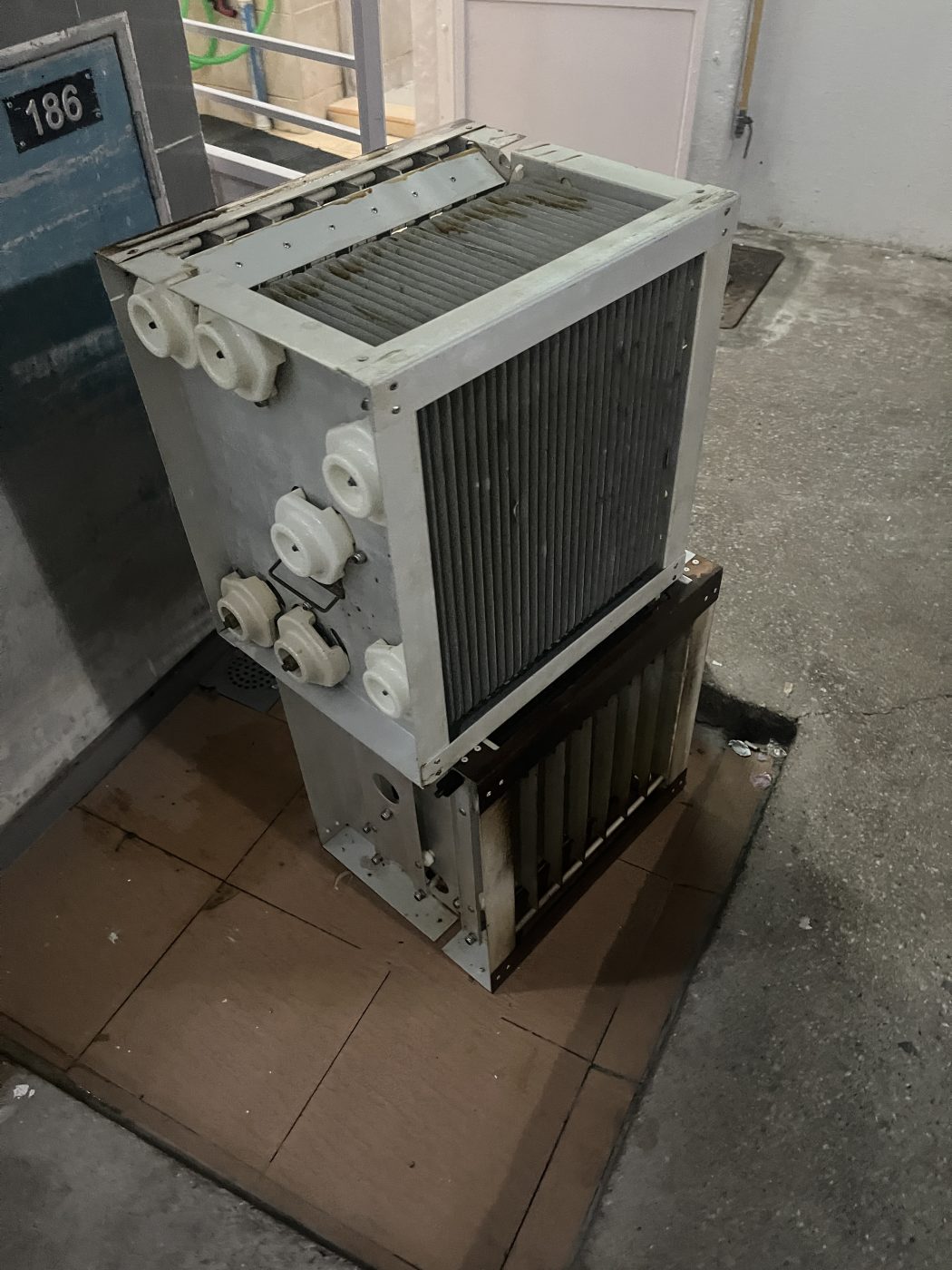
Kitchen exhaust inspection findings fall into three groups: evidence findings, where no cleaning or servicing record can be produced; condition findings such as grease accumulation, wrong filters or an out-of-date suppression service; and design or build findings such as missing duct access panels or a hood that no longer suits the cooking line. The first is paperwork, the second is usually one overnight shift, and only the third needs a programme.
An inspection report is a short document that creates a long week. Somebody has walked the kitchen, looked at the hood, opened what could be opened, asked for records, and left behind a list of findings and a date by which they expect them closed. The kitchen is still open, the deadline is real, and nobody in the building knows which of the items on that list is a two-hour job and which is a three-week one.
That sorting is the whole task. Most of the panic we get called into is not caused by the findings themselves — it is caused by treating a list of very different problems as one problem with one deadline.
Findings from an inspection are usually specific, and the specific wording tells you what kind of job it is. In our experience they fall into three groups, and the groups do not behave alike.
Evidence findings. The system may be perfectly serviceable, but nobody can produce a record of when it was last cleaned, what was done, or what condition the duct is in. A surprising share of failed inspections are failures to produce evidence rather than failures of the equipment. These close fastest, and they close permanently once a proper record-keeping habit exists.
Condition findings. Grease accumulation in the duct or on the fan, filters missing or the wrong type for the cooking line, a fan running but moving far less air than it should, a suppression system whose service is out of date. These are work, but they are known work with known durations.
Design and build findings. No access panels along the duct run, a discharge point that puts cooking odour where it should not go, a duct route that no longer suits the kitchen, a hood that does not capture what is now being cooked under it. These are the ones that cannot be closed in a weekend, and the ones people underestimate first.
Before booking any work, gather what you already have:
Two things usually emerge from that exercise. The first is that some findings are already answerable and simply were not answered on the day. The second is the gap that caused the finding — most often that cleaning has been happening, but only at the hood face, and nobody has ever recorded what happens beyond the first bend.
A full clean of hood, filters, plenum, duct run and fan is night work. It is done with the kitchen closed, and for most operators that is one overnight shift rather than a shutdown — which is the single most reassuring thing to learn on the morning after a bad inspection. What extends it is not the cleaning itself:
Some inspection findings are not maintenance failures at all. They are the system telling you it no longer matches the kitchen. A hood sized for the original menu will not capture a wok line that was added later; a duct route that was adequate at opening will not cope after the extraction demand doubled; a discharge point that never bothered anyone will start attracting complaints when the building next door changes use.
Closing that kind of finding with a deep clean buys a few months and then the same finding returns. It is worth being honest with yourself about which category you are in, because the recurring version is far more expensive than the one-off fix. If the same item keeps reappearing, that is the diagnosis.
The last one carries more weight than most operators expect. A closed finding with no plan behind it reads as luck; a closed finding with an interval attached to it reads as control.
There is no single correct cleaning frequency, because the driver is what you cook rather than how big the kitchen is. A heavy wok and deep-fry line loads a duct far faster than a bakery or a steaming line — the difference is not marginal, it is the difference between a quarterly and an annual conversation. We set that out in how often a commercial kitchen exhaust really needs cleaning, and it is the number worth getting right immediately after an inspection, while the cost of getting it wrong is fresh.
The other permanent fix is access. Access panels at the right intervals along the duct turn cleaning from a partial job into a complete one, and turn an inspection from an argument into a walkthrough.
It is worth remembering what the findings are for. We have set out separately what SCDF looks at in a commercial kitchen ventilation system and what NEA expects from a kitchen exhaust system. Read together, the pattern is consistent: grease that accumulates where it cannot be seen or reached is the risk, and evidence that it is being managed is the requirement. An operator who can show both is not fighting anybody.
Send us the findings as they are written, along with the deadline. We will tell you which items are evidence, which are cleaning, and which are build work that needs a programme — before anybody quotes anything. Every kitchen is different, so there is no fixed price for the work itself; what we can give you straight away is the sorting, which is the part that decides whether the deadline is comfortable or not.
WhatsApp us on 8989 2833 — we are on standby 24/7. Our kitchen exhaust cleaning work is documented as it goes, precisely so the next inspection is a shorter conversation than this one.
Also worth reading: the Duct You Cannot Open Is the Duct That Never Gets Cleaned.
If the finding has made you rethink who cleans the system, plan the change around the rectification deadline: changing your kitchen exhaust cleaning contractor.
Also worth reading: adding cooking equipment to an existing kitchen hood
We design, clean, repair and maintain commercial kitchen exhaust systems across Singapore — on 24/7 standby.