
03 Oct 2026 · Maintenance
When an exhaust clean finds a fault, ask which of three groups it falls into: fix it tonight, safe to run but book it with a date, or do not cook until it is dealt with. Get the fault photographed, the options and the cost before the work, and make sure the record shows what was found, what was done and what was deferred.
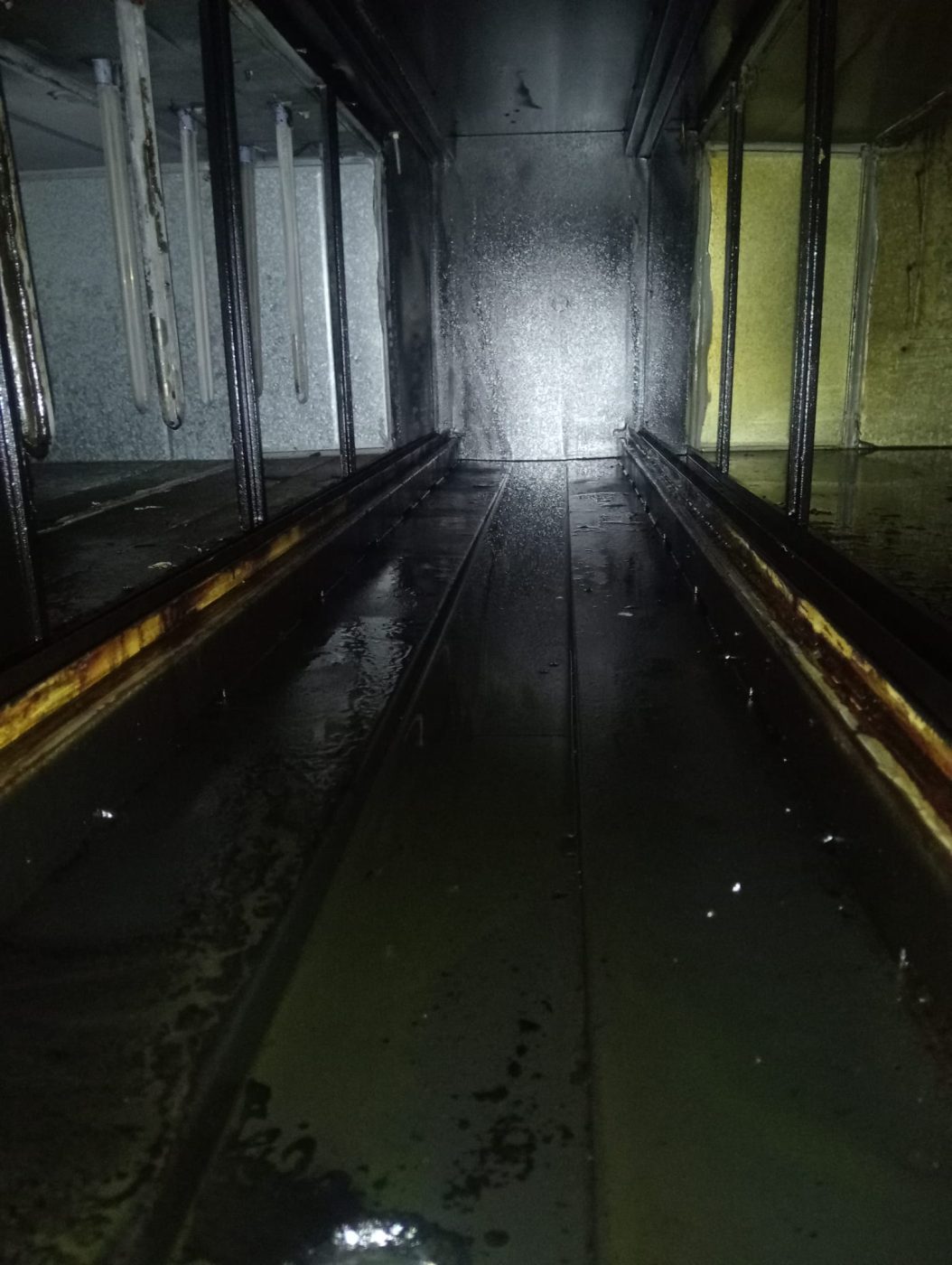
Pictured above: looking along the inside of an opened section of a kitchen exhaust system, with grease residue along the lower edges and liquid pooled on the floor of the section. This is a photo from our own work, reused here because it shows what is behind a panel that nobody opens between cleans. It is also where faults are found.
A proper exhaust clean opens things. The access panels come off, the filters come out, the fan housing is opened and the duct is looked at from the inside. For many kitchens that is the first time anyone has looked at those parts since the last clean, so it is no surprise when the crew finds something: a bearing that is starting to growl, a belt that has worn, a loose motor connection, a section of duct that is damaged. What surprises owners is what happens next. It is two in the morning, the crew is on site, and somebody has to decide in minutes whether to fix it tonight, book it for later, or tell the kitchen not to cook.
This post is about that decision: what you should be told, what you should ask for, and what should end up on paper. If you are choosing a cleaner, it is also a useful test of how they work.
Grease is the reason you clean, but it is not the only thing a clean reveals. On our 10-point servicing checklist, the fan is opened and degreased with the bearings, belts, vibration and balance inspected, the motor and its electrical connections are checked, the control panel and starter are tested, and the airflow at the hood is confirmed once the work is done. The checklist is written that way on purpose. Grease on the blades unbalances the fan and wears the bearings, and motor condition and connections are described there as the most common cause of a kitchen-down emergency. A crew that does all ten items will find things. A crew that wipes down the visible stainless will not, and the fault will wait for your busiest night.
So “they found a fault” is not bad news about the cleaner. It is the system doing its job. The question is what the cleaner does with it.
When a fault turns up, it falls into one of three groups. The crew should tell you which one, and why.
If you cannot tell which group the fault belongs to from what you are being told, ask. “Can the kitchen run tonight, and what is the risk if it does?” is a fair question and should get a plain answer.
One caution runs the other way. Do not approve a repair you have not understood just because the crew is standing there. If the quote is unclear, ask for it in writing by message and approve it by message. A fault you can fix tomorrow with a clear quote is often better than a fault fixed tonight with a vague one, as long as it falls in the second group above and not the third.
The hardest part of a mid-clean fault is not technical. It is that the person who can say yes is asleep, or off shift, or in another outlet. Before the clean, agree these with whoever books it:
For what to prepare on the night itself, see kitchen exhaust cleaning night. If you are comparing contractors, put the same question to each: what happens when you find something? The answer tells you more than a price does. Our post on what to check before signing a service contract has the other questions worth asking.
Every clean here comes with dated before-and-after photographs and a service record you can show NEA, SCDF, your landlord or your auditor. When a fault is found, the record should carry more than a tick:
The deferred line matters most. If an inspector or your landlord asks why a known fault was left, “it was recorded, with a date, and we agreed it” is a very different answer from “nobody told us.” The same record helps if you change cleaner later; we cover that in changing your kitchen exhaust cleaning contractor.
If a motor, fan or drive was replaced, a fan that runs is not proof that the system moves the right air. The checks that matter, from the direction of rotation to the airflow at the hood, are in confirming the kitchen exhaust is actually moving the air after a fan, motor or drive replacement. Ask for that before you sign off. If the fault turned out to be the early stage of a motor problem, exhaust fan motor failure: causes and fixes explains what usually leads there, and why we stock motors and fan parts in-house explains why many faults can be fixed in the same visit.
Grease also fouls suppression nozzles and fusible links, which is why suppression servicing can be carried out on the same visit as a clean. If the crew noticed anything about the suppression system while working around the hood, say so and ask for it to be recorded.
Scope and pricing for a clean or a repair follow an inspection of the actual system. We do not quote a figure before we have seen it. The kitchen exhaust cleaning page sets out what a clean covers, and our maintenance programs are built so faults are caught on a schedule and not on your busiest night. We are on 24/7 standby.
Want your next clean to come with a clear plan for faults? WhatsApp BC Air on 8989 2833 with your kitchen type, when it was last cleaned and anything you have already noticed.
Related reading: kitchen exhaust fan not working: causes and fixes · what a kitchen exhaust cleaning service should include · kitchen exhaust cleaning night: what to prepare
We design, clean, repair and maintain commercial kitchen exhaust systems across Singapore — on 24/7 standby.