
28 Sep 2026 · Troubleshooting
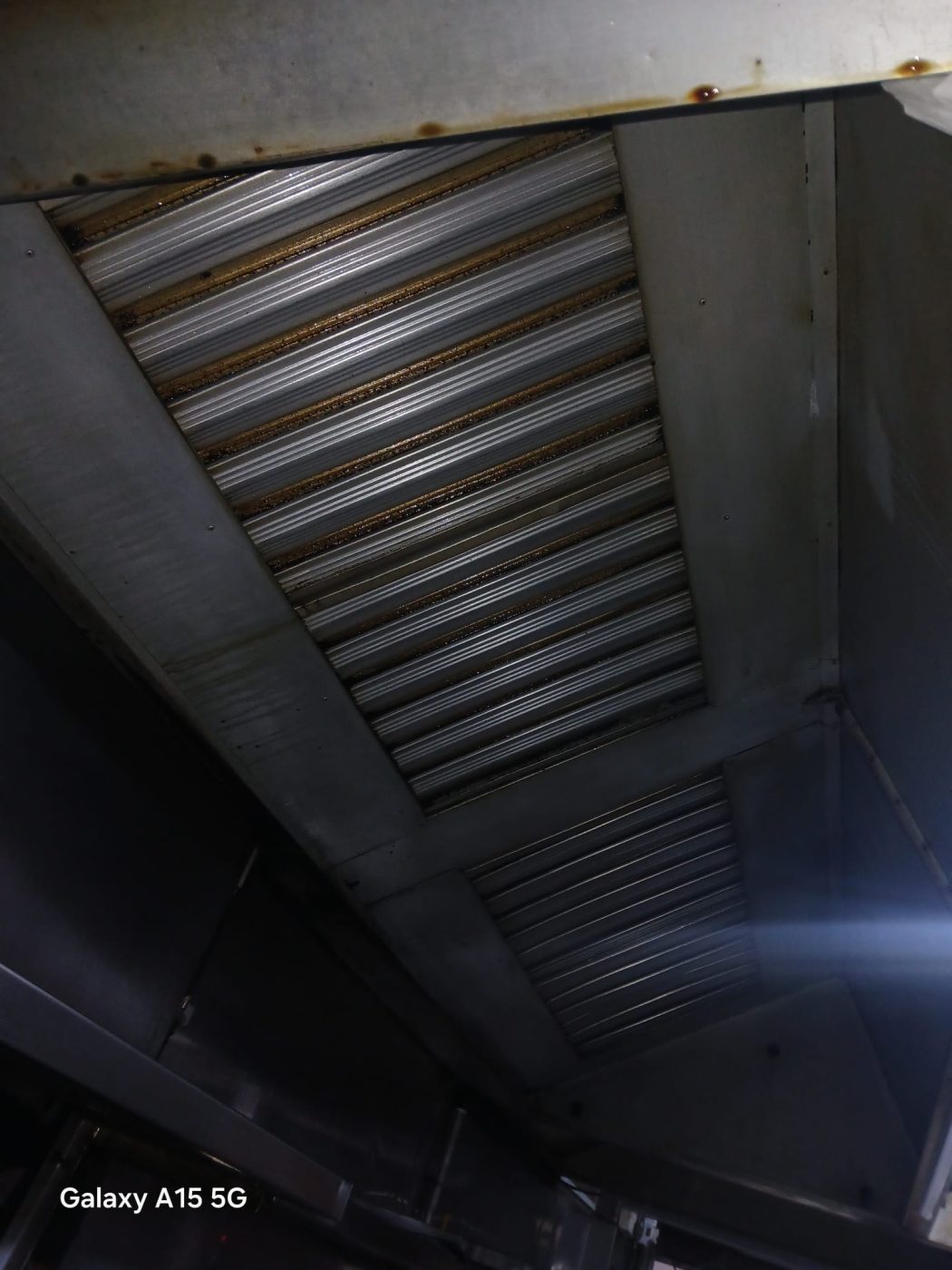
Water at a kitchen exhaust duct on a dry day has three likely sources: a failed joint (oily, at one seam), condensate forming inside the exhaust duct as steam-laden exhaust air cools on its way through a colder space (also oily, at joints and low points, following heavy cooking), or a cold air-conditioning or fresh-air duct nearby sweating on the outside (clean water along its length). A hot exhaust duct does not sweat on the outside. Clean water points to lagging with a continuous vapour barrier on the cold duct; oily water points to the exhaust duct itself - its joints, how it is laid and how long it runs through cold space.
A stain spreads on a ceiling tile under the kitchen exhaust duct. It hasn’t rained. No one has touched a joint or a seal. The usual first call is to whoever fabricated the ductwork, asking them to reseal it, because a wet duct usually means a leak. Sometimes that is the answer. Sometimes the water is condensation — and the useful question is which duct it is forming on, and on which side of the metal, because that decides the fix.
Here is how to tell the possibilities apart, why condensation happens around kitchen ductwork in a Singapore building, and what actually addresses each case.
Water near a kitchen exhaust duct has a handful of realistic causes. Two of them are not condensation at all, so check them first.
Water condenses wherever moist air meets a surface colder than that air’s dew point. Around a commercial kitchen that can happen in two quite different ways, and they look different on the ceiling.
Inside the exhaust duct. Cooking pushes a lot of moisture into the exhaust air — steam from woks, stockpots, steamers and dishwashing all goes up the hood. That air is hot, so it holds the moisture while it is near the kitchen. As it travels along the duct it cools, and it cools faster where the duct runs through a colder space: an air-conditioned ceiling void over a dining area, a cooled corridor, a long run before it reaches the riser. When the inside surface of the duct drops below the dew point of the exhaust air, water condenses inside the duct. It picks up grease on the way, runs to the lowest point or the nearest joint, and weeps out. So this water is usually oily or discoloured — which is exactly why it gets mistaken for a failed joint.
On the outside of a cold duct. The other case is a duct that is colder than the air around it. In a kitchen that is usually not the exhaust duct — it is the air-conditioning supply duct, or a fresh-air duct carrying cooled air, running through the hot, humid kitchen or through a ceiling void that is not air-conditioned. The humid air around it condenses on its outer surface and drips. This water is clean and runs along the length of the duct rather than appearing at one seam.
A hot exhaust duct passing through a cool space does not sweat on the outside — its surface is warmer than the room. If clean water is dripping from what looks like the exhaust run, check whether a cold duct runs alongside or above it before anyone touches the exhaust.
These are decisions that belong with the duct route at design stage — the same stage at which BC Air’s design & build page describes commissioning that “tests and balances airflow so the system performs from day one.” Correcting them after the ceiling is finished means opening it along the affected run, which is a bigger job than a small stain suggests. Whether that duct can even be opened without cutting the ceiling apart depends on decisions made at the original fit-out.
On its own this is a maintenance problem rather than an emergency — unless the water is tracking toward electrics, in which case treat it as urgently as a leak. Grease-laden water collecting inside an exhaust duct is also a cleaning matter, so it is worth raising at the next exhaust clean either way.
Seeing a stain and not sure which of these it is? WhatsApp us on 8989 2833 with where it is and what the water looks like, before anyone opens a ceiling. Scope and pricing follow a look at the actual run.
Related: if the drip only ever follows a storm, start with what to check after heavy rain instead.
Also worth reading: why grease duct joints fail · the duct you cannot open is the duct that never gets cleaned
We design, clean, repair and maintain commercial kitchen exhaust systems across Singapore — on 24/7 standby.