24/7 Standby · Always At Your Service 💬 WhatsApp +65 8989 2833

Foil, Pads and Liners on the Hood: Kitchen Shortcuts That Look Like They Save Cleaning

11 Nov 2026 · Maintenance
Foil, Pads and Liners on the Hood: Kitchen Shortcuts That Look Like They Save Cleaning
Never cover a hood filter opening with foil, a tray or a board: it blocks the airflow or burns, and it hides the missing or damaged filter. A disposable pad over a baffle filter turns it into a mesh that holds grease and chokes the airflow. A shortcut on the hood usually points to a real problem, so fix that: spare filter set, fixed closing list, and a cleaning interval that matches what you cook.

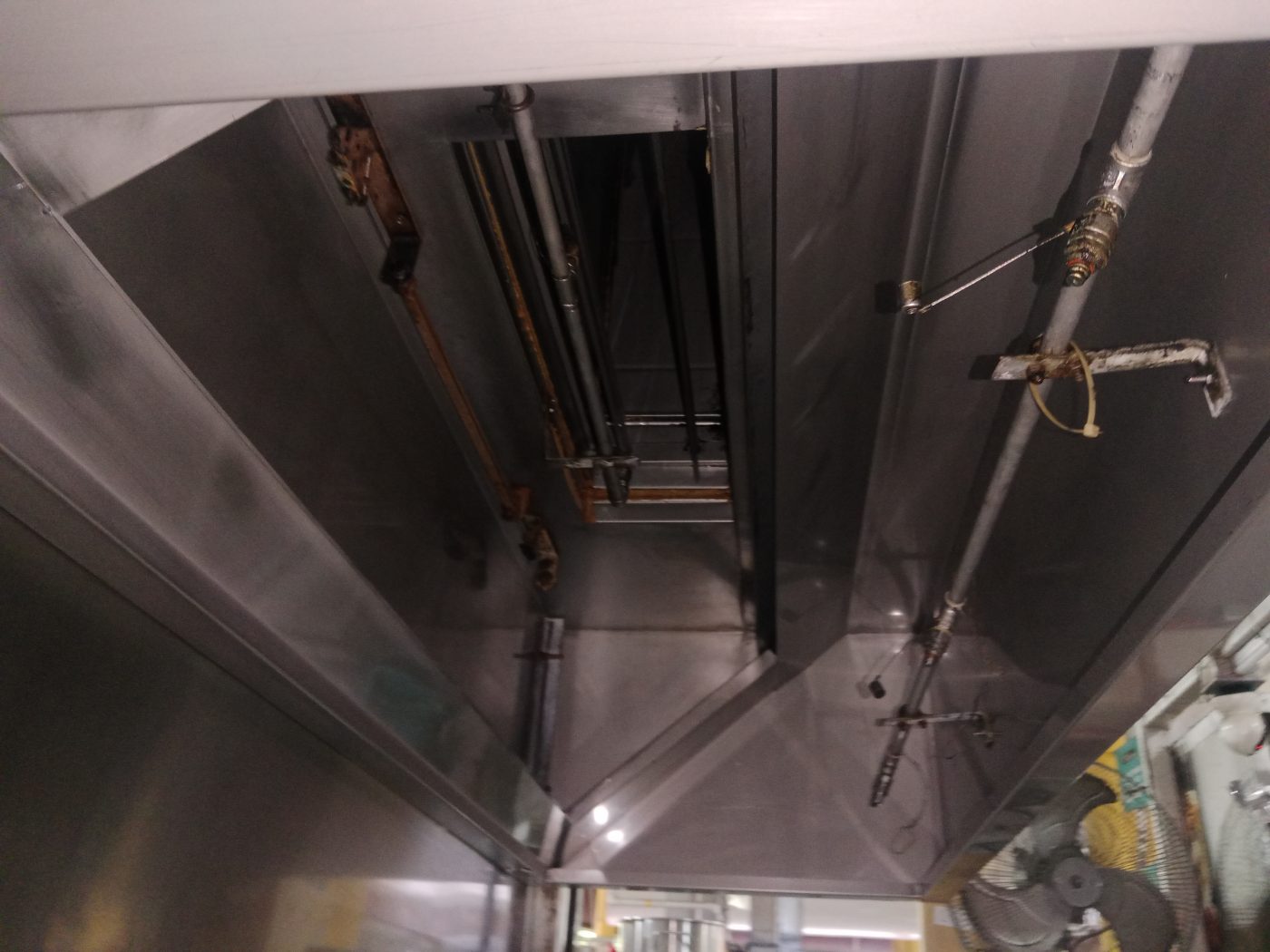
Pictured above: the inside of a hood canopy at one of BC Air’s projects (Yishun), looking up past the exhaust opening to the suppression pipework and a nozzle. It is reused here because it shows how much sits close together under a hood: the opening the air has to pass through, and the pipe and nozzle that have to stay clear. Anything stuck up there is stuck next to both.

Every busy kitchen finds its own shortcuts. A sheet of foil goes over the hood edge because the grease keeps dripping there. A disposable pad goes over the filters because washing them every night is a chore. The grease cup gets a foil liner so nobody has to scrape it. A tray sits over the gap where a filter went missing. None of it is done carelessly, and for a few days it looks as if it works.

This post is about those shortcuts: which ones quietly cost you more than they save, why, and what to do instead. It gives no prices: what a proper clean costs depends on the system, and we quote after seeing it.

Why a shortcut on the hood is not like a shortcut anywhere else in the kitchen

A hood and its filters are not a surface to keep clean. They are part of a working system. A baffle filter is built so that the air carrying the grease has to change direction sharply, two or three times, in a short distance. The grease droplets cannot make the turns, so they hit the metal, run down and drain towards the grease gutter. It works only while the channels stay open, the filter sits flush in its runners and the grease has a clear path to drain. Everything that follows in this post comes from that one idea: if you put something on or in front of the filter, you are changing how the air and the grease move.

The fan and the duct were sized around the resistance the original filters give. Add a layer of anything, and you have changed that resistance without telling the fan. That is why these shortcuts show up later as a hot, smoky kitchen, grease where there used to be none, or a fan that works harder for less, and nobody connects it back to the foil.

Foil, trays and boards over a filter or a gap

This is the one we are most direct about. A missing, bent or unseated filter leaves an opening, and the fast fix is to cover the opening with foil, a baking tray, a board or a flattened box. Do not.

  • It either blocks the airflow or it burns. A solid cover over part of the filter bank makes the rest of the bank do more work and starves the section it covers. A cover made of something combustible is a fuel layer sitting directly over the cooking line.
  • It does not remove the gap, it hides it. The real fault, a missing or damaged filter, is still there, and the next person to look cannot see it.
  • It moves the grease somewhere you cannot see. Grease that cannot drain through a covered section collects behind it or runs to the nearest edge.

If a filter is missing or damaged, the right answer is a spare set from the shelf, or a replacement of the same type as the rest of the bank. We set out how to measure and what to send in replacing a damaged baffle filter.

Disposable pads, cloths or mesh laid over the filters

The idea is attractive: let a cheap layer catch the grease and throw it away, and the filters underneath stay cleaner. The trouble is what that layer is. Anything fibrous or woven that is laid over a baffle filter behaves like a mesh, not a baffle. A mesh catches grease by interception and then holds it. It does not drain. As it loads, it becomes steadily more restrictive. We explain the difference in baffle versus mesh hood filters: a mesh panel is something that can fill with grease until almost no air passes through, and a saturated one is a mat of fuel sitting directly above an open flame.

A pad over a baffle filter turns the best part of your filter bank into the worst part. It also hides the filter from the person doing the daily look, so grease builds up under it unnoticed. And the part the pad cannot catch, the fine aerosol and smoke, goes straight through into the plenum behind exactly as before.

Foil or liners in the grease gutter and cup

A liner in the grease cup feels harmless, and a clean-out of a lined cup is faster. The risks are small individually and add up:

  • A liner that slips, folds or rides up can block the outlet from the gutter, so grease backs up and spills over the lip. We cover that in grease dripping from the hood onto the cooking line.
  • It makes a full cup look empty at a glance. The habit that matters is emptying the cup before it is full, on a routine. Anything that makes it harder to see how full it is works against that habit.

If emptying the cup is the chore that makes people look for a shortcut, make it a fixed job at the end of service, in the same place on the closing list every night, and write it in the logbook. Our post on what the kitchen team does daily explains how that routine decides what the deep clean ends up costing.

Covers and plastic wrap over the hood on days it is not used

Some kitchens cover a hood or its filters when a line is idle. The risk is the cover being left on when somebody lights a burner or starts the fan. Anything left over the filters at that moment is a blocked section, and plastic or paper over a hot line is worse. Keep any cover on a hook beside the hood, and make "all filters bare" part of the opening routine.

Sealant, tape or a dab of silicone on a hood seam

A drip from a seam or a joint feels like a small fix: tape over it, a bead of sealant along it. Neither is a repair. They add a layer that holds grease and heat, and they hide the seam from the next person. A leak at a seam needs repair in metal. We cover the options in damaged, leaking or rusted hood: repair, patch or replace.

What the shortcut is really telling you

Every one of these starts with a real problem. It is worth treating the shortcut as a symptom:

  • Filters are greasy again within a day or two of washing. That is information about the load. Our published guidance is that most commercial kitchens need the exhaust system cleaned every one to three months, and heavy wok, grill and deep-frying kitchens often monthly. If you are covering the filters between cleans, the interval may be too long for what the kitchen cooks.
  • The nightly filter wash is the thing nobody wants to do. The simple answer is a second set of filters: one in the hood, one drying. It costs one extra set and removes the temptation to leave the filters on a day longer.
  • The hood drips. Something upstream has failed: a full cup, a filter fitted wrong, a damaged filter or a hood coated with grease. The covering hides which one.
  • A filter is missing. That is urgent, not cosmetic. An opening in the bank takes a large share of the airflow, and the grease it carries goes straight to the plenum behind.

What to do instead, tonight and this month

  • Take the covering off. Look at what was underneath, and photograph it.
  • Check that every filter in the bank is the same type, the right way round, seated edge to edge and not bent.
  • Put the filter wash and the cup emptying on a fixed closing list, with a date written in the logbook.
  • Buy or keep a spare set of filters of the same type.
  • If the grease is returning faster than the schedule allows, ask for the cleaning interval to be looked at again. Filters are removed and chemically cleaned as part of a proper service, never cleaned in place, and the plenum, duct and fan are cleaned on the same visit.
  • If the shortcut was hiding a fault, such as a missing filter or a leaking seam, book the repair. When it is found during a clean we can often deal with it on the spot, because we stock motors, fans, fan parts and control components in-house, though some faults need a proper look and a plan.

One more reason to take shortcuts off before a clean: grease also fouls the fire suppression nozzles and fusible links over the cooking line, and a covering anywhere near them is a bad idea. We cover what a supervisor can safely check in between fire suppression service visits. Nobody should be moving, wrapping or covering a nozzle.

WhatsApp BC Air on 8989 2833 with the location, what you cook and for how many hours, what has been put on the hood or filters, and what you are seeing. A photo of the filter bank with the covering taken off helps. We are on 24/7 standby, and scope and pricing follow an inspection. Our kitchen exhaust cleaning covers the hood, the filters, the accessible duct and the fan, and a maintenance program puts the schedule in place so nobody has to improvise between visits.

The short version

  • A hood is a working system. Foil, trays, pads and liners change how the air and the grease move.
  • Never cover a filter opening with foil, a tray, a board or a box. It blocks the airflow or it burns, and it hides the fault.
  • A pad over a baffle filter turns it into a mesh that holds grease and chokes the airflow.
  • A shortcut usually points to a real problem: a heavy load, a hard chore or a fault. Fix that.
  • A spare filter set, a fixed closing list and a cleaning interval that matches what you cook do the job the shortcut was trying to do.

Related reading: a washed baffle filter that is still dirty · behind the baffle filters · how often a kitchen exhaust must be cleaned

Questions

Common questions

Can I cover a missing hood filter with foil or a tray until the replacement arrives?
No. A solid cover over part of the filter bank either blocks the airflow through that section or, if it is combustible, adds fuel directly above the cooking line, and it hides the fact that a filter is missing. Use a spare set of the same type if you have one, tell your contractor the opening is live, and treat a gap in the bank as urgent rather than cosmetic.
Do disposable pads over baffle filters keep the filters cleaner?
They keep the baffle face looking cleaner, but a fibrous or woven layer laid over a baffle filter behaves like a mesh: it catches grease by interception and holds it instead of draining it, so it grows more restrictive as it loads. It also hides the filter from the daily look, and the fine aerosol and smoke it cannot catch still go through to the plenum. A spare set of baffle filters and a nightly wash do the job without changing how the filter works.
Is it safe to put foil in the grease cup or gutter?
It is a risk that is small each time and adds up. A liner that slips or rides up can block the outlet so grease backs up and spills over the lip, and a lined cup that looks empty at a glance makes it harder to keep to the habit that matters, which is emptying it before it is full. If the clean-out is the chore people avoid, make it a fixed job on the closing list and record it in the logbook.
What does it mean if my filters are greasy again a day or two after washing?
That is information about the load, not proof the washing was careless. Our published guidance is that most commercial kitchens need the whole exhaust system cleaned every one to three months, and heavy wok, grill and deep-frying kitchens often monthly. If the filters need covering between cleans, the interval may be too long for what the kitchen cooks, and it should be looked at again after an inspection.
What should I do instead of using a shortcut on the hood?
Take the covering off and photograph what was underneath. Check that every filter is the same type, the right way round, seated and not bent. Keep a spare set so one set can dry while the other is in the hood, put the filter wash and the cup emptying on a fixed closing list, and ask for the cleaning interval to be reviewed if the grease is returning faster than the schedule allows. If the shortcut was hiding a fault such as a missing filter or a leaking seam, book the repair.

Need This Sorted in Your Kitchen?

We design, clean, repair and maintain commercial kitchen exhaust systems across Singapore — on 24/7 standby.

Chat on WhatsApp