
09 Nov 2026 · Maintenance
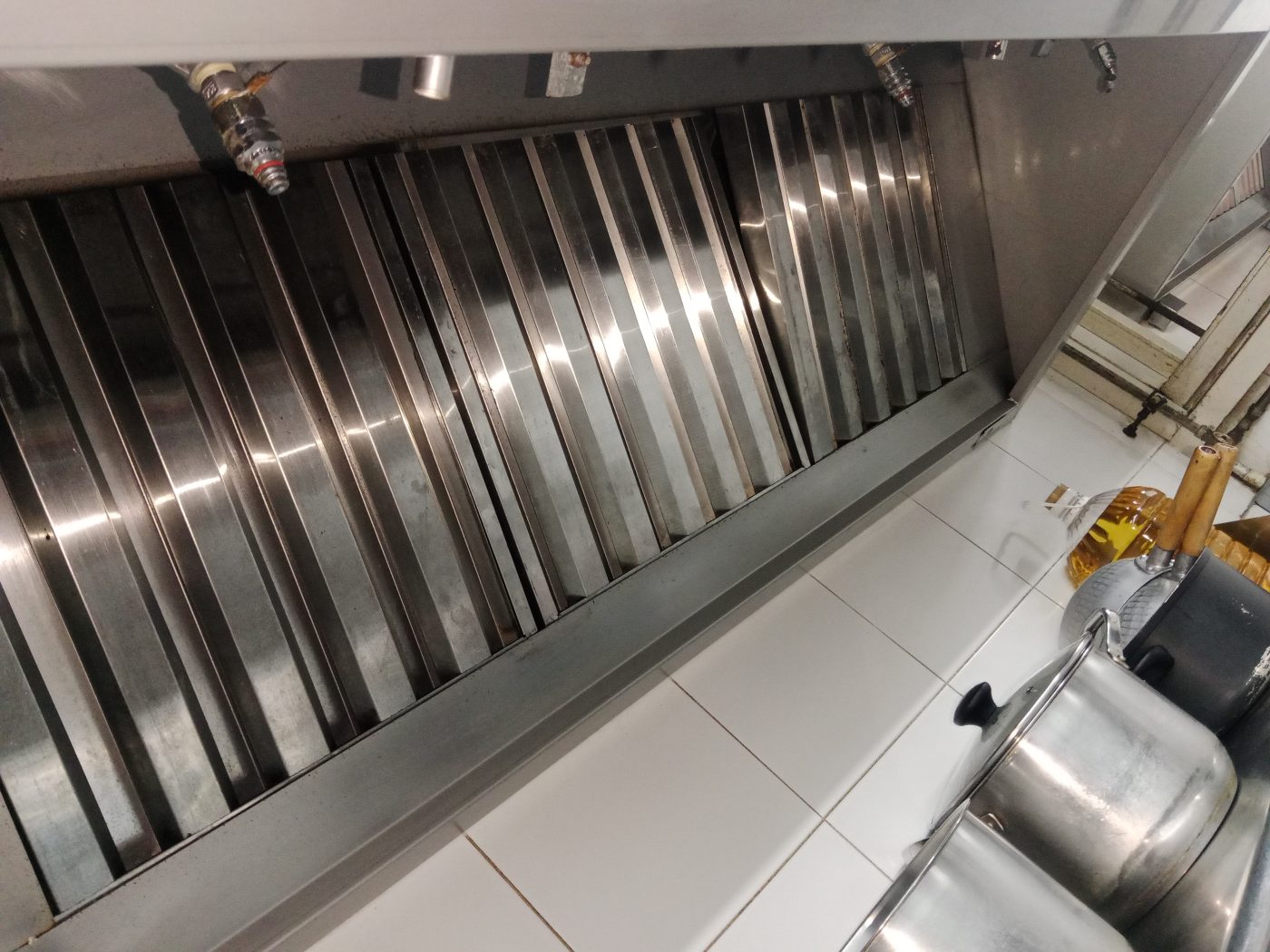
A baffle filter catches grease in its narrow channels, so a clean-looking face proves nothing. After washing, hold it to the light: you should see light through the offset channels along its length. Refit it with the drainage edge down towards the grease gutter, leave no gaps, and replace baffle with baffle if the blades are bent or the channels stay blocked after a proper wash.
Pictured above: the baffle filters in the hood of one of BC Air’s projects (Yishun), seen from underneath. This is a photo from our own work, reused here because it shows the part this post is about: the metal blades that the air has to turn around.
Your crew pulls the baffle filters every night, scrubs them in the sink, rinses them and puts them back. The face looks silver again. The next week the hood still smokes at the ends of the line, or the filters are greasy again by the second day. So the question is not whether the filters were washed. It is whether they came out clean enough to do their job, and when a filter has stopped being worth washing at all.
This post is for the person who does the washing, or who checks that it was done. It covers what a baffle filter is built to do, how to tell a properly cleaned one from one that only looks clean, the mistakes that make a clean filter work badly, and the point where you replace instead of wash.
A baffle filter is not a sieve. It is a set of interlocking metal channels that force the air to change direction sharply two or three times in a short distance. Grease droplets are heavier than the air carrying them, so when the air turns, the droplet cannot. It strikes the metal, condenses and runs down the channel into the grease gutter at the bottom of the filter. The air goes round the corner and the grease does not.
Three things about that design matter to anyone washing it:
The difference between a baffle and a mesh panel, and why they are not interchangeable, is in our baffle versus mesh comparison. Everything here is about the baffle type.
Baffle filters are built to be pulled and washed as routine. In a busy Singapore kitchen that generally means nightly rather than weekly. The honest interval for your kitchen depends on what you cook and how long the line runs: a wok and deep-fry line loads filters far faster than a bakery or a sandwich line. If the filters are greasy again within a day or two of washing, that is information about the load, not proof that the washing was careless. Write the day you washed them in your kitchen exhaust logbook so the pattern is visible.
You do not need any tool. After washing and drying, hold the filter up to a light, such as a window or a bright ceiling light, and look through it. The blades are offset, so you will not see a straight clear gap through the filter, but you should see light coming through the offset channels along the length of the filter. Then check:
If a filter keeps failing the light test after a proper wash, do not keep repeating the same wash and hope. Either the soak and contact time are not enough for the grease on it, or the filter is past the point where washing restores it. That is a conversation to have with whoever services your system, and it is one reason the filters are removed and chemically cleaned as part of a proper service, not only rinsed by the crew.
This is on our own checklist and it is worth repeating. Wiping the face of a filter that is still in the hood moves grease around and leaves the channels untouched. The filter comes out, goes through the degreasing step, is rinsed, and goes back. If a cleaner only wipes the hood and the filters stay where they are, the filters were not cleaned. The same applies to a general cleaning company: a hood wipe-down is not an exhaust clean, as we explain in hood wipe-down versus a duct clean.
A perfectly clean filter can still perform badly. Check these every time it goes back in:
Our daily routine for kitchen staff puts these checks on the closing and opening lists so they are not left to memory.
Our checklist says filters are removed and chemically cleaned, or replaced when worn. Signs that a filter is worn rather than dirty:
When you replace one, replace baffle with baffle. A mesh panel often fits a hood built for baffles, but it holds grease and gets steadily more restrictive, and it changes the resistance across the hood. What to measure and what to send us is in replacing a damaged baffle filter. Replacing consumables such as baffle filters is part of BC Air’s maintenance programmes.
Because a baffle filter never catches everything, whatever gets through settles in the plenum, the space immediately behind the filters, and then in the duct. Washing the filters every night does not touch that. While a filter is out, shine a torch into the opening and look at the back wall and the corners around the duct collar: clean metal or a light film is fine; a brown or black coating is overdue. We describe that check in behind the baffle filters.
Most commercial kitchens need the whole system cleaned every one to three months. Heavy wok, grill and deep-frying kitchens often need it monthly, and lighter kitchens can run quarterly. We inspect the system and your menu before recommending an interval. The full scope, filters, hood, plenum, accessible duct and fan, is on our kitchen exhaust cleaning page, and regular upkeep sits on the maintenance page.
WhatsApp BC Air on 8989 2833 with the location, what you cook, how often the filters are washed and what you see when you hold one to the light. A photo of the filter and the inside of the hood helps. We are on 24/7 standby, and scope and pricing follow an inspection.
Related reading: baffle versus mesh hood filters · behind the baffle filters · replacing a damaged baffle filter
Also worth reading: foil, pads and liners on the hood: shortcuts that look like they save cleaning, for what happens when a covering goes on instead of the filter coming out.
We design, clean, repair and maintain commercial kitchen exhaust systems across Singapore — on 24/7 standby.