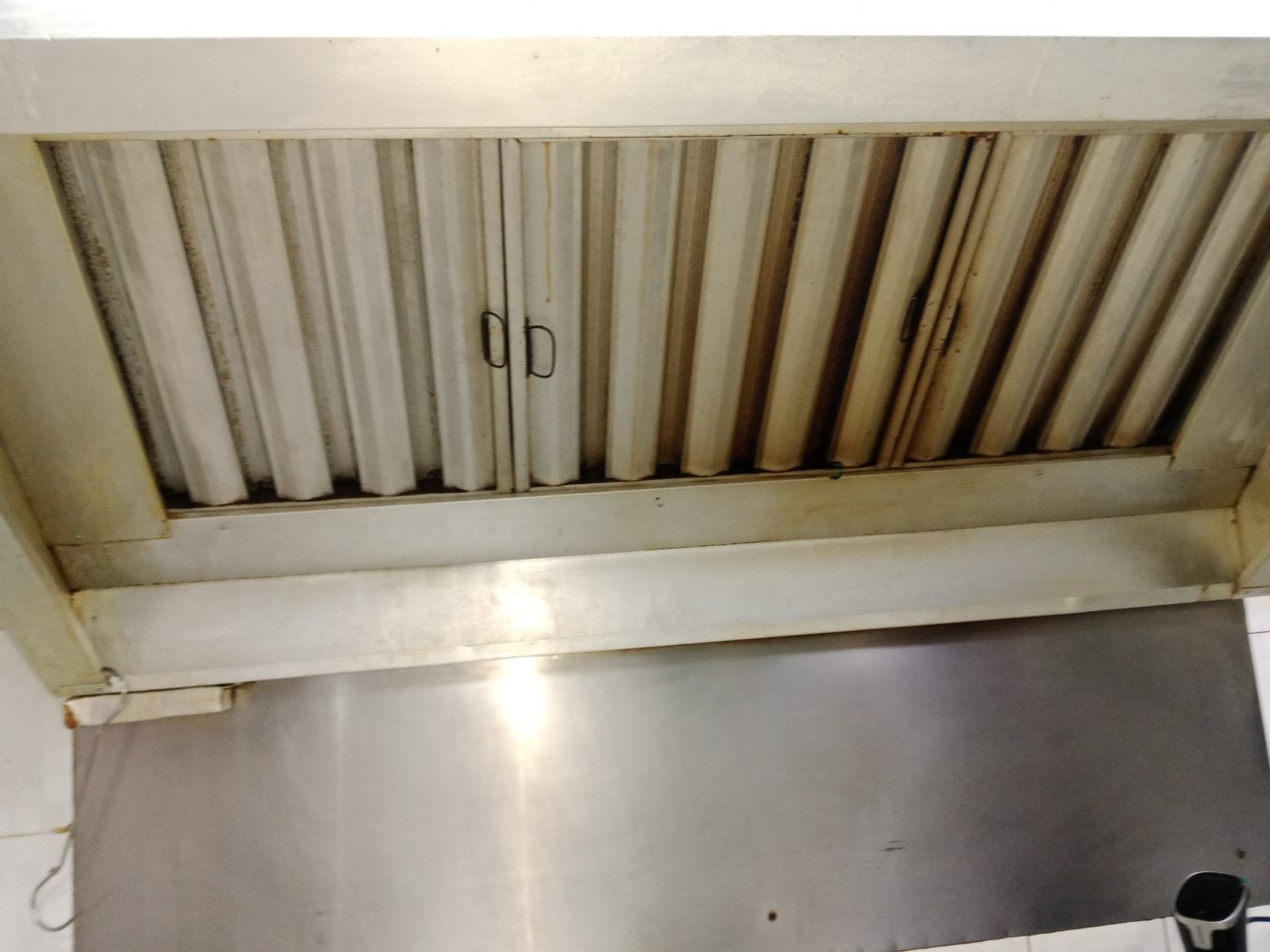
Pictured above: the baffle filter bank in a hood on one of our projects (Adelphi), seen from below. It is not a balancing job. It is the first thing that changes the readings if one bay is missing or badly seated, which is why it comes first on the checklist below.
Air balancing has been booked for the kitchen. Maybe the hood has never captured properly, maybe the dining room smells of the line, maybe a new unit has just been fitted out and the system needs to be proved. Someone is coming with instruments, and the operator's main question is usually a practical one: what do I need to do before they arrive, and what will they need from me on the day?
The answer matters more than it looks. Balancing measures the kitchen in the state it is found in. If it is found in the wrong state, with a filter missing, a door propped open or a drive turned down the night before, the readings describe that state, not the kitchen you run every day. This post is the preparation list we would want a kitchen to have done, and a plain account of what the visit covers and what you should be handed afterwards.
What the visit actually measures
Air balancing is the measured, hands-on step. For a commercial kitchen it means:
- measuring exhaust airflow and make-up air airflow and comparing them with the figures the system was designed around;
- checking hood capture over the cooking line, with the equipment actually running;
- checking the pressure between the kitchen and the dining area, so the kitchen is neither starved of air nor pushing its air into the dining room;
- on a shared fan, measuring each hood separately, so you can see which one is taking the air and which one is being starved;
- adjusting what can be adjusted, and writing the readings down.
It is the commissioning-stage end of the same airflow job that CFD modelling starts at design stage. We cover both on our CFD modelling and air balancing page. For a kitchen that is already built and underperforming, the usual order is to measure first, which we explain in air balancing first, or CFD first. This post picks up after that decision has been made.
Why the state of the kitchen on the day decides the result
A reading is a snapshot of a particular condition. Change the condition and the number changes. Three examples we see often enough to plan for:
- A greased duct moves less air. Grease builds inside the duct and resistance rises, so the airflow you measure is the airflow of a greased duct. After a proper clean it will be different. Our published guidance is a clean every one to three months for most commercial kitchens, monthly for heavy wok, grill and deep-frying kitchens and quarterly for lighter ones. If the clean is well overdue, say so before the visit, and decide with the technician whether to clean first.
- A missing filter changes the resistance across the hood. The fan and the duct were sized around a full bank of one type of baffle filter. A gap, or a mismatched filter, means the air takes the easy way through the gap and the hood stops behaving the way it was designed to.
- A door or a supply grille changes the pressure. A back door held open, a fan-coil blowing across the line, a make-up air grille covered during works: each one moves the kitchen-to-dining pressure and bends the plume. We went through the draught problem in when a pedestal fan or air-con unit pushes smoke past the hood.
Before the visit: a seven-point checklist
- Write down the date of the last clean, and what was cleaned. Hood and filters only, or the duct and the fan as well? The technician needs this to read the numbers fairly.
- Check every filter is in and seated. No gaps, no bent frames, the same type across the bank. If one has gone missing or been damaged, see replacing a damaged baffle filter, and fix that first.
- List what is under each hood. Every appliance, with the fuel or power it uses, and anything added or moved since the kitchen opened. The hood and fan were sized for the line that existed on opening day.
- Find the design papers, if any exist. A commissioning record, design airflows, as-built drawings, a CFD report. If they do not exist, say so plainly at the start. Balancing needs something to balance towards, and the technician will want to agree what that is. We cover what a good set looks like in the handover documents to ask for.
- Note which hoods share a fan and a duct. If several hoods are on one run, each one has to be measured, not only the main duct. The reason is in why the balance drifts when several hoods share a duct.
- Write down the variable speed drive setting, if there is one, and leave it alone. A drive is a control, not a cure. Turned down, capture falls. Turned up without enough make-up air, the kitchen simply goes more negative. Record where it is set so the before and after can be compared.
- Do not tidy up the symptoms. If the back door is always propped open in service, or the pedestal fan always stands at the pass, that is part of the real condition. Tell the technician about it rather than removing it for the day.
On the day
The aim is a kitchen that behaves the way it does in service, with someone who can say what is normal.
- Cooking load. Hood capture is checked with the equipment actually running, so the appliances that matter need to be lit or powered up. Agree beforehand which ones, and whether that is possible outside service hours. A kitchen that is stone cold and empty gives numbers for a kitchen that is not the one you trade in.
- Make-up air and air-conditioning as in normal service. Switch on whatever runs during a service. Do not run them harder than usual or turn them off for convenience.
- Doors as in service. Keep the doors the way they are during a normal shift. If they are normally open at the back, tell the technician, because the pressure reading depends on it.
- Someone on site who knows the kitchen. A chef or kitchen manager who knows which hood serves which line, where the controls are, and what changed recently, saves a good deal of searching.
- Access. Ceiling access panels, the fan, the plant room or the roof may all be needed. In a multi-tenant building, roof and riser access usually needs the landlord or building management to agree, and that takes lead time. We explain it in roof access for kitchen exhaust fan work in a multi-tenant building. Ask early.
When balancing cannot fully fix it
Balancing adjusts what can be adjusted: dampers, drive settings, the distribution of air between hoods. It cannot make a duct bigger or a fan stronger. If the readings show that the limit is the duct or the fan, or that make-up air is simply not provided, that is a finding, and the readings are what let you have a sensible conversation about the next step. It then becomes a design or repair question, and the quotation follows an assessment of the system, not a list price.
That is also why a bigger fan is rarely the first answer. An exhaust fan can only remove air that is replaced from somewhere. Where make-up air is short, a bigger fan deepens the negative pressure and makes the heavy doors, the lifted gas flames and the smell pulled in from the drain worse. We explain this in make-up air and air balancing.
What you should leave with
The visit is only worth having if the numbers come back to you in writing. Ask for:
- the measured exhaust airflow at each hood and the make-up air supplied at each outlet;
- the conditions they were taken under: which appliances were running, which doors were open, whether make-up air and the drive were on, and at what setting;
- what was adjusted, with the settings before and after;
- the pressure relationship between the kitchen and the dining area;
- anything that limited the result, named plainly, such as an overdue clean, a missing filter or an access problem.
Keep this with the rest of the system's paperwork. A reading on paper is a baseline. A year from now, "the exhaust seems weaker than it used to be" is an opinion without one, and a measurement against a known figure with one. It is also the first entry in the kind of record described in what to record in a kitchen exhaust logbook.
Booking it
If you want your kitchen balanced, or want to know whether balancing is the right first step, WhatsApp BC Air on 8989 2833 with: the number of hoods and what is under each, whether hoods share a fan, whether make-up air is provided, the date of the last clean, whether any design figures or commissioning record exist, and anything that changed recently. A photograph of the hood front and the filters helps. We run a 24/7 standby line for breakdowns. We give no price in a post: every system is sized to the specific kitchen, and the quotation follows an assessment.
The short version
- Balancing measures the kitchen in the state it is found in, so prepare the state before the visit.
- Write down the last clean date, check every filter is seated, list what is under each hood and record the drive setting.
- On the day, run the kitchen the way it runs in service: equipment on, doors and make-up air as normal, someone who knows the kitchen on site.
- Sort out roof and ceiling access early, especially in a multi-tenant building.
- Leave with written readings per hood, the conditions, what was adjusted and anything that limited the result.
Related reading: CFD modelling and air balancing · air balancing first, or CFD first · several hoods on one duct
Questions
Common questions
What does an air balancing visit measure in a commercial kitchen?
Exhaust airflow and make-up airflow compared with the figures the system was designed around, hood capture over the cooking line with the equipment running, and the pressure between the kitchen and the dining area. On a shared fan each hood is measured separately. What can be adjusted is then adjusted, and the readings are written down.
What should I do before the air balancing visit?
Write down the date of the last clean and what was cleaned, check every filter is in and seated, list the appliances under each hood and anything added since opening, find any commissioning record or design figures, note which hoods share a fan, and record the variable speed drive setting if there is one. Do not remove the everyday conditions, such as a propped door, because they are part of the real state of the kitchen.
Does the kitchen need to be cooking while the air is balanced?
Hood capture is checked with the equipment actually running, so the appliances that matter need to be lit or powered up. Agree with the technician beforehand which ones, and whether that can be arranged outside service hours.
Should the duct be cleaned before air balancing?
Grease inside the duct raises resistance and lowers airflow, so readings taken on a greased duct will change after a clean. If the clean is well overdue, say so before the visit and decide with the technician whether to clean first.
What should I receive after air balancing?
The measured exhaust airflow at each hood and the make-up air at each outlet, the conditions they were taken under, what was adjusted with the settings before and after, the pressure relationship between kitchen and dining area, and anything that limited the result. Keep it as the baseline for future checks.
How much does air balancing cost?
There is no published price. Every system is sized to the specific kitchen and the quotation follows an assessment. WhatsApp BC Air on 8989 2833 with the number of hoods, what is under each, whether make-up air is provided and the date of the last clean.