
27 Oct 2026 · Maintenance
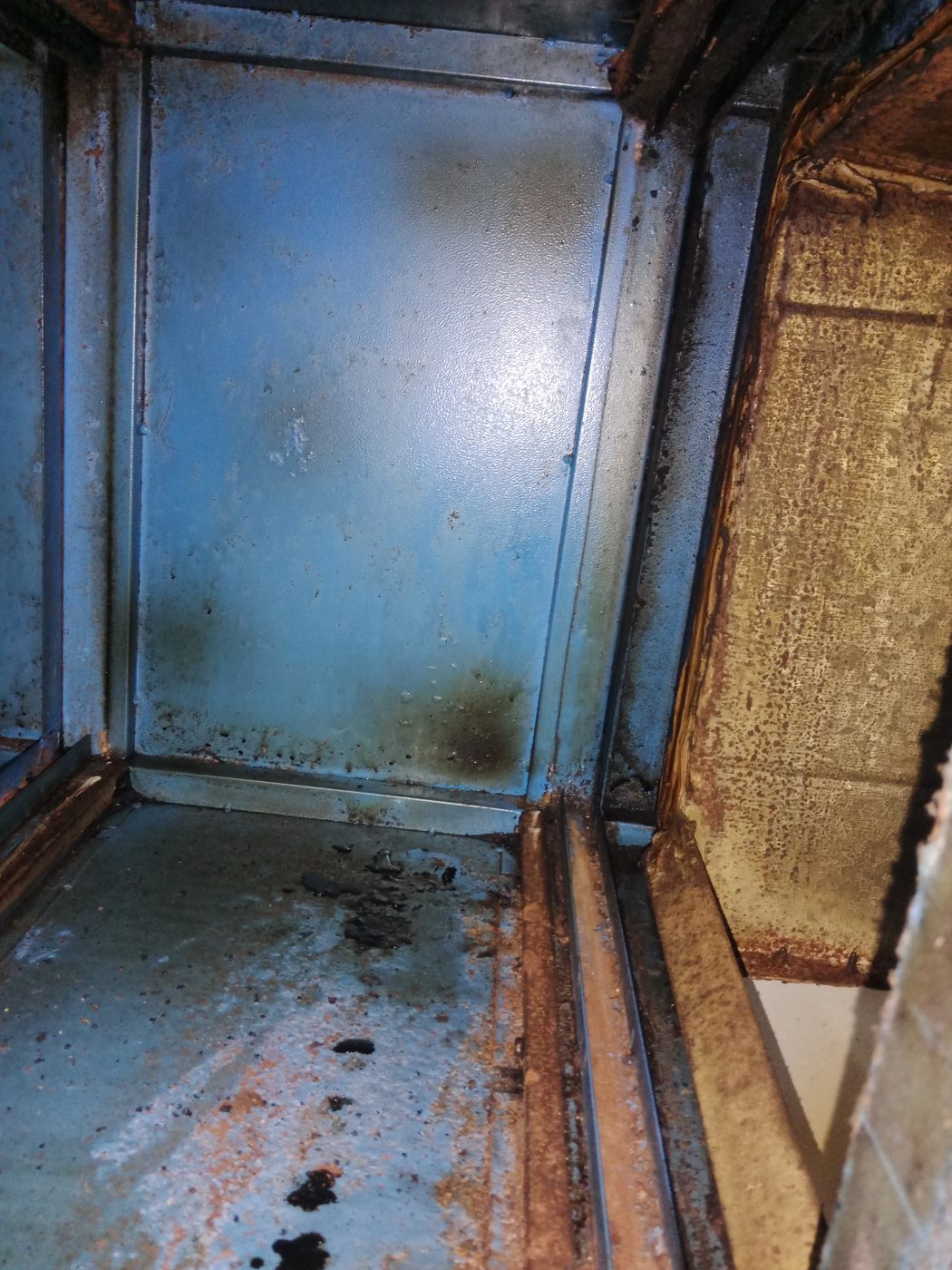
In a multi-tenant building the kitchen exhaust fan is usually on a roof, ledge or plant deck that the building controls. Before any clean, repair or replacement, find out where the fan is, who holds the key or pass, what notice the building needs, how a person and a heavy part would reach it, and put the answers in writing.
Pictured above: the inside of a metal enclosure on one of our projects (Adelphi), reached through an opening. Grease has collected in the bottom corners and along the seams, and it is the kind of place nobody sees unless the way in has been arranged. A fan housing, plenum or duct section can look like this behind a clean-looking outside.
Most kitchen exhaust fans do not sit in the kitchen. In a shop unit or a mall, the fan is usually somewhere you never go: a roof, a ledge, a plant deck, a service yard or a riser room that belongs to the building rather than to your tenancy. That is one reason the fan is the part of the system most likely to be left out of a clean, and the part that takes longest to repair when it fails.
The work itself is rarely the hard part. The hard part is getting the technician to the fan, on the day, with the right people knowing about it. This post is about that: what to find out about your fan's access before you need it, what to ask building management, and what to tell the contractor so the first visit is not wasted.
A kitchen-down call is the worst moment to learn who holds the key to the roof door. The questions all arrive at once. Where is the fan, exactly? Who can unlock the door? Does the building need notice before anyone goes up? Is there a route a motor or a fan wheel can be carried along, or does it need to be lifted? Each one can cost hours while the kitchen is shut.
The same questions come up for a routine clean, only with more time to answer them. If the fan has never been reached, the first sign is often something other than an access complaint: grease on the roof, as we describe in grease on the roof around the exhaust fan, or a cleaning report that only ever shows the hood and the filters.
Write the answers on one page and keep it with the exhaust drawings or the maintenance file. The next person to deal with the fan, whether it is you, a new manager or a contractor, will not have to start again.
When you book any fan work, send the contractor the following, so the quotation and the first visit are based on the real situation:
A contractor who asks you these things before quoting is not stalling. It is the same inspection-first approach that sets scope and price for any exhaust job: what the work costs depends on what is there and how it is reached, so there is no fixed figure to quote in advance.
When a fan stops, the order of work matters. First the quick checks from the kitchen: the isolator, the starter and what changed just before. Then, if someone has to go to the fan, the access arrangements above decide how fast that can happen. Having the key holder's contact and the building's notice requirement already written down can be the difference between a same-day visit and a lost day.
Whether the fix then turns out to be a repair or a replacement is a separate decision, covered in repair or replace the exhaust fan. Our repair and replacement page lists the motors, fans, fan parts, control panels, drives and ducting we deal with. Because we stock motors, fans and parts, a common failure can often be dealt with in one visit, but a visit only helps if the technician can reach the fan.
A fan that is hard to reach is the first thing to slip from a cleaning scope. Ask for it by name. The published 10-point servicing checklist includes the exhaust fan opened and degreased as its own line, and most kitchens need their exhaust cleaned every 1 to 3 months, with heavy wok, grill and deep-frying kitchens often monthly and lighter kitchens quarterly. If your fan is on a roof, put the access arrangements in the booking so that each visit does not begin with a search for the key.
Two things to ask for in the report afterwards: a photograph of the fan with its housing open, and a note of any section that could not be reached and why. A "not accessible" line is useful, because it tells you what to arrange before the next visit. If the report never names one, ask whether the fan was reached at all. The same point applies to the duct: the duct you cannot open is the duct that never gets cleaned.
WhatsApp BC Air on 8989 2833 with where the fan sits, what the work is and how the technician reaches it now, and we will tell you what a first visit would need to be ready. Scope and pricing follow an inspection of your system. For the cleaning side, see our kitchen exhaust cleaning page.
Related reading: grease on the roof · duct access panels · repair or replace the fan · mall units and shared risers
We design, clean, repair and maintain commercial kitchen exhaust systems across Singapore — on 24/7 standby.