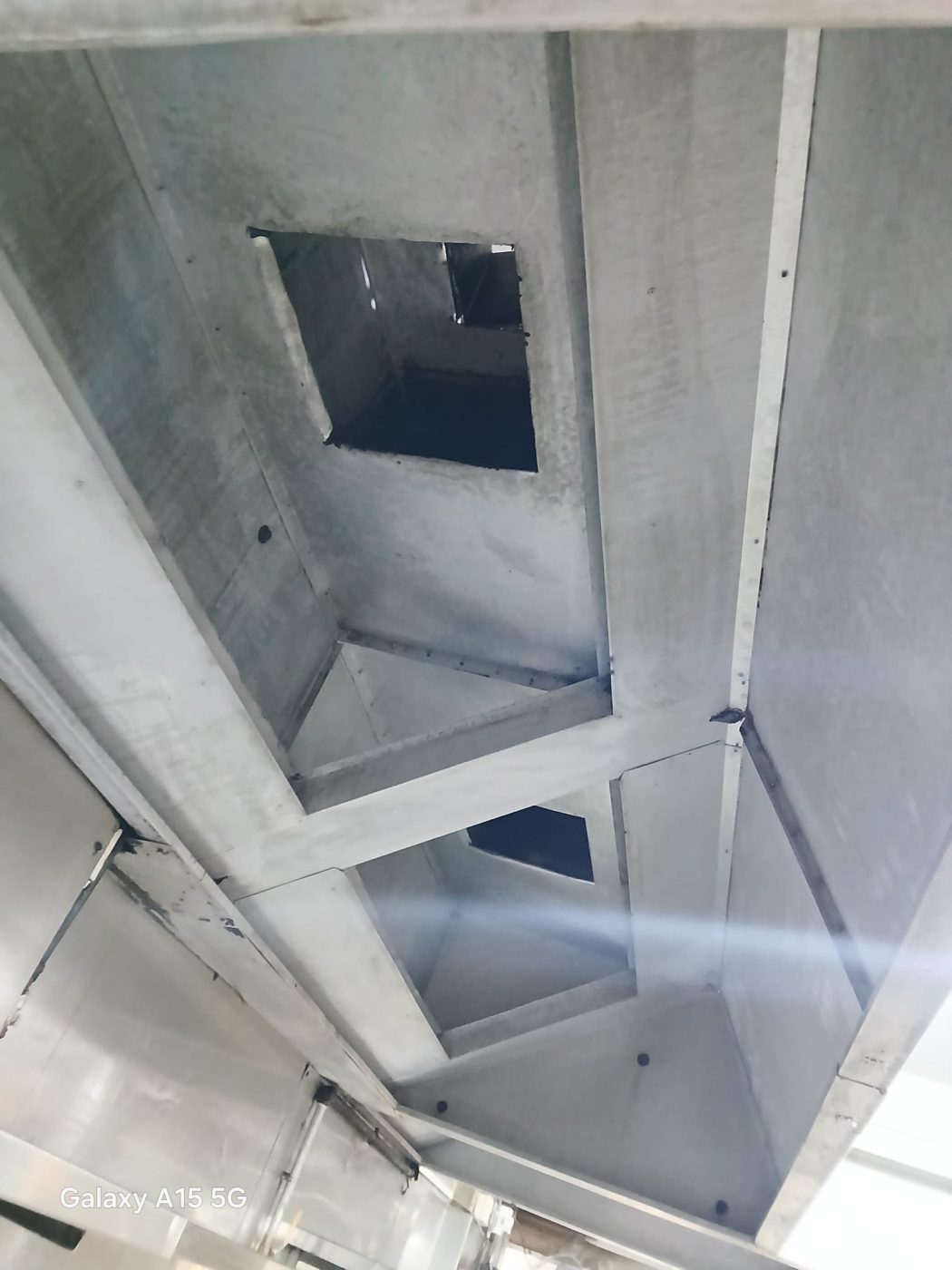
Pictured above: looking up inside a hood on one of BC Air’s projects (S Luck, Serangoon), at the openings that connect the hood to the duct. This is a photo from our own work, reused here because it shows where the air leaves a hood. When several hoods share one fan, each of those openings is a path the air can favour.
The complaint is always the same shape. One hood in the kitchen works beautifully. Another, a few metres down the same run, lets smoke roll out from under the canopy. Both were built together, both have clean filters, and the fan on the roof is turning. Someone says the fan must be too small, and someone else says the far hood was badly made.
Usually neither is true. When several hoods share one duct and one fan, the air does not divide itself fairly. It takes the easiest path, and the easiest path changes over time. This post is about why that happens, what changes it, and the point at which it is worth asking for the system to be rebalanced rather than adjusted by whoever is nearest a damper.
Why the air does not share itself out
A fan pulls from the duct, and the duct pulls from every hood connected to it. The hood with the least resistance between it and the fan gets the most air. The hood at the far end of the run, or the one with the longest branch, extra bends or a more restrictive filter bank, gets what is left.
That is why a multi-hood system has to be balanced when it is commissioned. Air balancing means measuring the airflow at each hood and each supply outlet, then adjusting dampers, drive speeds and outlet settings so that each hood receives its designed share, and recording the readings as a baseline. We explain what that step involves in make-up air and air balancing. A balanced system is correct on the day it is set. It is not locked.
What pushes it out of balance
Nothing needs to break for a balance to drift. These are the ordinary causes:
- Grease building up unevenly. Deposits narrow a branch or a section of duct, so resistance rises on that path and the airflow falls. It happens in one direction only, and it rarely happens evenly: the branch serving the wok line fills faster than the one serving a steamer.
- A damper that was knocked. A damper is moved during a clean, a repair or a fan visit and not put back, or someone opens one fully on a hood that seemed weak. The next hood along then loses what that one gained.
- A different filter type. Mesh sitting in a hood built for baffles, or a filter bank refitted with a gap, changes the resistance across that hood and therefore its share of the air. We cover the filter side in replacing a damaged baffle filter.
- A new appliance under one hood. A hood sized before the extra equipment existed now has more to capture from the same share of air. The line-up question is set out in adding cooking equipment to an existing hood.
- Drive settings and rotation. A variable speed drive turned down at prep hours, or a fan that was reversed during unrelated electrical work, changes what every hood receives, not just one.
- Changes on the supply side. A door propped open, a make-up air outlet blocked, or a new partition changes the pressure each hood is pulling against.
Why a bigger fan or a wide-open damper makes it worse
The instinct is to fix the weak hood by pulling harder. Opening its damper fully takes air from the other hoods, so the problem moves rather than going away. A bigger fan removes more air from a kitchen that may not be getting replacement air, and a kitchen short of replacement air goes negative: doors get heavy, the hoods capture less, and the kitchen pulls air from the places you least want it to come from. As we say in the make-up air post, nine times out of ten a bigger fan makes it worse.
A damper is a balancing tool. It is not a volume knob for one hood. Moved without a reading, it only redistributes the problem.
Five signs it is a balance problem, not a fan problem
- One hood, or one station, loses capture while the others hold. If the whole line is smoky, start with the exhaust is running but the kitchen is still smoky.
- Capture got worse after a clean, a repair, a filter change or an equipment change, and you can put a date on it.
- The weak hood is the one furthest from the fan, or on the longest branch.
- Shutting down one hood noticeably helps another.
- Nobody can find the figures the system was balanced to.
The last one matters most. Without a commissioning record, “it seems weaker than it used to be” is an opinion. With one, it is a measurement against a known number, and the cause can usually be found quickly.
Before you touch a damper
- Do not adjust anything first. Photograph every damper handle and the position it is in before anyone moves it, so there is something to return to.
- Check the cheap things. Filters in the right type, in the right place and fitted the right way round; the grease cup emptied; the fan turning the right way if there has been electrical work.
- Write down what changed and when. A clean, a new appliance, a menu change, work elsewhere in the building. Dating the change often names the cause on its own.
- Ask who last touched the dampers. If the answer is “the cleaning team” or “someone from the landlord’s side”, say so when you call.
When to ask for a rebalance
It is worth asking for a measured rebalance when any of these is true:
- You have added, moved or swapped appliances under one or more hoods.
- One hood has lost capture and the checks above have not fixed it.
- The system has been repaired, had a fan or drive replaced, or been modified, and nobody has measured the airflow since.
- The kitchen layout has changed: a partition, a new door, a different make-up air arrangement.
- There is no baseline at all. The first measured set of readings is the baseline you can compare against later.
What a rebalance should leave you with
A rebalance is a measured job, not a visit that ends with “adjusted, seems fine”. Ask for a one-page record with these on it:
- Each hood identified by name or position, with the airflow measured at it.
- The figure each hood was designed or intended to receive, where one exists, and the difference.
- The position of each damper and drive setting after the work, marked so it can be found again.
- The pressure relationship between the kitchen and the dining area, which should leave the kitchen marginally negative so smell travels towards the hood rather than the customers.
- Hood capture checked with the equipment actually running.
- The date, who measured, and anything that could not be checked.
If the design figures do not exist, say so. There is nothing to balance to, and the work becomes setting a sensible baseline rather than restoring an old one. That is still worth doing, and it is the reason to keep the sheet afterwards.
A rebalance also cannot fix a hood that is the wrong size for the equipment under it, or a duct with grease loading that has narrowed the branch. If the measurement shows that, the honest answer is to clean or redesign first, and to balance afterwards. For a new design or a system that is not performing, the CFD modelling and air balancing page sets out how we approach it: we assess what the existing kitchen is doing before recommending what to adjust.
Keep it from drifting again
- Keep the readings sheet where the kitchen manager can find it, not only with the contractor.
- Mark the damper positions, and tell every cleaning or repair team that the dampers are set and should be reported, not moved.
- Report a station that loses capture straight away; it is usually a damper or a filter, and it is quickest to fix early.
- Keep the duct clean. Grease is the slow cause, and the one that moves the balance without anyone touching anything.
- Before adding equipment, ask which hood it goes under and whether that hood has air to spare.
What it costs
We do not publish a price for balancing work. It depends on how many hoods are on the system, how many supply outlets there are and how accessible the dampers are, so we quote once we know the kitchen.
What to send us
- How many hoods share the fan, and which one is weak.
- What changed in the kitchen, and roughly when.
- Whether you have any commissioning or balancing figures.
- When the duct, fan and filters were last cleaned.
- Photographs of the dampers, if you can reach them safely, and of the hoods from the front.
One hood not keeping up? WhatsApp BC Air on 8989 2833 with the details above. We are on 24/7 standby, and scope and pricing follow an assessment.
Related reading: make-up air and air balancing · the readings and documents to ask for at handover · adding cooking equipment to an existing hood
Questions
Common questions
Why does one hood on a shared exhaust work and another does not?
When several hoods share one duct and one fan, the air favours the path of least resistance. The hood closest to the fan, or on the shortest branch, gets the most air and the one at the far end gets what is left. A system balanced at commissioning can drift when grease builds up unevenly, a damper is moved, a filter type is changed or an appliance is added.
Will a bigger exhaust fan fix a weak hood?
Usually not. A bigger fan removes more air from a kitchen that may already be short of replacement air, which deepens negative pressure and often makes capture worse. Fully opening the damper on the weak hood only takes air from the others. A measured rebalance finds where the air is going before anything is changed.
What is air balancing in a commercial kitchen?
Air balancing is the measured step where airflow is measured at each hood and each supply outlet, and dampers, drive speeds and outlet settings are adjusted so each hood receives its intended share. Hood capture is confirmed with the equipment running, the kitchen-to-dining pressure is checked, and the readings are recorded as a baseline to compare against later.
When should a multi-hood kitchen ask for a rebalance?
After appliances are added, moved or swapped; after a fan, drive or duct repair that nobody has measured since; when one hood has lost capture and the simple checks have not fixed it; after a layout change such as a new partition or door; and when no baseline readings exist at all.
What should a rebalance record show?
Each hood identified, the airflow measured at it, the figure it was meant to receive where one exists, the damper and drive positions after the work, the pressure relationship between kitchen and dining area, a capture check with the equipment running, and the date, who measured and anything that could not be checked.
How much does air balancing cost?
BC Air does not publish a price for balancing work. It depends on the number of hoods and supply outlets and how accessible the dampers are, so BC Air quotes once it knows the kitchen.