
30 Jul 2026 · Fire Safety
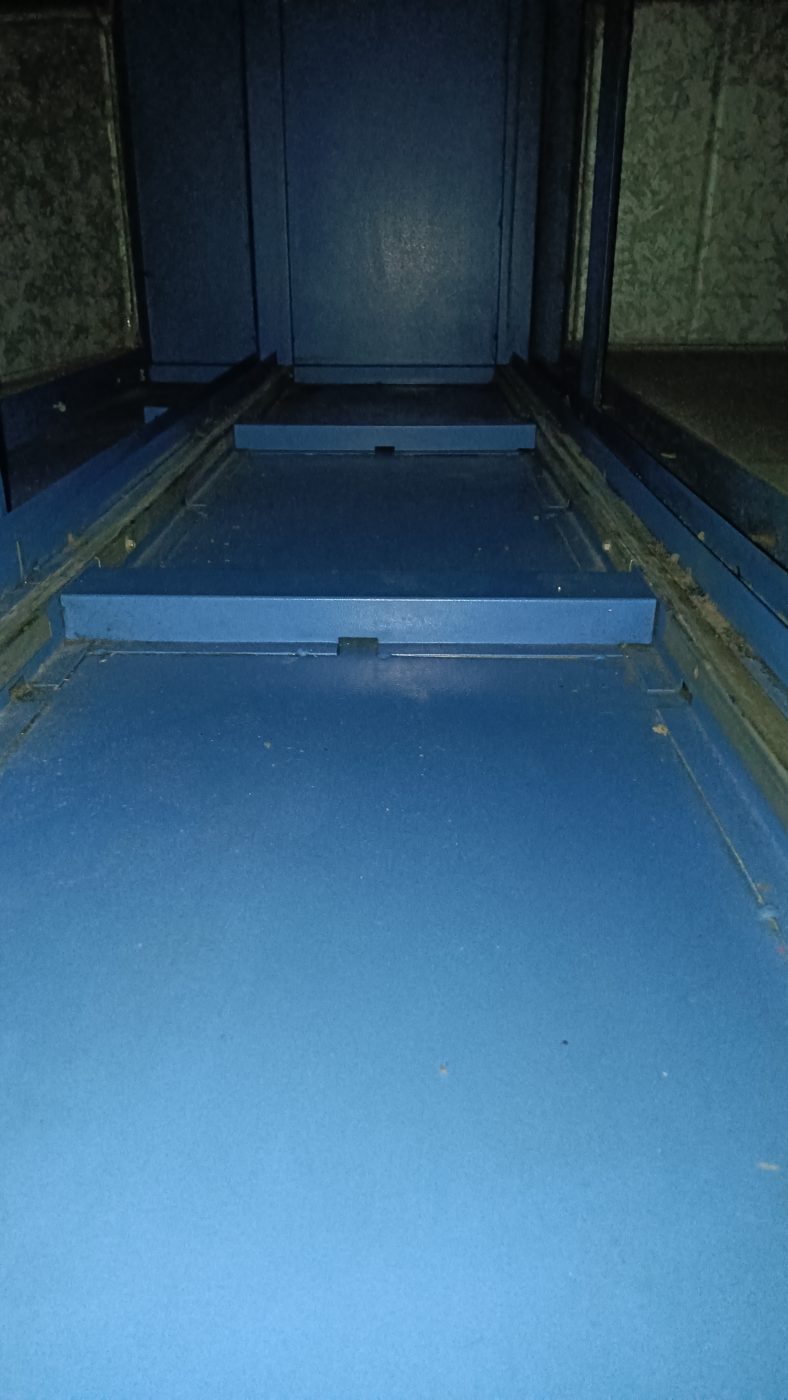
Grease build-up inside kitchen exhaust ductwork is a leading cause of commercial kitchen fires in Singapore. When cooking fumes cool inside the duct, grease condenses on internal surfaces. Over time it becomes thick, highly flammable, and invisible to kitchen staff — until a fire starts. Regular professional cleaning is the only reliable way to control the risk.
Grease build-up inside kitchen exhaust ductwork is, in our experience, the single most underestimated fire hazard in any commercial kitchen. We've opened ducts above busy restaurants, hotel banquet kitchens and food court stalls and found grease deposits so thick you could carve them. That grease is flammable. It sits hidden above the ceiling, out of sight of kitchen staff and even most fire inspectors — until something ignites it. Here's what we've learned from years of cleaning, inspecting and repairing these systems, and what every kitchen operator in Singapore should know.
Every time your wok burner fires up, cooking fumes — laden with grease, moisture and combustion by-products — are drawn up through the exhaust hood and into the ductwork. As those hot, greasy fumes travel along the duct and cool against the metal walls, grease condenses and sticks. It's the same physics as condensation on a cold glass, just a lot stickier and a lot more dangerous.
The rate of build-up depends on several factors:
Very. Accumulated grease is effectively a solid fuel lining the inside of a shaft that runs through your ceiling, roof space and building structure. All it needs is an ignition source — a small flash-back from a burner, a spark from a failing fan motor, or even an ember drawn up from an open flame — and that grease will burn fiercely. Because the duct acts as a chimney, a grease fire inside it has abundant oxygen and can travel the entire length of the run in seconds, pushing flames and superheated gases into ceiling voids, roof spaces and adjacent tenancies.
SCDF and NEA regulations exist specifically because of this risk. Operators are required to maintain exhaust systems in a clean and serviceable condition. We always confirm the exact current requirements with the relevant authority before quoting, because the specifics can be updated — but the underlying principle has never changed: a grease-laden duct is a non-compliant duct, and it is a fire waiting to happen.
This is the part that surprises most kitchen owners. The canopy filters are visible — you can see when they're dirty, and staff usually clean them fairly regularly. But beyond the filters, the duct system extends out of sight:
On one kitchen we serviced, the owner was diligently cleaning the canopy filters every week — good practice — but the horizontal duct run above the ceiling hadn't been touched in two years. The grease deposit on the bottom of that duct was over 25mm deep. That kitchen had a compliant-looking canopy and a ticking clock above the ceiling.
A proper clean is not a wipe-down of the accessible surfaces. When we carry out exhaust duct cleaning, we access the full system — not just what's easy to reach. That means cutting and reinstating access panels where none exist, working through the duct run section by section, and applying our own BC Air degreaser chemistry at the right concentration and dwell time for the level of deposit we find.
We use:
We photograph and document the condition before and after, so you have a record for compliance purposes. That record matters if you're ever asked to demonstrate due diligence to NEA or SCDF.
There's no single answer that fits every kitchen, and anyone who quotes you a universal figure without looking at your operation is guessing. The honest answer is: it depends on your cooking volume, your fuel type, what you cook and how well your canopy filters are maintained.
As a working guide from what we see in the field:
We'd rather inspect your system and give you an honest frequency recommendation than sell you a service schedule that's more or less than what your kitchen actually needs.
Yes — significantly. When we design and build exhaust systems, we factor in grease load from the start. Duct sizing, air velocity, canopy capture velocity, filter specification and access panel placement all affect how quickly grease accumulates and how easily the system can be cleaned.
A well-designed system with properly positioned access panels, appropriate duct gradients (so condensed grease drains to a collection point rather than pooling) and correctly specified canopy filters will accumulate grease more slowly and be far easier to clean thoroughly when the time comes. Retrofitting access panels and correcting poor duct layouts is work we do regularly — and it always pays off in reduced cleaning costs and lower fire risk over the life of the system.
Honestly, you usually can't tell just by looking at the canopy. The grease that poses the greatest fire risk is deep inside horizontal duct runs and bends above the ceiling — out of sight entirely. The only reliable way to know is to have someone open the duct and inspect it. We carry out inspection visits and will tell you exactly what we find, with photographs. If your ductwork hasn't been professionally cleaned in the last six months and you run a high-heat kitchen, it almost certainly needs attention.
This is a question for your insurer, not us — but what we can tell you is that insurers and loss adjusters routinely examine cleaning and maintenance records after a kitchen fire. If there's no evidence of regular, professional duct cleaning, you may face a very difficult conversation about whether the risk was properly managed. Keeping documented cleaning records is straightforward protection. We provide before-and-after photographic reports for exactly this reason.
At minimum, expect a notice requiring you to rectify the condition within a specified timeframe. In more serious cases, or where a grease fire has actually occurred, the consequences can include fines and potential suspension of your food business licence. We always recommend confirming the precise current requirements directly with the relevant authority, but the regulatory intent is clear: operators are responsible for maintaining exhaust systems in a safe, clean condition. We can help you get there and stay there.
Yes — this is the norm for most of our clients. We schedule cleaning during your kitchen's off-peak hours or overnight to minimise disruption. Our 24/7 standby capability means we're not limited to standard working hours, and for urgent situations — after a grease incident, for example, or ahead of an inspection — we can mobilise quickly. We'll work around your operation, not the other way around.
Full replacement is rarely the first answer. In most cases we can improve fire safety significantly through a combination of thorough cleaning, fan servicing, access panel installation and targeted modifications to duct layout or filter specification. We assess each system on its own merits. If replacement really is the right call, we'll explain why clearly — and we design and fabricate in-house, so we're not giving you that advice to push a sale from a third party.
If it's been a while since your ductwork was properly inspected, or you're not sure what state your exhaust system is in, get in touch with us for a quotation. We'll come and look at the system, tell you exactly what we find, and recommend only what's genuinely needed. Our 24/7 standby means that if something is urgent, we can respond — day or night.
Also worth reading: baffle vs mesh hood filters — what each type does, and how the wrong one ends up in the frame.
Also worth reading: behind the baffle filters - the part of the hood nobody looks at.
Also worth reading: the Duct You Cannot Open Is the Duct That Never Gets Cleaned.
Also worth reading: hotpot and Korean BBQ table extraction — why buried table ductwork is the hardest grease-laden duct to keep clean, and why access has to be designed in.
Whatever the filters miss ends up at the outlet — see where the duct terminates, and why it causes complaints.
Where the grease collects is decided by how the duct was built - what the duct is made of and why it leaks.
We design, clean, repair and maintain commercial kitchen exhaust systems across Singapore — on 24/7 standby.