
18 Jul 2026 · Cleaning & Compliance
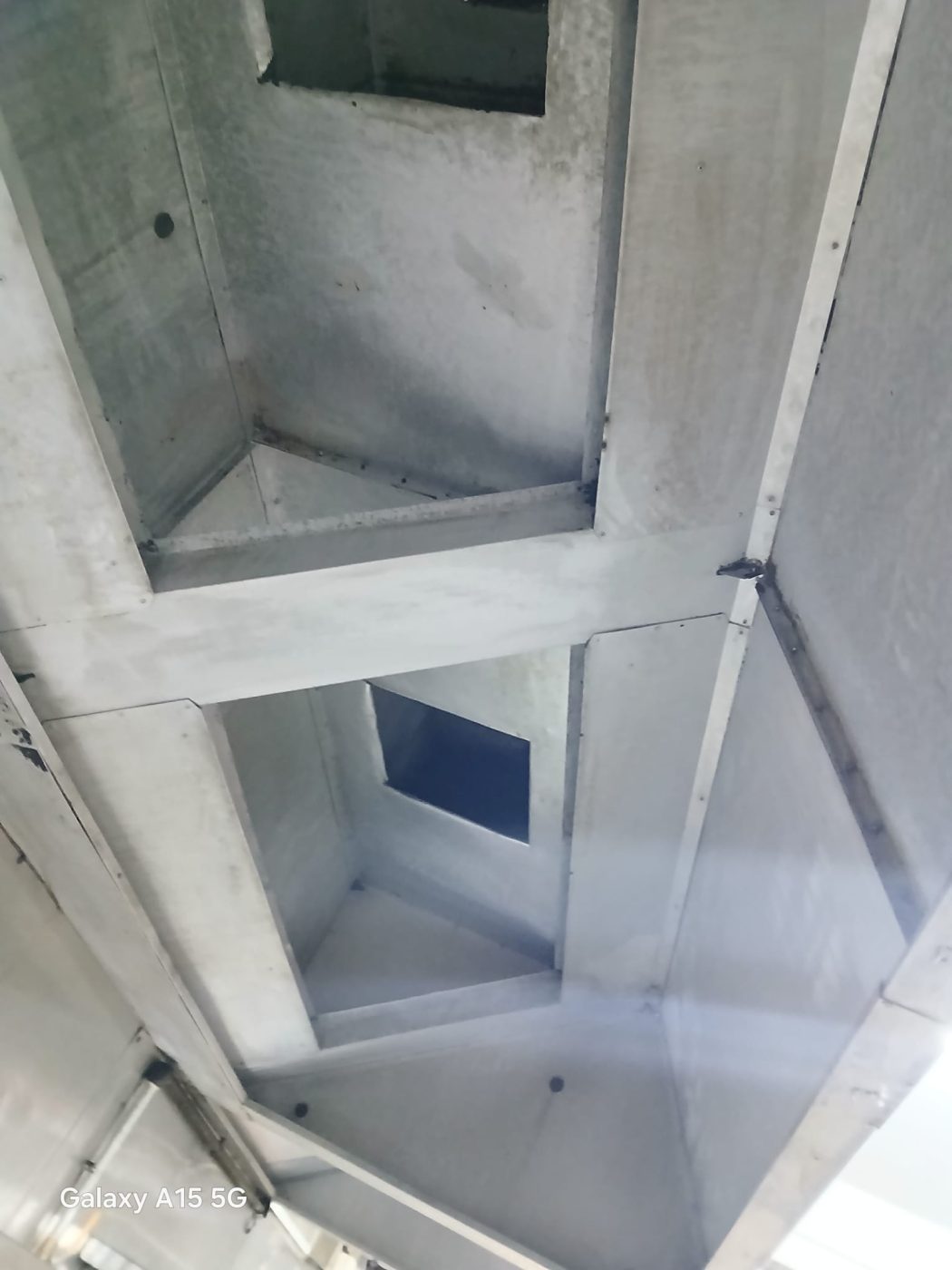
A proper kitchen exhaust cleaning service must cover the full system: canopy filters and grease traps, all accessible ductwork, the exhaust fan housing and blades, and the grease collection points. Chemical degreasing, a post-clean inspection and a written service record are all non-negotiable parts of the job.
When a client calls us asking why their kitchen smells, why their exhaust fan sounds rough, or why the NEA inspector flagged them — the answer is almost always the same: their last cleaning was incomplete. A proper kitchen exhaust cleaning service is not just a wipe-down of the canopy filters. It covers the full system, end to end, and leaves behind a written record you can show an authority if asked. Here is exactly what we believe every commercial kitchen exhaust cleaning should include, and why each part matters.
Grease is the enemy. Every time your kitchen operates, grease-laden air travels from the cooking surface through your canopy, into the ductwork, past the fan, and out through the discharge point. At every step, a thin film of grease deposits on the internal surfaces. Over time that film builds up — and built-up grease is both a fire fuel and a ventilation problem. Airflow drops, odours worsen, and a single ignition event can turn a grease-coated duct into a chimney fire that travels through your entire building.
We have attended kitchens where the duct interior was coated with grease so thick it had solidified into a waxy layer centimetres deep. At that point you are not cleaning — you are carrying out remediation work. Regular, thorough cleaning prevents you from ever reaching that stage.
The canopy is the first line of defence, and it is also the most visible part of the system. A proper clean here means:
A canopy that looks clean on the outside but has a grease-saturated plenum is a false sense of security. We always open it up.
This is where most corners get cut, and it is the section that matters most from a fire safety standpoint. Ductwork cleaning should include:
We always confirm the exact duct cleaning frequency requirement with the relevant authority before quoting, as it can vary depending on kitchen type and grease load. High-volume operations — wok kitchens, charcoal grillers, dim sum houses — generate far more grease than a light-fare café and need more frequent attention.
The exhaust fan is the heart of your ventilation system, and it accumulates grease faster than most operators realise. A complete fan service as part of your exhaust clean should cover:
A service report is not optional — it is part of what you are paying for. At minimum, the report should include:
We provide a written service record on every job. If an NEA or SCDF officer asks for your cleaning history, you need to be able to produce this. We have seen operators fined not because their kitchen was dirty on the day of inspection, but because they could not prove when the last clean was done.
In our view, yes — at least at a basic level. A good cleaning team should flag anything obviously wrong while they are inside the system. We routinely note:
We do not charge extra to flag these observations. It is part of serving a client properly rather than just clearing grease and leaving.
It depends on the type and volume of cooking. High-grease operations — wok cooking, charcoal grilling, deep frying — typically need cleaning more frequently than lighter operations. We always assess the kitchen's cooking profile and grease load before recommending a frequency, and we confirm compliance requirements with the relevant authority. A general rule of thumb is quarterly for heavy-use kitchens, but we have clients who need us more often than that.
We use our own BC Air chemical series, which we have developed and tested for commercial kitchen use. Our degreasers are formulated to break down polymerised grease effectively without leaving residues that would be unsafe near food contact surfaces. After chemical cleaning, we rinse thoroughly and ensure the system is dry and clear before it is returned to service.
We encounter this regularly. Where access panels are missing or incorrectly positioned, we can fabricate and install proper access openings as a separate scope of work. Running a duct cleaning without proper access means a significant portion of the duct run is simply not cleaned — which is a compliance and fire risk issue. We prefer to do the job properly or to be transparent with the client about what we could and could not reach.
Yes. While grease accumulation is primarily an exhaust duct issue, supply air ductwork in kitchen environments still accumulates dust, mould and contaminants that affect air quality and cooking conditions. We handle both sides of the ventilation system and can quote them together or separately depending on what the kitchen needs.
We document it, explain it in plain language, and give you a repair or replacement recommendation. Because we carry our own parts — motors, fans, control components — and handle fabrication in-house, we can often turn around a repair faster than you would expect. Our 24/7 standby service means that if something critical comes up, we are not leaving you to manage a broken system over a weekend.
If you are not sure whether your last exhaust clean was done to the standard your kitchen actually needs, get in touch with us for an assessment. We will tell you honestly what we find. Our 24/7 standby line means you do not have to wait for office hours — reach out whenever it suits you and we will put together a quotation based on your actual system, not a generic package.
At the other end of the lease, what reinstatement asks of a kitchen exhaust system covers strip-out versus hand-over and how the original condition record decides the bill.
Related: the scope is only half of a good clean. What to prepare before the crew arrives, and the ten-minute check to run before the first burner is lit, are in kitchen exhaust cleaning night: what to prepare, and what to check before you cook.
Related: a good clean opens the fan and the duct, so it sometimes finds a fault. What should happen next is in a fault found during an exhaust clean: fix tonight, book it, or don't cook.
We design, clean, repair and maintain commercial kitchen exhaust systems across Singapore — on 24/7 standby.