
21 Jun 2026 · Design & Build
We size a kitchen exhaust hood by calculating the heat and grease load of every piece of cooking equipment, then determining the correct capture velocity, hood overhang and exhaust airflow rate — all before a single bracket goes up. Get it wrong and you get smoke, grease buildup and a compliance problem.
We size a kitchen exhaust hood by working through the heat output and grease load of every piece of cooking equipment under it, calculating the airflow needed to capture and contain all the effluent, and then confirming the hood geometry — length, width and mounting height — before anything gets fabricated. It is a methodical process, and cutting corners at this stage is exactly what causes kitchens to fill with smoke, grease to cake on ceilings, and operators to fail their NEA inspections.
A hood that is too small simply cannot capture all the smoke, steam and grease-laden vapour rising from your cooking line. That effluent goes somewhere — usually across your kitchen ceiling, into your air-conditioning system, or out into the dining area. We have walked into kitchens where the existing hood was installed by someone who measured it to fit the space rather than the equipment, and the grease deposits on the structural beams told the whole story.
A hood that is oversized is a different kind of problem. You are moving far more air than you need to, which means a larger make-up air system to compensate, higher energy bills every month, and a noisier kitchen. We always aim for the right size — not the safe-looking big one.
Before we put a single figure on paper, we need to understand your cooking line in detail. That means:
The core of the calculation is achieving the right capture velocity at the face of the hood — the air speed at the open perimeter that pulls rising effluent inward rather than letting it spill out. For most commercial cooking equipment in Singapore, we work to an accepted face velocity range, though the exact figure shifts depending on the type of cooking and the hood configuration.
From there, the exhaust airflow volume (measured in cubic metres per hour, or CMH) is derived from the hood face area multiplied by that velocity. A wider, lower-mounted hood over a high-intensity wok line needs a meaningfully higher airflow rate than a narrower hood over a holding oven. We also factor in:
The hood must extend beyond the cooking equipment on every open side. This overhang is not arbitrary — it compensates for the fact that cooking vapours do not rise in a perfectly vertical column. They spread. As a general principle, we allow for a meaningful overhang on all unobstructed sides, and more overhang when the mounting height is greater or when the equipment runs very hot. A hood flush with the edge of the cooking suite will miss a significant portion of the effluent. We have seen this cause grease to accumulate on the wall directly behind the equipment because the hood was drawing air across the surface rather than capturing the plume properly.
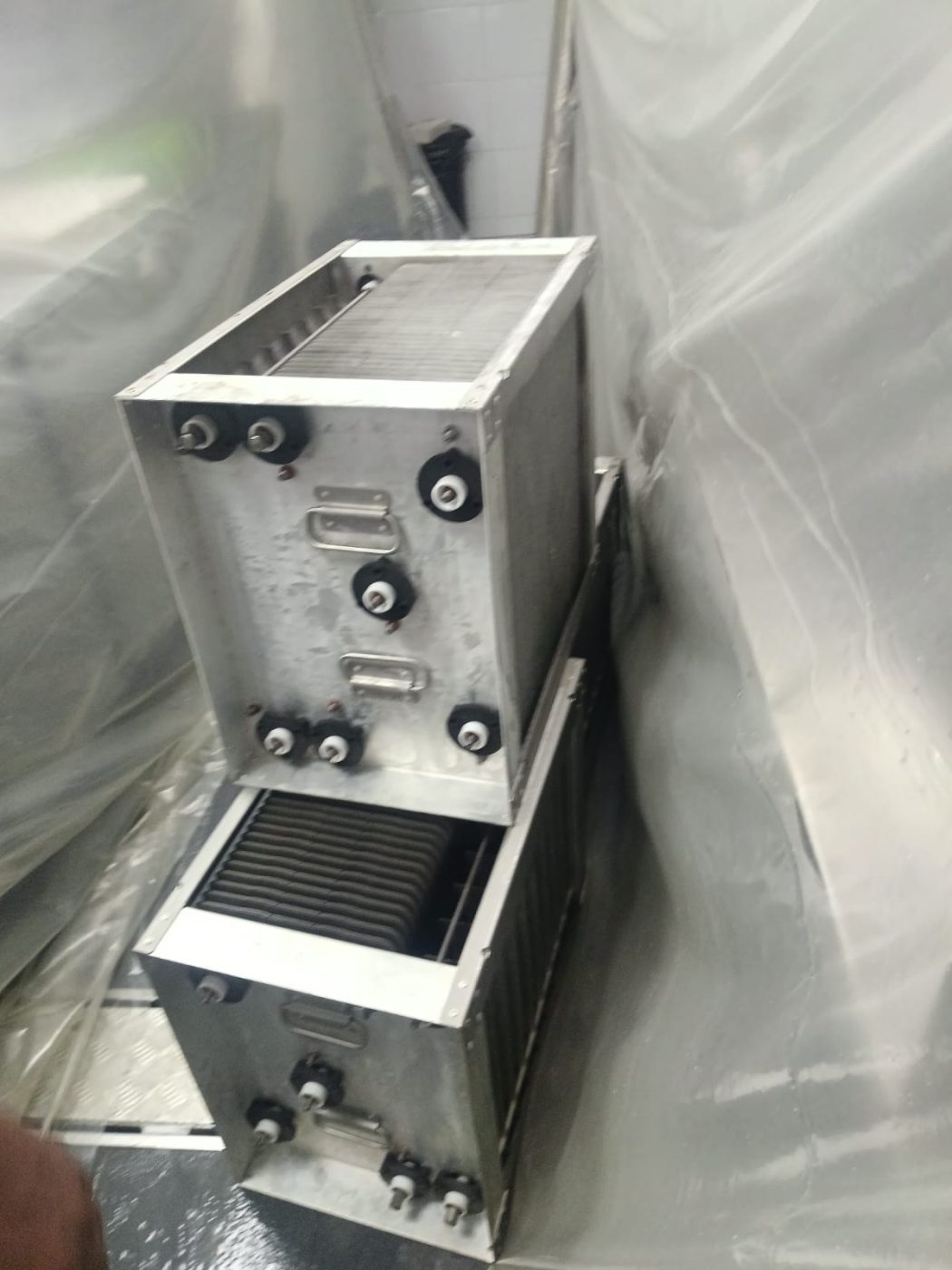
Airflow sizing gets you the right volume of air moving. Grease load sizing determines what has to happen to that air before it leaves the building. High grease-load cooking — wok frying, deep frying, chargrilling — requires properly rated grease filters or baffle filters, adequate drain gutters, and in many cases additional downstream filtration. For sites where odour is a compliance concern or where neighbours are close by, we design in our carbon bank systems or germicidal UV systems as part of the same package.
We stock and fabricate our own filter housings, carbon banks and UV units, so we are not dependent on external suppliers to complete a design. That matters for lead times and for long-term maintenance, because when filters need replacing two years down the line, we already know exactly what is in your system.
Yes, and we take this seriously. NEA sets requirements around ventilation rates and grease management for food establishments. SCDF has requirements that touch on the fire risk associated with grease accumulation in exhaust ductwork — requirements that directly inform how we design duct access panels, duct slope for grease drainage and clearances around the system. BCA requirements apply to the building integration side of the installation.
We always confirm the exact current requirements with the relevant authority before quoting, because these requirements do get updated and we are not willing to design something that passes today but creates a compliance headache for you at the next inspection.
Only if the previous one was sized correctly for your current cooking line. We have seen plenty of kitchens where the original hood was a rough estimate, or where the cooking equipment has changed since it was installed. We always verify against the actual equipment before we confirm a size — it takes a site visit and a few data sheets, and it saves a lot of grief later.
The two are directly linked. Every cubic metre of air we exhaust has to be replaced by make-up air, otherwise the kitchen goes negative-pressure and the hood stops working properly — doors become hard to open and air gets drawn in from uncontrolled gaps. We size both sides together and design the supply air delivery point so it supports rather than disrupts the capture pattern at the hood face.
Yes, significantly. The higher the hood is mounted, the more the thermal plume has spread by the time it reaches the hood face, and the wider the hood needs to be to intercept it. Where ceiling height limits how low we can hang the hood, we compensate with increased overhang and sometimes a higher airflow rate. It is one of the first measurements we take on a site visit.
It depends on what you are adding and what headroom the existing system has. Adding a high-output charbroiler to a line that was sized for lighter cooking could push the system beyond its design capacity. We will assess the existing hood, fan and duct and tell you honestly whether the system can absorb the additional load or whether it needs upgrading. We would rather tell you the truth at the assessment stage than have you call us back because the kitchen is smoky.
If you are planning a new kitchen, extending your cooking line, or just not sure whether your existing hood is up to the job, give us a call or send us your equipment list and we will come back to you with a proper assessment. Our team is available around the clock — including our 24/7 standby service for urgent situations — so reach out whenever it suits you.
We design, clean, repair and maintain commercial kitchen exhaust systems across Singapore — on 24/7 standby.