
26 Jun 2026 · Fire Safety
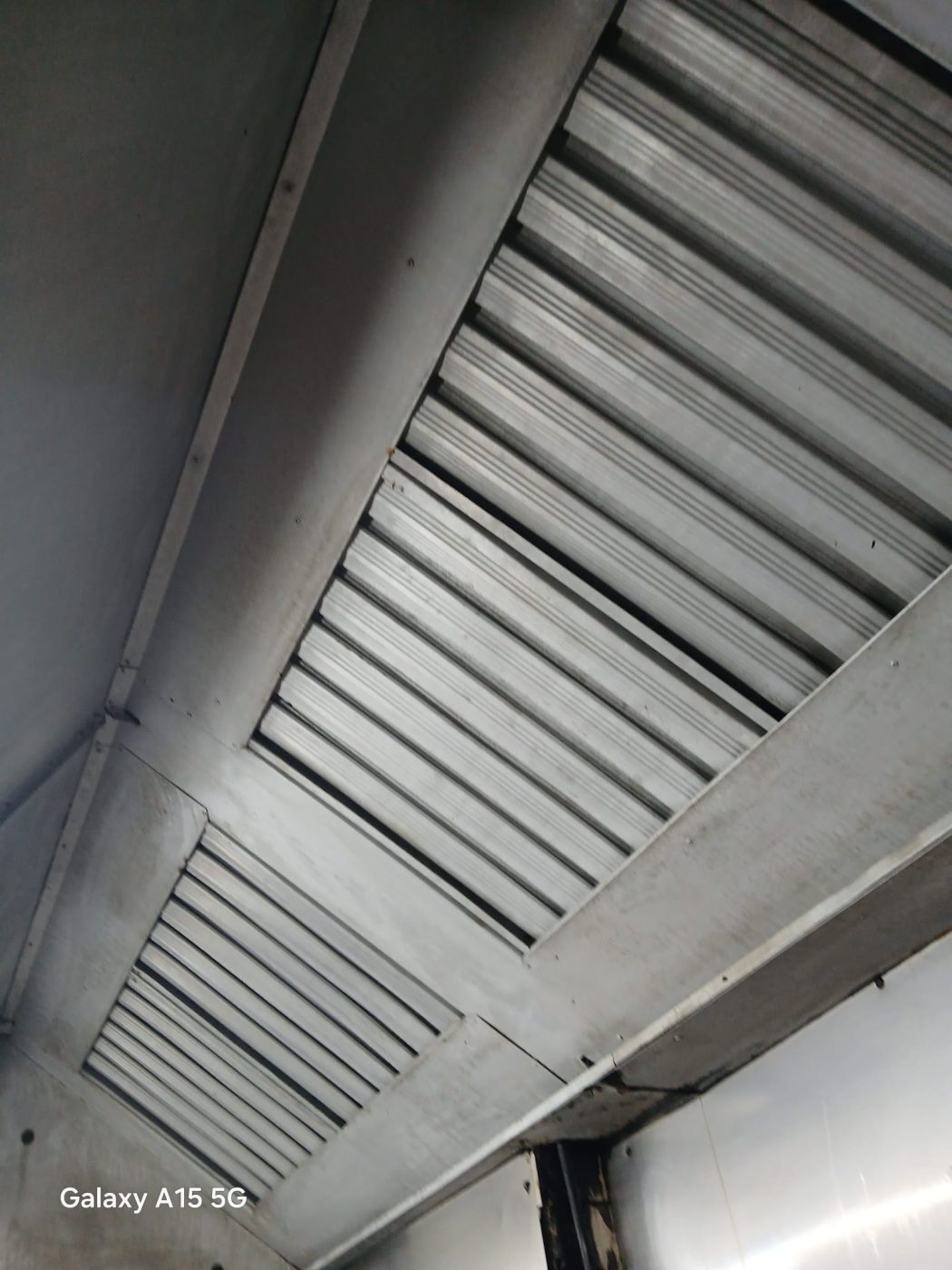
SCDF looks at whether your commercial kitchen exhaust system is properly designed to contain and remove grease-laden air, whether fire suppression is integrated, and whether the ductwork construction and clearances meet fire code requirements. We help Singapore kitchens get this right from design through to ongoing maintenance.
When SCDF reviews a commercial kitchen ventilation system, they are not just ticking a box about airflow. They are looking at whether grease-laden air is being safely captured, transported and expelled — and whether the whole system will behave correctly if a fire starts. We work through these requirements with clients regularly, whether we are designing a new kitchen exhaust system or helping an existing operator get their paperwork in order before an inspection. Here is what we have learned matters most.
Grease is fuel. Every cooking session deposits a thin layer of grease inside your exhaust hood, ductwork and fan. Over time, that buildup becomes a serious fire load. If a flare-up or grease fire occurs at the cooking line, a poorly designed or maintained exhaust system can carry that fire deep into the building — through the duct, into the ceiling void, across floors.
SCDF's concern is not ventilation for comfort. It is containment and suppression of a fire that starts in or near the exhaust path. That shapes every requirement they apply to commercial kitchen exhaust systems.
The ductwork carrying grease-laden air must be built to resist fire for a defined period. SCDF generally requires kitchen exhaust ducts to be constructed from steel of a specified gauge and to maintain fire-rated separation from combustible building elements. We fabricate our own ductwork in-house and we are familiar with what the code expects in terms of steel thickness, welded seams and access panel placement. A duct with pop-riveted seams and thin sheet metal will not satisfy an SCDF reviewer — and more importantly, it will not hold in a real fire.
There must be adequate clearance between the exhaust duct and any combustible material in the ceiling or wall cavities it passes through. Where that clearance cannot be achieved, a fire-rated enclosure or wrap is required. We always survey the ceiling void before we route ductwork, because problems discovered during an SCDF review are far more expensive to fix than ones we plan around from the start.
The exhaust hood needs to capture grease before it travels into the duct. SCDF expects properly fitted, cleanable grease filters — typically baffle-type filters — installed at the correct angle to drain grease away from the airstream. A hood with gaps around the filters, or filters that have not been cleaned and are saturated, is a direct fire risk and will be flagged. We supply and fit baffle filters as part of our exhaust hood builds and we include filter cleaning in every maintenance programme we run.
For most commercial cooking operations, SCDF requires an automatic fire suppression system — typically a wet chemical system — covering the cooking equipment, the hood plenum and often the duct entry point. This suppression system must be compatible with the exhaust system design: when it activates, the exhaust fan may need to shut down to prevent the suppressant being pulled away from the fire before it can work.
We do not install fire suppression systems ourselves, but we design our exhaust systems to integrate cleanly with them. We coordinate with the suppression contractor to make sure fan shutdown interlocks and access for suppression nozzles are accounted for in our design. A kitchen exhaust system that has not been coordinated with the suppression system is one of the most common reasons an SCDF submission gets sent back for revision.
The exhaust fan itself must be capable of maintaining adequate negative pressure in the duct under cooking load conditions. An undersized fan means grease-laden air escapes into the kitchen rather than being captured — and an oversized fan running at full speed when it is not needed wastes energy and can cause noise complaints. We stock and supply MV fans and we carry out proper airflow calculations before specifying a fan for any project. SCDF reviewers will want to see that the system is designed to handle the actual cooking load, not just a generic number.
Fan placement matters too. Wherever possible, the fan should be positioned so that the majority of the duct is under negative pressure — meaning grease and smoke are being pulled through, not pushed. This limits how far grease-laden air travels through the building under positive pressure if there is a duct breach.
This is the one operators most often underestimate. SCDF and NEA both expect that the system can be — and is being — cleaned and inspected at appropriate intervals. That means access panels in the ductwork at specified intervals, properly positioned for a technician to reach every section. It also means keeping records of cleaning. On more than one kitchen we have serviced, the ductwork had no access panels at all. The previous installer had simply sealed it up. That is not compliant, and it means grease accumulates unchecked.
We install access panels as a matter of course and we provide written service records after every clean, which our clients can produce during an inspection.
In a pre-occupation inspection, a non-compliant exhaust system can delay your Temporary Occupation Permit or prevent you from opening. For an operating kitchen, an SCDF or NEA inspection finding can result in a notice to rectify, a stop-work order, or in serious cases, prosecution. We have helped clients work through rectification notices and we can tell you from experience that getting it right the first time costs far less — in money, time and stress — than fixing a non-compliant installation under pressure.
Generally, yes — if you are operating commercial cooking equipment, the exhaust duct is treated as a grease duct and the construction requirements apply regardless of how busy the kitchen is. The grease load may be lower, but the risk does not disappear. We always confirm the exact requirement with the relevant authority before quoting, because the specific threshold can depend on equipment type and kitchen classification.
You can, but we strongly recommend having us inspect it before you commit. We have walked into existing kitchens where the ductwork was the wrong gauge, the fan was undersized for the cooking load, or access panels were missing entirely. Taking over a non-compliant system means the compliance problem becomes yours. An inspection before handover gives you leverage to negotiate rectification costs with the outgoing party.
Cleaning frequency depends on your cooking load and the types of food you are cooking. High-volume wok cooking produces far more grease than a light café kitchen. NEA guidelines give a general framework, but we recommend a professional assessment so the cleaning schedule is matched to your actual grease accumulation rate. Cleaning too infrequently is a fire risk and a compliance issue; we document every clean so you have the records to show an inspector.
They overlap but focus on different things. SCDF is primarily concerned with fire safety — duct construction, fire suppression integration, and fire-rated separation. NEA focuses more on environmental impact — odour control, exhaust discharge direction, and overall ventilation adequacy. In practice, a compliant kitchen needs to satisfy both, and the design has to account for both sets of requirements from the start. We work across both when we design and build exhaust systems for our clients.
We work with qualified engineers and drafters to produce the documentation needed for submission. Our in-house technical experience means we can provide accurate input on system specifications, and we have gone through this process enough times to know what reviewers look for. We always confirm submission requirements with the relevant professional before proceeding, as requirements can vary with project scope.
We design, clean, repair and maintain commercial kitchen exhaust systems across Singapore — on 24/7 standby.