
19 Jul 2026 · Design & Build
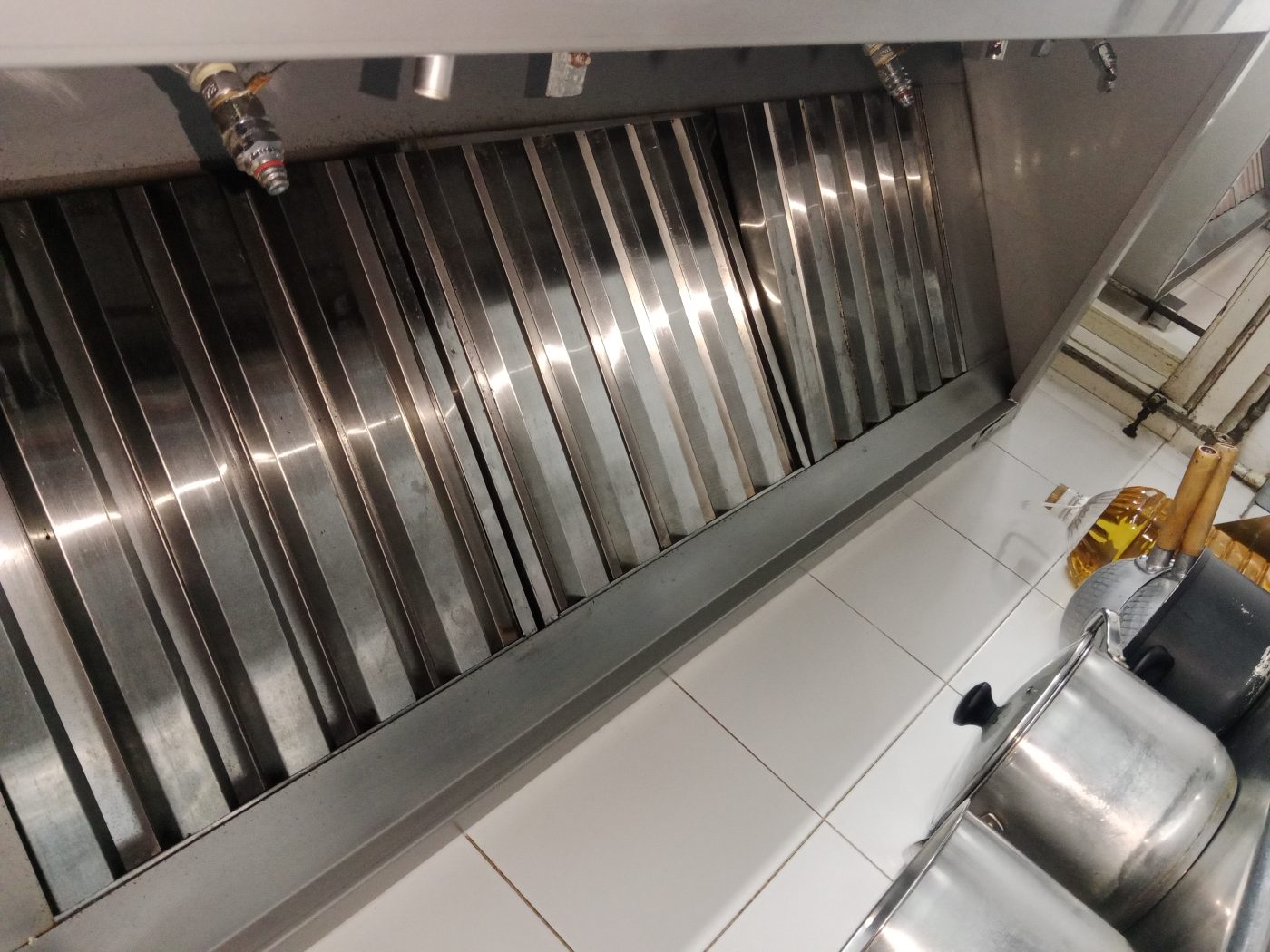
Reducing commercial kitchen heat starts with balancing exhaust and supply air. A correctly sized hood, well-placed make-up air supply and proper fan selection can cut ambient kitchen temperatures significantly, improving staff comfort, reducing fatigue and keeping the space NEA and SCDF compliant.
We get called to a lot of kitchens where the first thing you notice — before you even look at the hood or the ductwork — is the wall of heat that hits you at the door. Temperatures above 35°C at the cooking line are not unusual in under-ventilated Singapore kitchens. The good news is that in almost every case, the problem is fixable with the right exhaust and supply air design. Here is how we approach it.
Heat in a commercial kitchen comes from two main sources: the cooking equipment itself and the people operating it. Gas ranges, wok burners, ovens and fryers all release enormous amounts of radiant and convective heat. In Singapore's already warm and humid climate, that heat has nowhere to go unless the ventilation system is actively removing it.
The most common culprits we find on-site are:
Each of these issues compounds the others. A kitchen that is already too hot works harder on the air-conditioning, which drives up energy costs — and still leaves the staff uncomfortable.
A well-designed system does three things simultaneously: it captures heat and grease-laden air at source, it exhausts that air efficiently out of the building, and it replaces it with fresh, cooler air in a way that does not create cold draughts or short-circuit the exhaust hood.
The ratio between exhaust volume and supply (make-up) air volume matters a great deal. We typically design kitchens to run at a slight negative pressure relative to the dining area — enough to prevent cooking odours migrating out front, but not so negative that the kitchen is pulling in uncontrolled warm air through every gap in the building envelope. Getting that balance right requires airflow calculations based on the actual cooking load, the hood geometry and the duct run lengths.
The hood is the first line of defence against heat. If it does not capture the thermal plume rising from the cooking equipment, no amount of duct or fan work downstream will compensate. We size hoods based on the equipment beneath them and calculate the minimum capture velocity needed to entrain the hot air column. For high-output equipment like commercial wok burners, this means larger overhangs and higher exhaust rates than a standard hood catalogue would suggest.
Once air is captured, it needs to travel through the ductwork and out of the building without losing too much energy to friction. We fabricate our own ductwork and select fans — including the MV fans and components we stock in-house — to match the actual system resistance, not a generic estimate. A fan that is oversized for its duct system will be noisy and inefficient; one that is undersized will not move the air you need.
Where cooking loads vary across service periods — say, a hotel kitchen that runs a full buffet breakfast but a lighter à la carte dinner — we often recommend variable speed drives (VSDs), which we also supply and install ourselves. A VSD lets the fan ramp up during peak demand and back off when the kitchen is quieter, saving energy and reducing wear.
This is the single biggest source of heat problems in kitchens we visit. Exhaust systems are installed, but the make-up air — the fresh air that replaces what is being extracted — is either absent or poorly located. When there is no dedicated make-up air supply, the kitchen draws replacement air through any available gap: doors, service hatches, ceiling voids. That air is warm, humid and uncontrolled.
Properly introduced make-up air should be delivered at a velocity and angle that reinforces the hood's capture zone rather than disrupting it. In some installations, we introduce a portion of the make-up air directly into the hood plenum (short-circuit supply), which reduces the thermal load on the kitchen space while maintaining capture efficiency. The right approach depends on the specific kitchen layout, and we work that out during the design phase.
The direct effect is obvious — lower ambient temperature means a more bearable working environment. But the knock-on effects are significant too. Kitchens that run cooler tend to have lower staff turnover, fewer heat-related incidents and better food hygiene outcomes, since food is less likely to be mishandled when the team is not exhausted from working in extreme heat.
We have walked into kitchens where the exhaust system had not been properly serviced in years. Grease-clogged ductwork had cut airflow by more than half. Once we cleaned and restored the system, the kitchen operators told us the working temperature dropped noticeably within the first service. That is not unusual — it is simply what a functioning system should do.
There is also a compliance dimension. NEA guidelines address ventilation provision in food establishments, and SCDF requirements govern the fire safety of exhaust systems. A kitchen that is too hot is often also a kitchen whose ventilation system is not performing to its design specification — which can create issues at inspection. We always confirm the exact requirement with the relevant authority before quoting, so our clients know what they are signing up for.
If your kitchen team is regularly working in temperatures that feel unbearable, or if you notice condensation forming on walls and ceilings, cooking odours drifting out front, or grease building up faster than usual on surfaces away from the cooking line — these are all signs that the ventilation system is not doing its job. Some of these issues can be resolved with a thorough clean and a fan service. Others require a redesign of the hood or make-up air configuration.
We can assess the situation on-site, take airflow measurements, and give you an honest view of what needs doing and in what order. We do not sub-contract any of this work — our own engineers and technicians handle the assessment, the design, the fabrication and the installation.
The quickest check is to measure airflow at the hood face and compare it to the system's design specification. If airflow is significantly below spec, the system is not removing heat at the rate it should. We carry out these measurements on-site as part of any ventilation assessment. Blocked ductwork, worn fan impellers and grease-laden filters are the most common causes we find.
In our experience, it rarely does on its own. If the exhaust system is not removing heat at source, you are simply asking the air-conditioning to fight a battle it cannot win — and paying a high electricity bill for the privilege. Fixing the ventilation first almost always reduces the air-conditioning load as a side effect, which actually saves money over time.
Make-up air is the fresh air supply that replaces the air your exhaust system removes. Without it, your kitchen depressurises and draws in uncontrolled warm, humid air from wherever it can. In Singapore's climate, that means hot, sticky replacement air that makes the heat problem worse. Virtually every kitchen we design or assess benefits from a properly configured make-up air supply.
Yes, indirectly. A variable speed drive (VSD) allows your exhaust fan to run at higher speed during busy cooking periods — when heat output is greatest — and dial back during quieter times. This means you are moving more air when you need it most, without running the fan flat-out all day. We supply and install VSDs as part of our in-house scope, and we can integrate them into existing systems as well as new installations.
It depends on the cooking load and the type of cuisine. High-volume wok cooking or deep-frying generates grease-laden air that can coat ductwork surprisingly quickly. We generally recommend quarterly cleaning for high-output kitchens and six-monthly for lighter operations, but we assess each kitchen individually and advise accordingly. Deferred cleaning does not just affect performance — it is also a fire risk that SCDF takes seriously.
If your kitchen team is struggling with heat, or if you suspect your ventilation system is not performing as it should, get in touch with us for an on-site assessment and quotation. We run a 24/7 standby service, so whether it is a routine review or an urgent situation, we are ready to help.
Hood running but the kitchen is still smoky? Make-up air and air balancing explains why a correctly sized hood stops capturing when replacement air is missing — and why a bigger fan makes it worse.
Related reading: steam extraction over the wash-up area — usually the hottest, wettest station in the kitchen, and the cheapest one to improve.
We design, clean, repair and maintain commercial kitchen exhaust systems across Singapore — on 24/7 standby.