
24 Jul 2026 · Operations & Cost
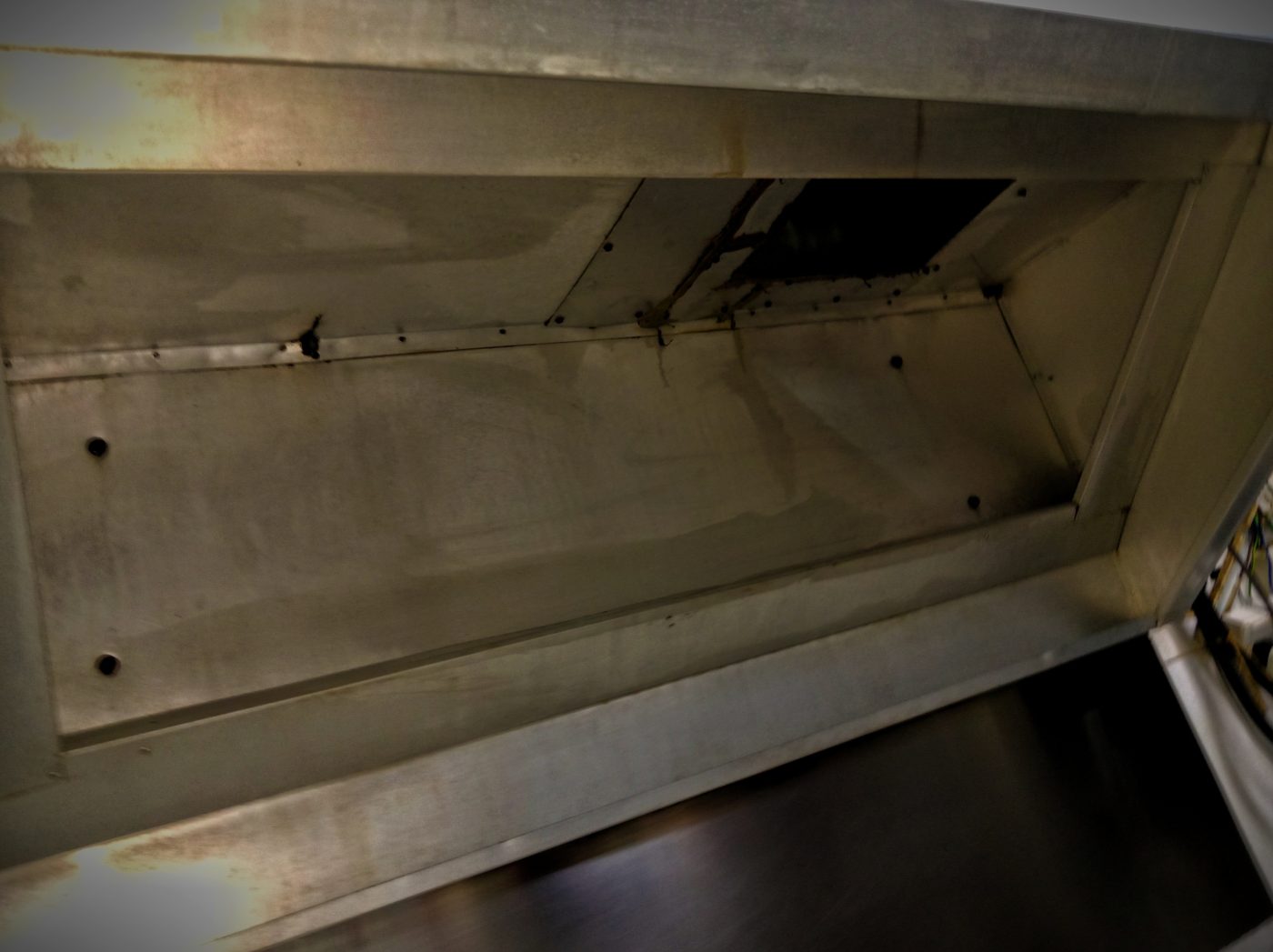
Preventive maintenance on a commercial kitchen exhaust system typically costs a fraction of what an emergency breakdown repair does — especially once you factor in downtime, replacement parts, fire risk, and potential NEA or SCDF compliance issues. We've seen kitchens spend five to ten times more fixing a crisis than they would have spent preventing it.
We'll be honest with you: the call we dread most is the 2 a.m. one — a kitchen is down, a lunch service is at risk, and nobody has touched the exhaust system in eighteen months. We get those calls regularly, and every single time, the repair bill and the lost revenue together dwarf what a simple maintenance schedule would have cost. Preventive maintenance on a commercial kitchen exhaust system isn't a luxury; it's the cheapest insurance a kitchen operator can buy.
When an exhaust system fails, the direct repair cost is just the start. Let's walk through what a typical breakdown scenario actually involves.
An emergency callout — especially outside office hours — costs more than a scheduled visit, full stop. If a motor has seized because a grease-saturated bearing was never checked, we may need to source and fit a replacement motor on short notice. We stock our own motors, MV fans and components precisely so we can respond fast, but that urgency still commands a premium compared to planned work. Emergency labour, expedited parts, and the complexity of working around a kitchen mid-crisis all push the bill upward.
A commercial kitchen that cannot ventilate cannot legally or safely cook. For a restaurant doing three covers a day, every hour offline is revenue gone. For a hotel banquet kitchen or a central kitchen supplying multiple outlets, the ripple effect is even wider. We've attended breakdowns where the kitchen was shut for the better part of a day — and no repair invoice covers what the operator lost at the till.
Grease accumulation inside an exhaust duct is a fire hazard. SCDF requirements exist for exactly this reason, and NEA expects ventilation systems to function properly as a condition of operating food premises. When a system fails an inspection — or worse, when a grease fire breaks out — the consequences go well beyond a repair bill. We always recommend operators keep a maintenance log precisely so they have documentary evidence of due diligence.
A properly structured maintenance programme isn't just about cleaning filters. When we set up a service contract with a client, here's what we're doing on a scheduled basis:
We won't quote you invented statistics, because every kitchen is different — a hawker stall exhaust and a hotel banquet kitchen exhaust are completely different animals. What we will say, from years of experience across restaurants, food courts, central kitchens and institutional canteens, is this:
A reactive repair almost always costs more than the maintenance that would have prevented it.
In our experience, the rough multiplier is somewhere between three and ten times, once you account for emergency callout rates, parts sourcing under pressure, and any associated downtime. On one kitchen we serviced — a mid-sized restaurant group — the operator had deferred maintenance for two years to save money. When the main exhaust fan finally failed, the combined cost of emergency repair, a replacement motor, duct degreasing that was well overdue, and two days of partial closure worked out to more than three years of the maintenance contract they had let lapse. That's a painful lesson to learn.
This is the mechanism most operators don't fully appreciate. Grease isn't just a fire risk — it's mechanically destructive. As grease accumulates on fan blades, it creates an imbalance. An imbalanced fan vibrates. Vibration accelerates bearing wear. Worn bearings increase motor load. Increased motor load shortens motor life. By the time a motor seizes, it has been running in distress for months, and the damage is often total rather than repairable.
A technician who visits on a schedule catches the imbalance early — often just by listening to the fan run — before it becomes a cascading failure. That's exactly the kind of judgment call that comes from doing this work every day, in-house, with our own team.
Not all service contracts are equal. When you're evaluating a maintenance programme — whether with us or anyone else — look for these things:
We do all of this in-house. We fabricate and stock our own components, run our own chemical products, and our team is on standby around the clock. When something goes wrong outside a scheduled visit, we're reachable — because kitchens don't break down between 9 and 5.
It depends on cooking volume, fuel type and menu. A high-volume wok kitchen running charcoal or gas produces far more grease-laden air than a light-prep café kitchen. As a general guide, we recommend quarterly cleaning for busy operations, with bi-annual or annual programmes for lighter-use kitchens. We assess each kitchen individually before recommending a schedule — and we always align our recommendations with NEA and SCDF requirements.
Cleaning accessible filters yourself is a good habit, and we encourage it between visits. But filter cleaning alone doesn't address grease in the ductwork, fan blade condition, motor health, or control system integrity. The parts of the system you can't easily see are usually the parts that fail — and they're the ones a proper service visit covers.
A non-functioning or non-compliant exhaust system can result in enforcement action, including suspension of the food establishment licence in serious cases. We always recommend keeping a full service record — dates, scope of work, photographic evidence — so you have documentation ready. We provide this as standard with every service we carry out.
Yes. We run 24/7 standby for all clients, contract or not. That said, contract clients naturally get priority scheduling, and their systems are far less likely to break down in the first place — which is the whole point.
We aim to have someone on site within a few hours for emergency callouts, and because we stock our own motors, fan parts and components, we're not waiting on a supplier to ship parts before we can fix the problem. Response times can vary depending on location and the time of day, but our standby team is always reachable.
If your kitchen exhaust system hasn't been serviced recently — or if you're not sure when it last was — reach out to us for a no-obligation site assessment and quotation. Whether you need a one-off clean or a full maintenance programme, we'll give you a straight answer on what your system needs. Our 24/7 standby means we're always just a call away, before something goes wrong and long after office hours.
We design, clean, repair and maintain commercial kitchen exhaust systems across Singapore — on 24/7 standby.