
28 Jun 2026 · Operations & Cost
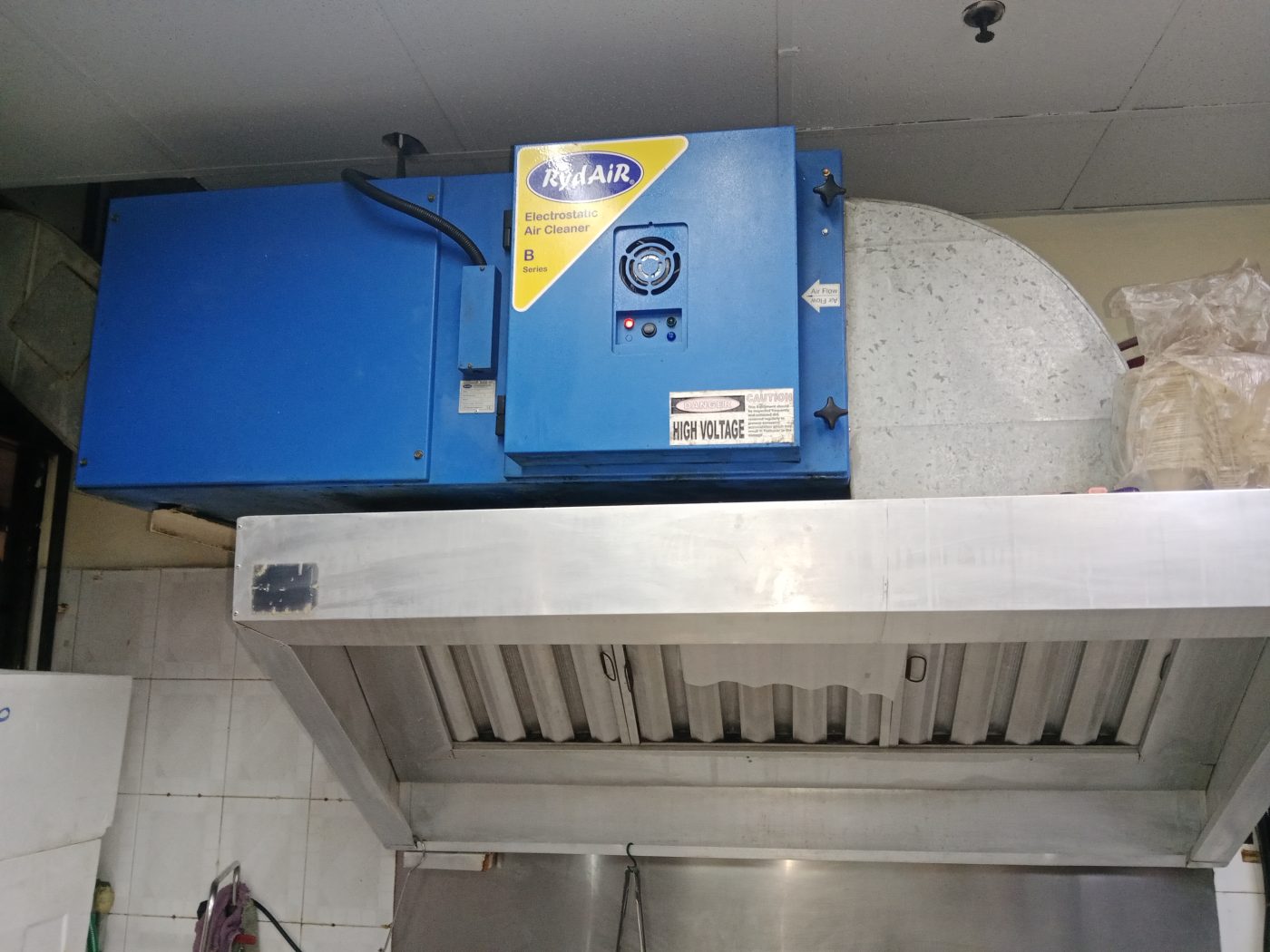
Preventive maintenance on a commercial kitchen exhaust system costs a fraction of what an emergency breakdown repair does. Grease build-up, worn motors and clogged filters don't fail quietly — they shut down your kitchen at the worst possible moment. Scheduled servicing catches these issues before they become emergencies.
When an exhaust system fails mid-service, the bill is rarely just the repair itself. You're looking at a stack of costs that compound quickly:
We've attended emergencies where the client paid more in a single reactive call-out than they would have spent on a full year of scheduled maintenance. That is not an exaggeration.
Understanding failure points helps you appreciate what preventive maintenance is actually checking. In our experience servicing commercial kitchens across Singapore — restaurants, hotels, food courts, central kitchens, institutional canteens — the same culprits come up repeatedly.
Grease is the single biggest threat in any kitchen exhaust system. It reduces airflow, raises fire risk, and adds weight to ductwork that was not designed to carry it. NEA and SCDF both have requirements around grease management and duct condition — we always confirm the exact current requirements with the relevant authority before quoting a job, because these do get updated. What we can tell you from our own work is that kitchens operating without a regular cleaning schedule consistently show grease depths that alarm us. Our own BC Air chemical series is formulated specifically for this kind of heavy-duty degreasing, and it makes a measurable difference in cleaning time and result compared with generic products.
MV fans run continuously in hot, greasy, humid conditions. Bearings wear. Impellers accumulate grease and fall out of balance, which accelerates bearing wear further. On one kitchen we serviced, the fan had been vibrating badly for months — staff had assumed it was normal. By the time we were called, the bearing had failed completely and the impeller had scored the fan casing. What would have been a bearing replacement turned into a full fan assembly job. We stock motors and fan parts in-house precisely so we can turn around replacements quickly, but the cost difference between planned and unplanned is significant every time.
Baffle filters that are never cleaned restrict airflow and force the fan to work harder. Carbon banks that are saturated no longer control odour — which matters both for NEA compliance and for your neighbours. We supply and replace carbon banks as part of scheduled maintenance, and we'll always tell you honestly when a bank has life left versus when it needs changing.
We fabricate and maintain our own control panels and carry variable speed drives in stock. These components are more reliable than people expect — but they do need periodic inspection. Loose terminals, moisture ingress and accumulated grease dust are all things a scheduled visit catches early. A VSD failure that shuts your exhaust fan down is a kitchen-closure event.
When we set up a scheduled maintenance agreement, we look at the whole system, not just the parts that are easiest to reach. A typical programme for a busy commercial kitchen covers:
Everything is done in-house by our own team. We do not sub-contract, which means the engineer who designs a fix is accountable for it, and the person cleaning your duct understands the system they're working on.
There is no single answer that applies to every kitchen. A light-use staff canteen with a simple menu is not the same as a 16-hour-a-day tze char operation. We assess grease load, cooking type, operating hours and system design before recommending a schedule. As a general principle, the higher the grease load, the shorter the interval between duct cleans. Trying to apply a one-size schedule to every kitchen is one of the ways operators end up in trouble.
Yes, and significantly. A well-maintained system is a compliant system. Ducts within grease limits, functioning fire dampers, serviceable suppression connections, proper airflow — these are not just good practice, they are what the authorities expect to find. We always recommend keeping maintenance records on-site. If an inspector visits, being able to show a documented service history is far better than having no records at all. We provide documentation after every visit for exactly this reason.
There are usually warning signs: reduced airflow (staff notice smoke lingering longer), unusual noise from the fan, visible grease dripping from ductwork joints, persistent odour despite carbon banks that should still be serviceable, or the fan tripping its isolator intermittently. If you're noticing any of these, call us — we'd rather do a check visit than be called out for a full breakdown later.
There are regulatory requirements around kitchen exhaust systems from NEA, SCDF and BCA that touch on maintenance, grease management and fire safety. The precise obligations depend on your premises type, cooking process and system configuration. We always confirm the exact applicable requirements before quoting, because they can vary and do get updated. What we can say confidently is that a neglected system puts you at compliance risk, and the cost of enforcement rectification is far higher than the cost of staying ahead of it.
You can, but in our experience it always costs more — sometimes significantly more. The repair bill is only part of it. The lost trading time, the emergency rates, the risk of secondary damage and the compliance exposure add up fast. We've seen operators make this calculation and regret it. Preventive maintenance is not a luxury for well-funded operations; it's the cost-effective choice for any kitchen that cannot afford to stop trading unexpectedly.
We stock our own components — electric motors, MV fans and fan parts, control panels, variable speed drives, carbon banks, UV germicidal systems, and our BC Air chemical range. For common components, we can often carry out same-visit or next-visit replacement rather than waiting on a supply chain. This is one of the practical advantages of working with a specialist who controls their own inventory.
We work across the full range: independent restaurants, hotel kitchens, food courts, central kitchens, institutional canteens and industrial facilities. The principles are the same regardless of scale — grease builds up, equipment wears, and a system that isn't maintained will eventually fail. We size our service programmes to the operation, so you're not paying for more visits than your kitchen actually needs.
If you'd like to talk through a maintenance programme for your kitchen — or you have a system that's already showing signs of trouble — contact us for a no-obligation quotation. Our team is on standby 24/7, so whether it's a scheduled conversation or an urgent situation, we're ready to help.
]]>We design, clean, repair and maintain commercial kitchen exhaust systems across Singapore — on 24/7 standby.