
02 Jul 2026 · Cleaning & Compliance
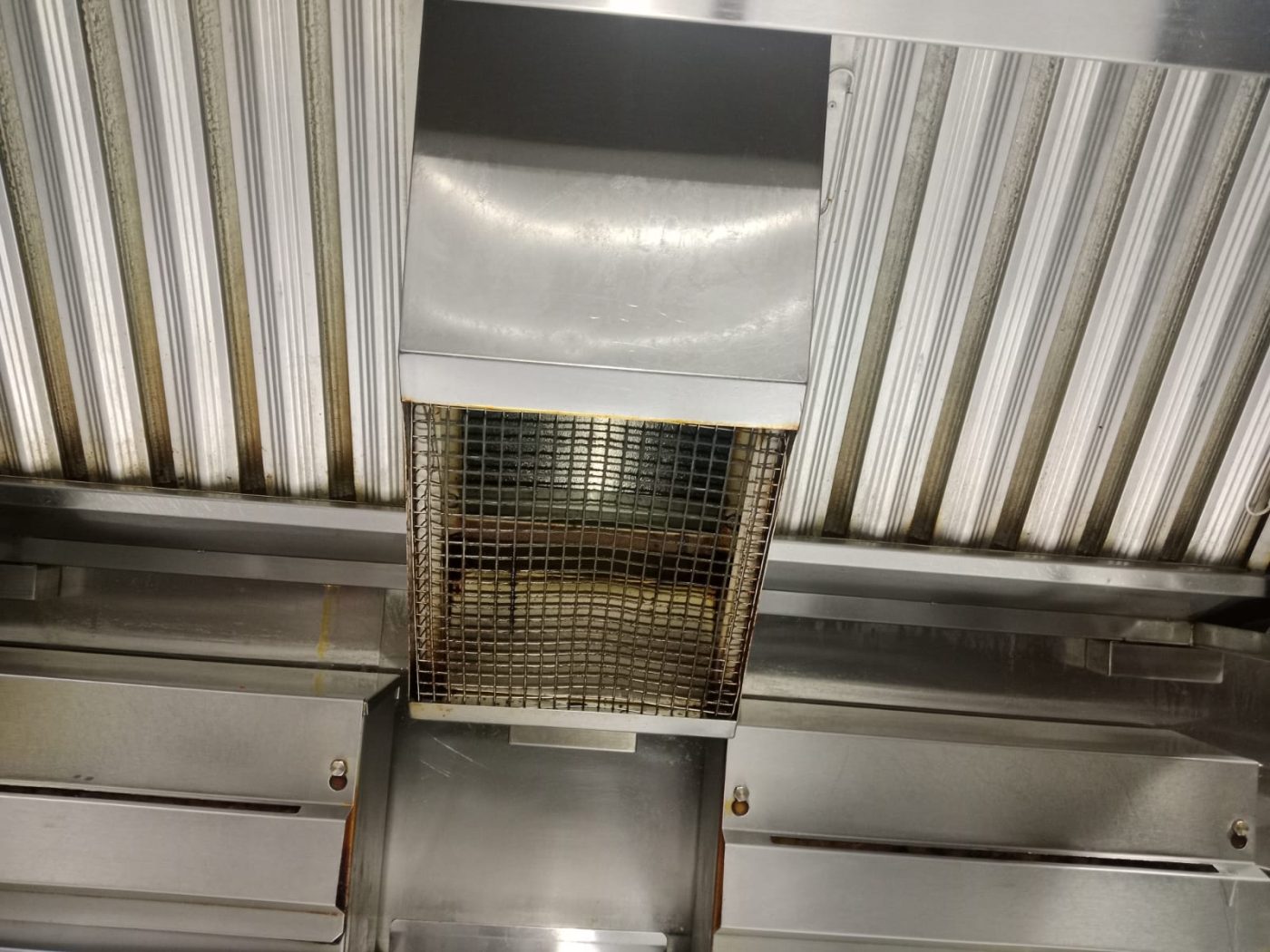
A kitchen ventilation maintenance contract should cover scheduled grease cleaning of hoods, ducts and fans, filter servicing, mechanical inspection of motors and drives, odour control system checks, fire risk assessments and documented compliance records for NEA and SCDF requirements.
When a client asks us to look over their existing maintenance contract, we often find the same thing: it covers cleaning the hood filters and not much else. That might tick a box on paper, but it leaves the rest of the system — the ductwork, the fans, the odour control, the electrical components — running on hope. A proper kitchen ventilation maintenance contract should protect your operations, keep you compliant and catch problems before they become expensive shutdowns or, worse, a fire.
Grease accumulation is the single biggest fire risk in a commercial kitchen exhaust system. It builds up fast in high-volume kitchens — char kway teow stalls, steamboat restaurants, hotel banquet kitchens — and it doesn't stop at the filters. Grease travels up into the ductwork and settles on every surface it touches.
Your contract should specify cleaning frequency for each component:
We use our own BC Air chemical degreasing series for this work — formulated for the kind of baked-on carbonised grease you get in a wok kitchen that's been running two shifts a day. Off-the-shelf products often don't cut through it properly.
Cleaning is only half the job. A good contract should include a structured mechanical and electrical inspection at each visit. Here's what that means in practice:
We check motor running current, bearing condition and belt tension (where applicable) at every scheduled visit. A motor drawing higher than normal current is telling you something — usually that it's working harder than it should because of a grease-fouled fan or a developing bearing fault. Catching it early costs a fraction of what an emergency motor replacement costs at midnight on a Saturday.
Where variable speed drives (VSDs) are installed, they need periodic inspection for dust accumulation, correct parameter settings and fault logs. We stock and service VSDs in-house, so we're not waiting on a third party when something needs attention.
Loose terminals, tripped breakers, faulty interlocks — these are the kinds of quiet problems that can take down your ventilation system at the worst time. A quick panel inspection at each visit takes minutes and can prevent hours of downtime.
Many Singapore commercial kitchens — especially those in mixed-use developments, near residential areas or subject to NEA odour complaints — operate carbon filtration banks, germicidal UV systems or both. These need their own maintenance schedule within the contract.
If your current contract doesn't mention odour control servicing at all, that's a gap worth addressing — especially if you've ever had a complaint raised with NEA.
In our experience, this is where a lot of operators get caught out. The work was done, but the paperwork isn't in order when an inspector comes around.
Your maintenance contract should produce, at minimum:
We always confirm the exact documentation requirement with the relevant authority before quoting — the specifics can vary depending on your premises type and use. But the principle is the same: if it isn't written down, it didn't happen.
Absolutely. Kitchens don't break down on weekday mornings. They break down on Friday nights before a full house, or during Chinese New Year service when every table is booked. A maintenance contract that only covers scheduled visits leaves you on your own when it matters most.
We run a 24/7 standby service precisely because that's when our clients need us. Any contract we put in front of a client includes clear response time commitments for emergency callouts, not just a vague promise to "attend as soon as possible".
When reviewing a contract, these are the items we most commonly see missing or underspecified:
We're not saying every contract needs to cover all of this — the right scope depends on your system configuration, cooking type and volume. But these items should at least be discussed and a conscious decision made to include or exclude them.
It depends on your cooking volume and grease load. For high-output kitchens — wok cooking, deep frying, grilling — we'd typically recommend quarterly duct cleaning. Lower-volume kitchens may manage on a biannual schedule. We assess grease load during an initial inspection and recommend a frequency we can stand behind, not just the cheapest option that gets the contract signed.
It should, yes. A properly structured contract produces the service records, inspection reports and photographic documentation that the relevant authorities expect to see. We always check the current requirements with NEA or SCDF before finalising a contract scope, because the specifics can shift and we'd rather confirm than assume.
A cleaning contract covers degreasing — filters, hoods, ducts. A full maintenance contract adds mechanical inspection, electrical checks, odour control servicing, compliance documentation and emergency response. In our view, a cleaning-only arrangement is a starting point, not a complete solution. Grease fires don't care whether your motor was inspected last month.
No. Everything we do — cleaning, mechanical work, electrical inspection, fabrication, emergency response — is done by our own people. We stock our own components, including motors, fans, control panels, variable speed drives and carbon banks. That means when something needs replacing, we're not waiting on a supplier or a third-party tradesman.
Yes, and we do it regularly. We start with a full system condition inspection so we both know exactly what we're taking on. If there's deferred maintenance or defects that need rectifying, we'll document them clearly and agree a remediation plan before the ongoing contract begins.
If you'd like us to review your current arrangement or put together a contract proposal for your kitchen, get in touch with us for a quotation. Our 24/7 standby means we're available when you need us — not just during office hours.
We design, clean, repair and maintain commercial kitchen exhaust systems across Singapore — on 24/7 standby.