
07 Jul 2026 · Design & Build
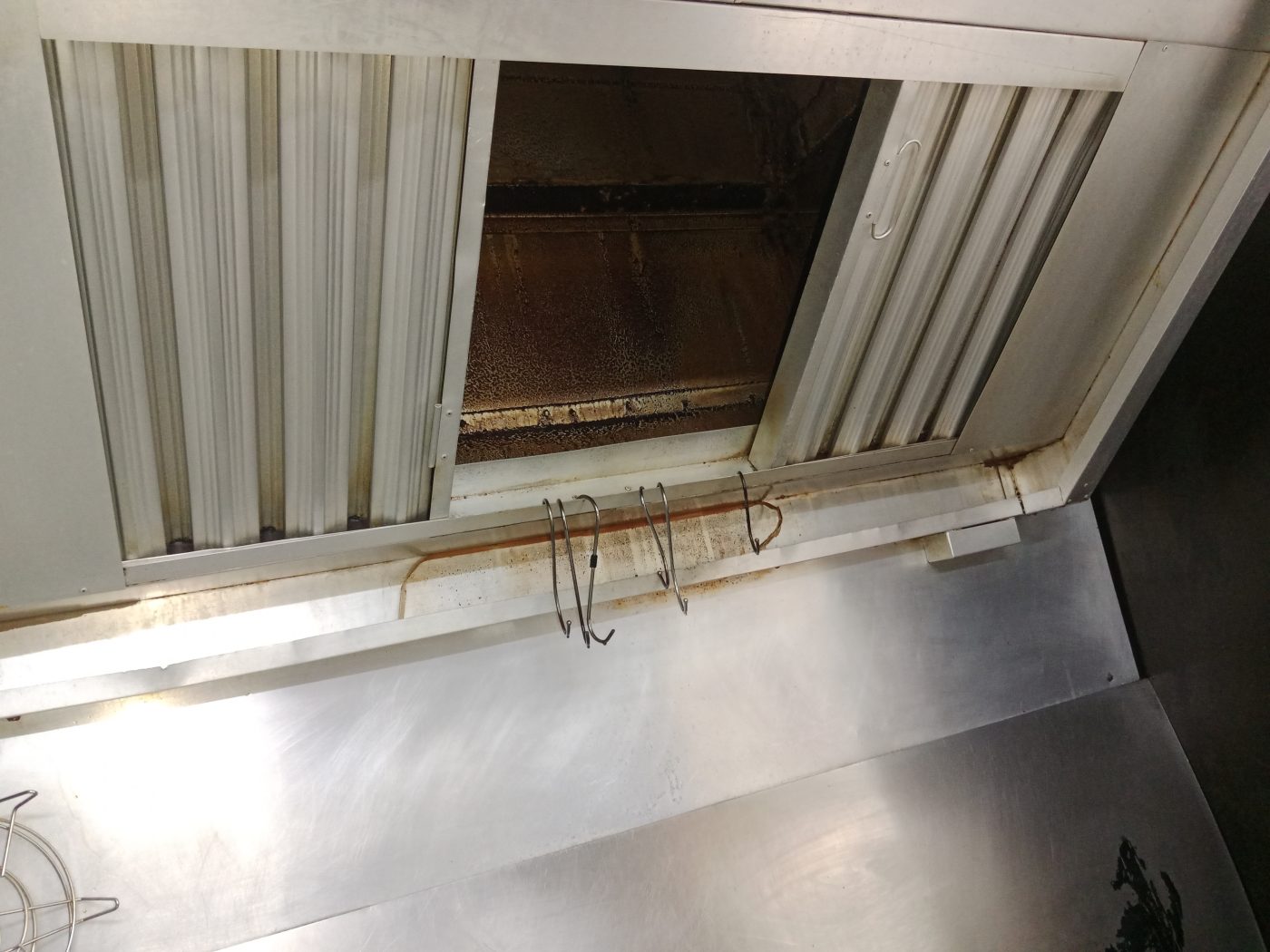
When we fabricate ductwork in-house, we control the metal gauge, joint quality, grease-trap positioning and compliance dimensions ourselves — no handoff, no assumptions. That means faster installs, tighter fits and exhaust systems that pass NEA and SCDF inspections the first time.
When a client calls us about a new kitchen exhaust system or a failing one, the first question we ask is not about budget — it is about the space. Every commercial kitchen in Singapore is different: ceiling height, cooking load, hood position, fire suppression layout, the route a duct has to travel through a shophouse wall or a hotel riser shaft. Outsourced ductwork is built to a specification on paper. Our ductwork is built by the same team that surveyed the site, designed the system and will maintain it for years afterwards. That difference is not a small thing.
When we say we fabricate in-house, we mean our own people cut, fold, seam and assemble the ductwork in our workshop, then deliver and install it using the same team. We stock our own sheet metal, fittings, flanges and access panels. We do not send drawings to a third-party fabricator and wait for delivery. We do not rely on a sub-contractor who has never seen your kitchen and may be building three other jobs at the same time.
This matters more in kitchen exhaust work than in almost any other mechanical trade. Kitchen exhaust ducts carry hot, grease-laden air. A poorly fitted joint is not just an airflow problem — it is a fire risk and a cleaning headache. A duct run that does not match the actual ceiling void means your extraction fan is working against unnecessary resistance, your grease trap is in the wrong position and your system will fail its next NEA or SCDF inspection.
Commercial kitchen exhaust systems have to move a specific volume of air — enough to capture cooking fumes, heat and grease particulates at the hood face, draw them through the duct, pass them through grease filters and, where required, through carbon banks or UV systems before discharge. If the duct geometry is wrong, you lose that capture velocity before it even reaches the filters.
We have walked into kitchens where outsourced ductwork arrived on site and simply did not match the ceiling void. The fabricator built to the drawing; the drawing did not account for a beam that shifted or a riser that was repositioned during construction. The result was improvised bends, extra elbows and a pressure drop that made the entire system underperform from day one.
When we measure a site ourselves and fabricate ourselves, we adapt in real time. If a beam is not where the architectural drawing says it is, we adjust the duct run before it is cut — not after it is delivered.
Grease accumulation in ductwork is the leading cause of commercial kitchen fires. The rate at which grease builds up depends on several factors: cooking volume, cooking method, filter efficiency — and duct geometry. Horizontal runs, low-velocity sections and poorly sealed joints all accelerate grease accumulation.
When we design and fabricate a duct system ourselves, we can deliberately minimise flat horizontal runs, maintain consistent cross-sectional velocity and position access panels exactly where our cleaning crews will need them. We know where the problem spots will be because we have been cleaning ducts for years — and we build that knowledge into every system we fabricate.
Outsourced fabrication does not carry that operational memory. A fabricator who builds ductwork for ACMV systems, carparks and commercial kitchens alike is not thinking about where your next quarterly clean will happen. We are.
Kitchen exhaust systems in Singapore are subject to requirements from multiple authorities. NEA is concerned with discharge point location, emission control and odour management. SCDF has requirements around fire-rated duct construction, fire dampers and suppression system integration. BCA has its own considerations where structural penetrations are involved. We always confirm the exact current requirement with the relevant authority before quoting, because these requirements do get updated.
When fabrication is outsourced, compliance responsibility gets blurry. The fabricator says the duct was built to spec. The installer says the spec was what they were given. The kitchen owner is left in the middle when an inspection flags a non-conformity. Because we design, fabricate and install as one team, there is one point of accountability — us. If something needs to change to satisfy an inspector, we change it. No finger-pointing, no delay waiting for a third party to re-fabricate a section.
This is the question we get asked most often, and honestly, the answer is: not usually, once you account for the full picture.
We are not the cheapest quote on a spreadsheet comparison. But for a kitchen running two or three services a day, the cost of downtime, a failed inspection or a grease fire is not a spreadsheet number — it is an existential event.
Yes, and we do this regularly. We survey the existing system, assess what needs to be replaced or modified, and fabricate to match — or improve on — the original geometry. We carry our own stock of common profiles and fittings, so turnaround is usually faster than clients expect.
We work to SCDF requirements throughout the design and fabrication process, including material specification, joint construction and, where required, fire-rated enclosures or fire damper integration. We always verify current requirements with the authority before committing to a specification, and we document everything for the client's record.
We position access panels based on the actual duct route and the cleaning method we will use — not just at code-minimum intervals. Our own cleaning crews use the same systems they helped design, so panel placement reflects real operational needs rather than minimum compliance.
Yes. We design and build the complete system: hood, duct run, grease filters, fans, odour control where required, and discharge point. Working across the full system means we can balance airflow correctly and ensure every component is sized and positioned to work together.
We design, clean, repair and maintain commercial kitchen exhaust systems across Singapore — on 24/7 standby.