
31 May 2026 · Fire Safety
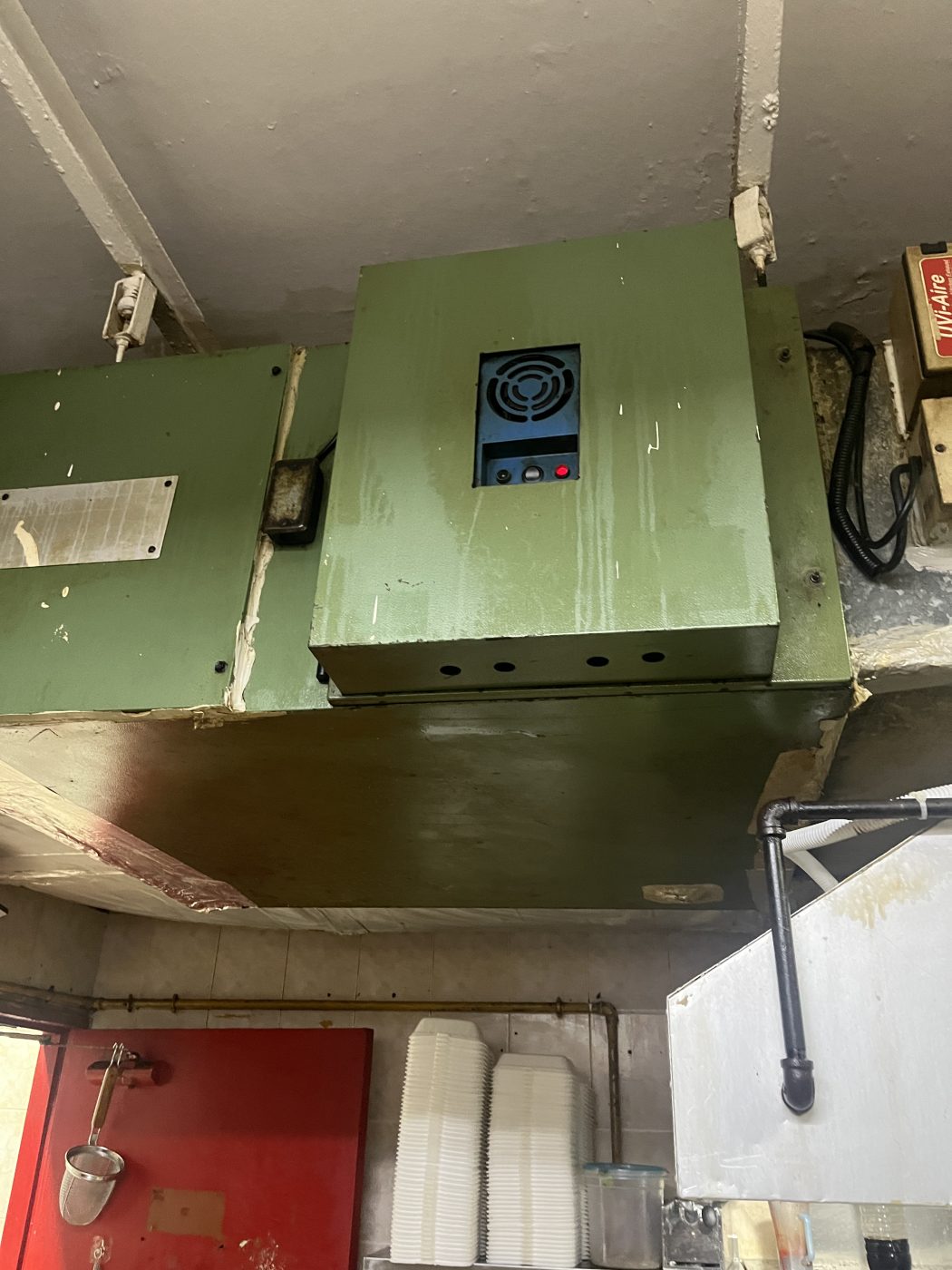
A grease fire starts at the cooking line and travels upward through the exhaust hood into the ductwork, where accumulated grease acts as fuel and carries the fire through the building. The three defences against this are regular grease cleaning, hood fire suppression, and fire-rated ductwork — used together, not in isolation.
A kitchen fire almost never stays where it starts. It begins as a flare-up at the cooking line — a wok catching, oil igniting — and then it does the most dangerous thing possible: it goes up. Into the hood, and then into the ductwork, where months of accumulated grease are waiting to act as fuel.
The exhaust system is designed to pull hot air upward and away. In a fire, that same airflow pulls flames into the ducting. If those ducts are coated in grease — and neglected ones always are — the fire now has a fuel-lined channel running through your building, often through spaces you can't see or reach. This is exactly why grease build-up isn't just a hygiene issue; it's the single biggest factor in how far a kitchen fire spreads.
No single measure is enough on its own. Real kitchen fire safety is layered:
Clean removes the fuel. Suppression stops the fire. Fire-rated ducting contains what's left. You want all three.
For higher-risk commercial kitchens, this layered approach reflects what fire-safety requirements are built around. We design and maintain systems with that in mind, and we document the work so your fire-safety file holds up to scrutiny.
Yes. Suppression handles the fire at the cooking line, but greasy ductwork is still fuel. Cleaning and suppression do different jobs.
It depends on how the exhaust is routed and your building's fire-compartmentation requirements. We assess the routing and advise where rated ductwork is required.
Yes — we design, clean, suppress and fire-rate in-house, so the whole system works together rather than as disconnected parts.
If you're not confident your kitchen has all three layers covered, we'll assess it. Get a quotation — we're on 24/7 standby.
We design, clean, repair and maintain commercial kitchen exhaust systems across Singapore — on 24/7 standby.