
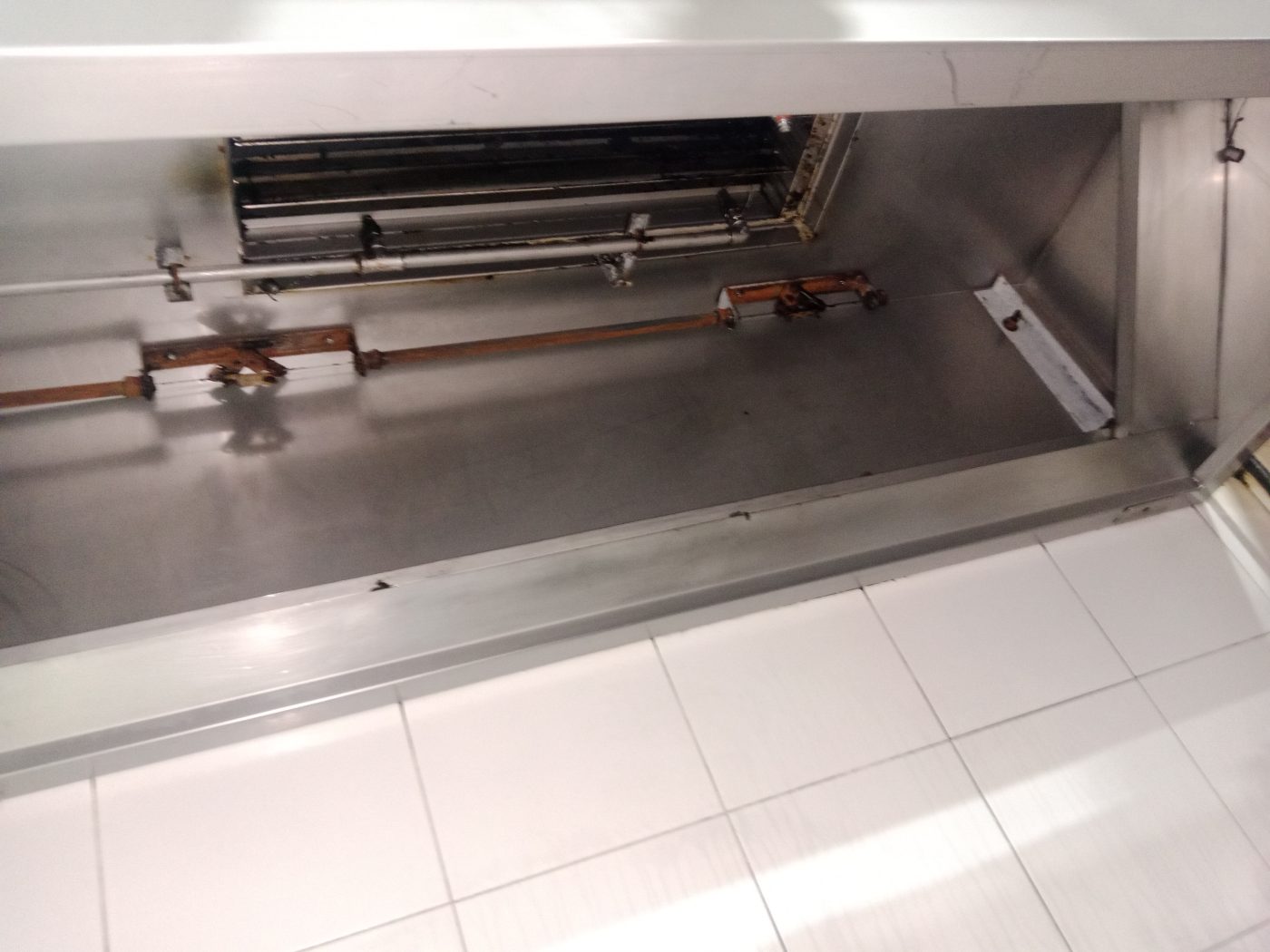
Ductwork routing is, in our experience, the most underestimated factor in how well a kitchen exhaust system actually works. When a client calls us because their hood isn't capturing smoke, or their kitchen smells despite a running fan, we almost always trace the problem back to how the duct was laid out — too many bends, too long a run, a duct that rises and falls before it exits, or a diameter that made sense on paper but chokes the airflow in practice. Getting the routing right from day one saves you money, keeps you compliant, and means your kitchen actually stays clear of smoke and grease-laden air.
Why Does Duct Routing Matter So Much?
Air moving through a duct encounters resistance — what engineers call static pressure loss. Every metre of straight duct adds a small amount of resistance. Every bend, transition, offset or change in cross-section adds significantly more. Your fan has to overcome all of that resistance just to pull air from the hood to the discharge point. If the total resistance is too high, the fan cannot move enough air, and performance drops well below what the system was designed to deliver.
In a commercial kitchen, this isn't just a comfort issue. Insufficient airflow means:
- Grease-laden vapour escapes the capture zone of the hood and settles on surfaces throughout the kitchen.
- Grease accumulates faster inside the duct itself, creating a fire hazard and shortening the interval between mandatory cleans.
- Odour and heat build up in the cooking area, affecting staff and diners.
- Your system may no longer meet NEA or SCDF ventilation requirements — which puts your licence at risk.
We've seen kitchens where the fan was perfectly specified for the cooking load, but the ductwork routing was so convoluted that effective airflow at the hood was less than half of what was designed. That's not a fan problem — it's a routing problem, and it requires a ductwork solution, not a motor upgrade.
What Are the Most Common Routing Mistakes We See?
Too Many Bends in the Run
Every 90-degree elbow in a duct is the pressure-loss equivalent of adding several metres of straight duct. When a duct has to navigate around beams, pipes, and ceiling voids — which is almost always the case in Singapore's shophouses and commercial units — bends accumulate quickly. We always try to use long-radius elbows rather than sharp 90-degree turns, and where we can, we replace 90-degree bends with two 45-degree angles. The pressure saving across the full run is meaningful.
Excessive Horizontal Runs with No Gradient
A horizontal grease duct that runs flat — or worse, slopes slightly back toward the kitchen — is a serious problem. Grease condensing on the duct walls needs somewhere to drain. We design horizontal sections with a deliberate fall toward a grease collection point, so liquid grease drains away rather than pooling. A flat or back-sloping duct fills with grease quickly, becomes a fire risk, and makes cleaning both harder and more frequent.
Duct Sizing That Doesn't Match the Route
Sometimes a duct is correctly sized for a short, direct route, then re-routed during construction to avoid a structural element — but nobody resizes the duct to compensate for the added resistance. A longer or more convoluted route needs either a larger duct cross-section, a more powerful fan, or ideally both reviewed together. We always recalculate when a routing change is made, because the original specification is no longer valid once the route changes.
Rises and Dips ("Trapping")
When a duct runs upward, then is forced downward to avoid an obstruction, and then rises again, you create a low point — a trap. Grease collects there. In the worst cases, condensed grease partially blocks the duct and creates a pocket that feeds a fire if one starts. We've cleaned ducts where accumulated grease in a low-point trap was the primary reason a routine clean took three times as long as it should have. Wherever we design a system, we do everything possible to ensure the duct only rises — never dips after it has started climbing.
How Do We Plan a Duct Route Before We Quote?
Before we commit to a layout, we walk the kitchen and the ceiling void together with the client. We want to understand where the structural beams sit, where the M&E services already run, and what the landlord or building management will allow us to penetrate or attach to. In older conservation shophouses and modern food court builds alike, there are almost always constraints — and the routing solution has to work within them without sacrificing performance.
We produce a duct routing plan that maps the proposed path, flags every bend and transition, and calculates the total equivalent duct length — so we can confirm that the fan we're specifying can actually deliver the required airflow at that resistance. We also consider access for cleaning at this stage: a duct we cannot clean properly is a compliance and fire-safety liability from the moment it's installed.
Does the Discharge Point Affect Routing Performance?
Absolutely — and it's often overlooked. The discharge point isn't just about where the air ends up; it determines how long the duct run is, how many bends it requires, and whether the fan is working against prevailing wind pressure. A discharge point that faces into the prevailing wind will add back-pressure that the fan has to overcome on top of the duct resistance. We always discuss discharge positioning with clients and, where required, we confirm the arrangement meets NEA and SCDF requirements for discharge height and proximity to openings. We always confirm the exact requirement with the relevant authority before quoting, because rules can differ by building type and area.
What About Existing Systems With Poor Routing?
We get called in regularly to assess exhaust systems that have been underperforming for years. Sometimes the client has been replacing fans and wondering why performance never improves — and the answer is the duct routing hasn't changed. In these situations, we do a full system assessment: we measure actual airflow at the hood, inspect the duct route, and identify where the resistance is highest.
The fix isn't always a full reroute. Sometimes adding a well-placed access panel and resizing one constricted section recovers most of the lost performance. Other times, a route correction is necessary. We always give clients a clear picture of what's causing the problem and what the options are before any work begins.
Frequently Asked Questions
How many bends are too many in a kitchen exhaust duct?
There's no single magic number — it depends on the total equivalent duct length and the fan specification. What we'd say is this: every bend adds resistance, and resistance is cumulative. We've assessed systems with five or six bends in a single run where the fan was so undersized that even one extra bend was enough to tip performance below the required airflow. We calculate the total resistance for every system we design, so we know whether the fan can handle the routing before we install anything.
Can I just fit a bigger fan to compensate for a poor duct route?
You can, up to a point — but it's rarely the right solution on its own. A larger fan draws more power, runs louder, and puts more stress on duct joints and connections. It also doesn't solve the underlying problems: grease traps in low points, inadequate access for cleaning, and sections where high velocity through an undersized duct causes turbulence and additional pressure drop. We'd rather correct the routing and right-size the fan than mask a design problem with brute-force extraction.
How does ductwork routing affect how often I need to clean my ducts?
Significantly. A duct with unnecessary horizontal runs, low points, or rough internal joints accumulates grease much faster than a well-routed system. We clean grease ducts regularly for clients across Singapore, and the difference in grease load between a well-designed run and a poorly routed one — for kitchens with similar cooking volumes — is striking. Better routing means longer intervals between cleans, lower cleaning costs, and a lower fire risk between visits.
Does duct material affect how routing is planned?
Yes, in a few ways. We fabricate our ductwork in-house, predominantly in stainless steel for grease duct applications — it's more durable, easier to clean, and holds up better over time than galvanised mild steel in a high-grease environment. Stainless steel also allows us to make tighter, cleaner welds at joints and transitions, which reduces the internal roughness that contributes to pressure drop. The material choice and the routing plan work together, not independently.
What if my building only allows a very long or complicated duct route?
It happens — especially in older buildings or units where the discharge point is far from the kitchen. When a long or complex route is unavoidable, we work through the implications methodically: we size the duct and fan for the actual resistance of that specific route, we ensure the duct is pitched correctly throughout, and we make sure there are enough access panels for our cleaning crews to reach every section. A difficult route doesn't have to mean a poorly performing system — it just requires more careful engineering from the start.
If you're planning a new kitchen exhaust system or struggling with one that isn't performing as it should, we'd welcome the chance to take a look. Reach out to us for a quotation — and if something goes wrong outside of office hours, our 24/7 standby team is always available to help.