
09 Jul 2026 · Operations & Cost
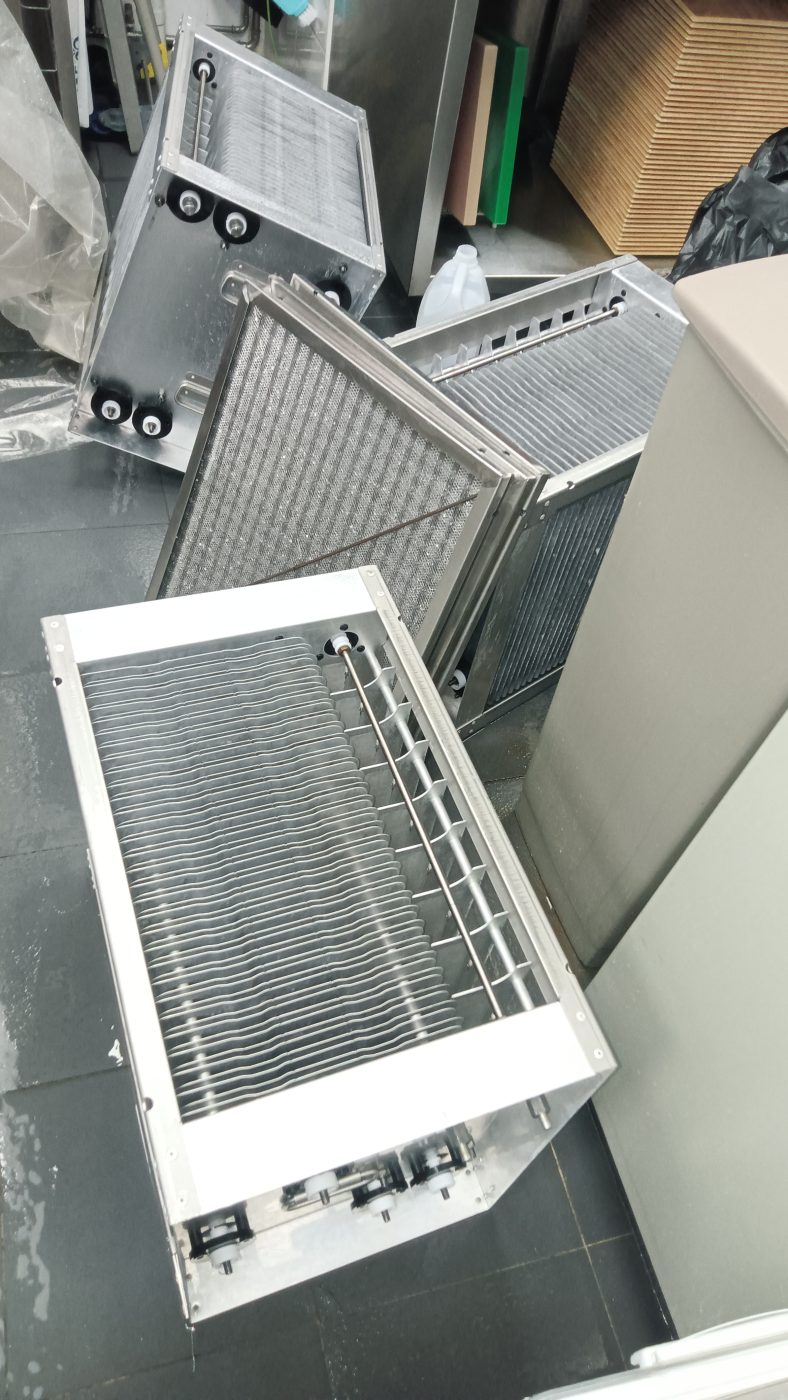
A grease-coated exhaust fan impeller loses aerodynamic efficiency, forcing the motor to draw more current to maintain airflow. In our experience, a heavily fouled fan can consume 20–35% more energy than a clean one — adding real money to your electricity bill every month without a single warning light.
A dirty exhaust fan doesn't announce itself on your utility bill with a line item that reads "grease penalty." It just quietly draws more and more current, month after month, while your kitchen team assumes everything is fine because the hood is still pulling smoke. We've seen this pattern dozens of times — and once we clean the system, owners are often surprised by how much their running costs drop. Here's what's actually happening inside that fouled fan casing.
Your exhaust fan — whether it's a centrifugal MV fan or an inline unit — was designed with precisely shaped blades. Those blade profiles are not decorative. They are engineered to move a specific volume of air at a specific static pressure while consuming a rated amount of power. When grease, carbon and cooking residue coat the impeller, several things happen at once:
The net result is that your motor draws more current to deliver less airflow. In our experience, a heavily fouled fan can consume noticeably more energy than a clean one — and in a commercial kitchen running 10 to 16 hours a day, that gap adds up fast.
We won't invent a precise dollar figure here, because it depends on your fan size, operating hours, tariff rate and the severity of fouling. What we can tell you is how to think about it.
A typical commercial kitchen exhaust fan motor might be rated anywhere from 1.5 kW to 7.5 kW or more depending on the system. If grease build-up forces the motor to draw even 15% more current than rated, and your kitchen runs 12 hours a day, 30 days a month — you are paying for hundreds of extra kilowatt-hours every single month for no useful output whatsoever. At Singapore's commercial electricity tariff rates, that is real money disappearing into heat and vibration.
On top of the electricity cost, there are the downstream costs: shorter motor lifespan, bearing replacements, and the risk of an unplanned breakdown during service. We've attended many emergency callouts that started as an ignored efficiency problem and ended as a complete motor burnout on a Saturday night.
We install variable speed drives (VSDs) on many of the systems we build and retrofit, and they are genuinely useful for managing energy consumption. A VSD lets you dial back fan speed during quieter periods and ramp up during peak cooking. But a VSD is not a substitute for a clean system.
If the impeller is fouled, the VSD will simply compensate by running the motor harder to maintain the setpoint airflow — consuming more energy in the process. A dirty fan fitted with a VSD still underperforms a clean fan. The drive can mask the symptom; it can't fix the cause.
When we service a system that has a VSD installed but hasn't been cleaned properly, we often find the drive has been manually set to a higher frequency by someone trying to restore airflow performance. That workaround pushes the motor beyond its comfort zone and accelerates wear. The right fix is always to clean first, then tune the drive.
This depends on your grease load. A hawker-style wok kitchen running at high heat generates vastly more grease-laden vapour than a light-prep café. As a general guide:
These are starting points. We always assess the actual grease accumulation when we do an initial inspection and recommend a schedule based on what we find, not a generic rule of thumb. NEA and SCDF have their own requirements around grease trap and exhaust maintenance — we confirm the exact applicable requirements with our clients before we finalise any maintenance programme.
We're not talking about a wipe-down with a damp cloth. A thorough exhaust fan service means:
When we do this properly, the difference in motor current draw is measurable. We've seen ammeters drop noticeably after a full clean — the motor is simply doing less work to move the same air.
Yes. The exhaust fan gets the most attention, but the entire system contributes to energy consumption:
A well-maintained exhaust system works as a whole. Cleaning just the fan but leaving clogged filters in place is like clearing a drain but leaving the pipe blocked upstream.
A few signs to watch for: the fan is louder or vibrates more than usual; you notice more smoke or odour escaping into the kitchen than before; your electricity bills have crept up without any obvious reason; or the motor housing feels unusually hot to the touch. Any one of these is worth investigating. Give us a call and we'll assess the system — we can measure motor current on-site and compare it against the nameplate rating to give you an objective picture.
Cleaning the filters is worthwhile and you should absolutely do it regularly. But the filters are the first line of defence, not the last. Grease vapour always gets past them to some degree — that's why the fan impeller, the duct and the fan housing accumulate grease over time regardless of how clean your filters are. Skipping the fan means you're managing the symptom but not the source of the efficiency loss.
Not if it's done properly by a competent team. In fact, most equipment warranties require regular maintenance to remain valid. We document all our work and can provide service records that demonstrate the system has been properly maintained — useful both for warranty purposes and for NEA or SCDF inspections.
Yes — a new system in a high-grease kitchen will accumulate fouling faster than most people expect. We've inspected systems less than six months old that already had significant grease build-up on the impeller because the kitchen was running heavy wok cooking every day. The age of the equipment matters less than the cooking load it handles.
In most cases, yes. We design, supply and install VSDs as part of our in-house service — no third-party contractors involved. However, we always recommend a full system clean and assessment before retrofitting a drive, so we're optimising a healthy system rather than papering over a fouled one. We can advise on the right drive specification for your motor and usage pattern when we come out to quote.
If your electricity bills have been climbing and nobody has looked at your exhaust system recently, it's worth getting us in for an assessment — it costs far less than a year of wasted energy or an emergency motor replacement. We run a 24/7 standby service, so reach out to us any time and we'll arrange a visit at a time that works around your kitchen.
Related: a fouled fan does not only cost electricity - it is often the reason building management reports grease on the roof. See grease on the roof around your kitchen exhaust fan: where it comes from and what to fix.
We design, clean, repair and maintain commercial kitchen exhaust systems across Singapore — on 24/7 standby.