
22 Jul 2026 · Design & Build
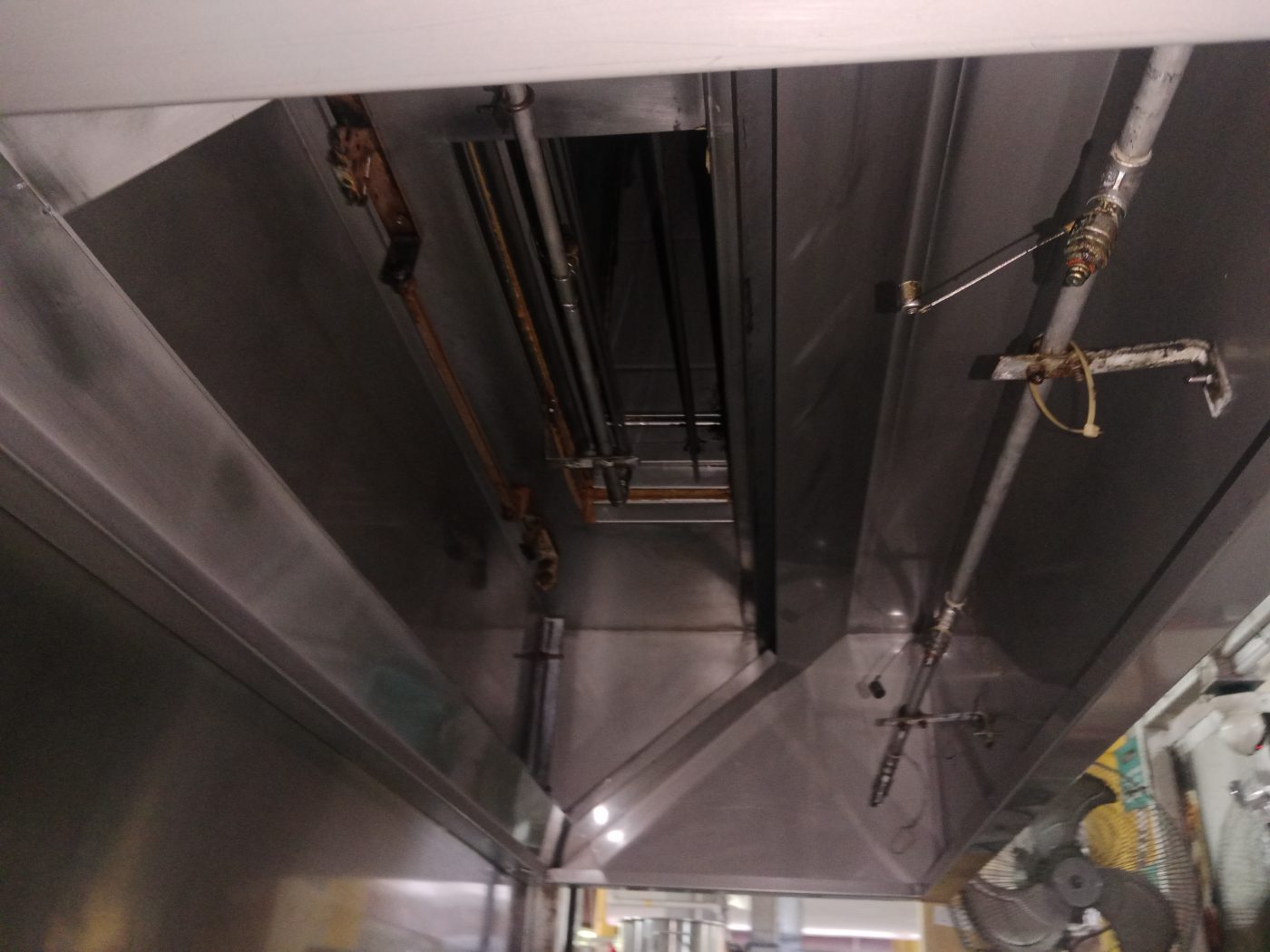
For commercial kitchens in Singapore, the right exhaust fan depends on your cooking load, duct length and available space. Inline mixed-flow fans suit tight ceiling voids; centrifugal fans handle high-grease, high-resistance duct runs; axial fans work only in low-resistance, low-grease settings. We size every system to NEA and SCDF requirements.
When a kitchen owner asks us which exhaust fan to install, our first answer is always: it depends on what you're cooking, how much of it, and where the duct has to travel. We've walked into kitchens running the wrong fan type and seen the consequences — grease backing up into the duct, motors burning out within a year, NEA-compliance issues and, in the worst cases, a near-miss fire. Choosing the right fan from the start is one of the most important decisions in any commercial kitchen exhaust system. Here's how we think through it.
In Singapore commercial kitchen work, we regularly work with three primary fan families. Each has a different aerodynamic principle, and each suits a different set of site conditions.
Centrifugal fans — sometimes called squirrel-cage or radial fans — draw air in axially and discharge it at 90 degrees through a scroll housing. They are the workhorses of high-grease, high-resistance kitchen exhaust systems. Because they build significant static pressure, they can push air through long, bending duct runs without losing performance. They also handle heavy grease-laden air well: the scroll housing channels grease droplets outward, and with proper grease filters and regular cleaning, they remain manageable.
We tend to specify centrifugal fans for central kitchens, hotel banquet kitchens, and any setup where the exhaust duct travels a considerable distance — multiple floors, extended horizontal runs, or through a complex building riser. The trade-off is physical size: a properly sized centrifugal fan takes up meaningful space, and the motor is typically mounted externally to the airstream, which we consider an advantage in grease-heavy environments because it keeps the motor cleaner and cooler.
Mixed-flow fans sit between axial and centrifugal designs — they draw air in axially but impart a centrifugal component, so they produce more pressure than a pure axial fan while remaining compact enough to sit within the duct itself. This makes them extremely useful in Singapore shophouse kitchens, food courts and smaller restaurant settings where ceiling void space is limited and you need the fan to live inside the duct run rather than in a dedicated plant room.
We stock and fit our own MV fan range for exactly these applications. A well-selected mixed-flow inline fan installed at the right point in the duct — typically close to the discharge point — keeps the duct upstream under negative pressure, which is what you want for fire safety and odour control. We always pair these with appropriate grease filters at the hood and schedule cleaning intervals based on cooking load, because grease accumulation on the impeller blades of an inline fan will degrade performance quickly and create a fire risk.
Axial fans move air straight through, parallel to the shaft. They are high-volume, low-pressure devices — excellent for general ventilation and make-up air supply, but poorly suited as the primary exhaust fan in a cooking environment with any real grease output. We do use axial fans in our ventilation designs, but almost always on the supply (fresh air) side or in low-heat, low-grease areas like dry storage and dishwashing zones. Running a standard axial fan on a heavy-cooking exhaust duct is a common mistake we see in self-installed or poorly designed systems — grease coats the blades, balance is lost, vibration increases, and motor failure follows.
Fan selection is an engineering exercise, not a catalogue decision. When we assess a kitchen, we look at several factors before we ever specify a model.
A wok line producing heavy char siu generates far more grease-laden vapour than a sandwich prep kitchen. The heavier the grease load, the more important it is to choose a fan that can tolerate contamination and be cleaned effectively. Centrifugal fans with external motors win here. High-grease environments also demand shorter cleaning intervals — this is something we build into every maintenance schedule we set up for clients.
Every metre of duct, every bend, every grease filter and every piece of equipment in the airstream adds resistance — measured in Pascals of static pressure. A fan that cannot overcome that resistance will underperform from day one. We do a full duct resistance calculation before specifying fan size. An undersized fan running flat-out all day will fail early. An oversized fan is wasteful and noisy. Getting the sizing right is the whole job.
Singapore buildings — especially older shophouses and conserved buildings in the CBD — often leave us very little ceiling void. In those cases, a compact inline mixed-flow fan fitted within the duct run is usually the only practical answer. Where there is a rooftop plant room or a dedicated riser, centrifugal fans give us better long-term performance and easier maintenance access.
We fit variable speed drives (VSDs) to most fan installations we do now. A VSD lets the fan ramp down during quiet service periods and ramp up during peak cooking — reducing energy consumption significantly and extending motor life. We supply and wire the VSDs ourselves, integrated with our control panels, so there's one point of accountability for the whole system.
Fan noise matters, especially in shophouse restaurants with residential neighbours above or beside. Centrifugal fans with isolated mountings and lined duct sections can be quieter than a poorly installed inline fan vibrating against sheet metal. We account for acoustic performance as part of the design, not as an afterthought.
In Singapore, your exhaust system has to satisfy NEA requirements on air change rates and discharge points, and SCDF requirements around grease duct fire ratings and suppression. The fan type and capacity you choose directly affects whether you pass inspection. We've seen kitchens fail NEA inspections simply because the installed fan couldn't achieve the required air velocity at the hood face. We design to the required standards from the start and we always confirm the exact requirement with the relevant authority before finalising any specification — requirements do get updated, and we don't assume last year's numbers are still current.
Often, yes. We regularly retrofit more capable fans into existing duct systems — upgrading from an undersized or failed unit to a correctly sized centrifugal or mixed-flow fan, sometimes adding a VSD at the same time. On one kitchen we serviced in an older building, the original inline fan had been running at 100% capacity and was still struggling to clear cooking fumes. We replaced it with a correctly sized centrifugal unit, rebalanced the duct, and the kitchen's smoke and odour problem was resolved without touching the ductwork. The key is ensuring the existing duct is clean and structurally sound before we drop a more powerful fan in — otherwise you're just pushing grease harder through a system that's already at risk.
In our experience, inline mixed-flow fans are the most commonly installed in smaller Singapore restaurant and food court kitchens because of their compact footprint. For larger operations — hotels, central kitchens, institutional canteens — we typically use centrifugal fans because they handle longer duct runs and heavier grease loads more reliably.
It depends on cooking load, but as a general guide, a high-volume cooking kitchen should have its fan and duct system cleaned and inspected every three months. Lighter operations may stretch to six months. We assess each kitchen individually and build a maintenance schedule around actual usage — not just a fixed calendar. Letting grease build up on fan impellers is one of the leading causes of fan failure and exhaust duct fires.
Yes, and we actively recommend it. Fitting a variable speed drive (VSD) to your exhaust fan means it runs only as hard as cooking demand requires. During prep or quiet periods, the fan slows down. During a full dinner service, it ramps up. In our installations, clients consistently see lower electricity bills and longer motor life. We supply, fit and commission VSDs as part of our system builds.
You'll see a range of problems: insufficient air capture at the hood, cooking fumes and heat spilling into the kitchen, grease condensing in the duct because vapours aren't moving fast enough, and potential NEA compliance failures. An undersized fan also runs at maximum load continuously, which shortens its lifespan significantly. If your kitchen always feels smoky or your staff are complaining about heat, the fan size is the first thing we check.
Yes. We fabricate and stock our own MV fan range, motors, control panels and variable speed drives. If your fan fails, we're not waiting on a supplier — we have standby stock and our team runs 24/7. Most emergency fan replacements we handle are resolved within the same day we're called.
If you're not sure whether your current exhaust fan is the right type and size for your kitchen, we're happy to take a look and give you a straight assessment. Contact us for a site evaluation and quotation — and if something fails in the meantime, our 24/7 standby team is always on call.
We design, clean, repair and maintain commercial kitchen exhaust systems across Singapore — on 24/7 standby.