
23 Jul 2026 · Cleaning & Compliance
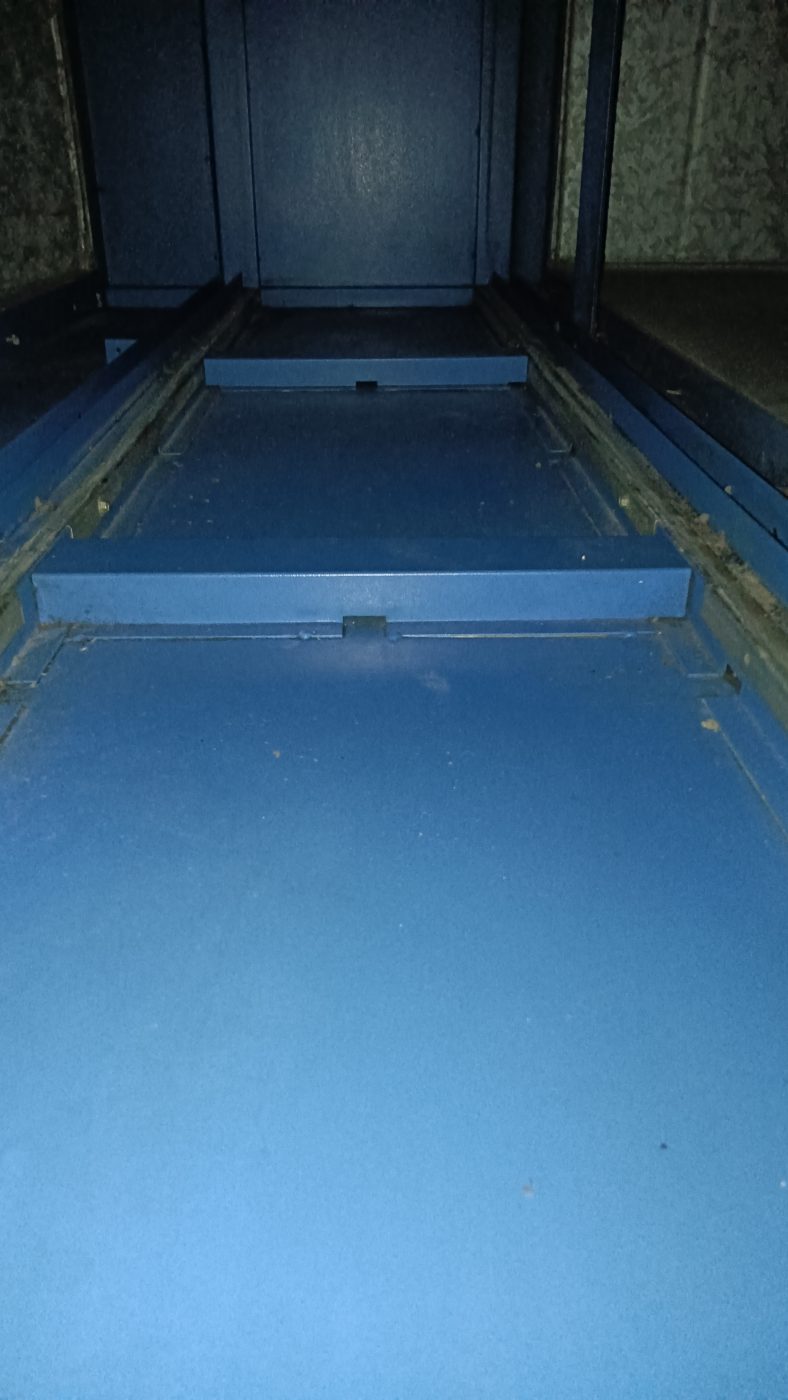
Chemical degreasing penetrates and emulsifies baked-on grease that manual scraping cannot reach, especially inside ductwork and fan housings. For heavily loaded commercial kitchen exhaust systems, we always use both methods together — scraping bulk deposits first, then applying a specialist alkaline degreaser to dissolve residual grease down to bare metal.
The short answer is: neither method alone is enough for a heavily loaded commercial kitchen exhaust system. We've cleaned thousands of exhaust hoods, ducts, plenums and fan housings across Singapore — restaurants, hotel kitchens, food courts, central kitchens — and the best results always come from knowing when to scrape, when to apply chemistry, and when to use both together. Here's what we've learned doing this work every day.
Cooking produces a fine aerosol of oil, moisture and combustion by-products. Your exhaust system is designed to capture and remove this — but in doing so, it becomes the collection point for everything it pulls out of the kitchen air. Over time, grease deposits on every internal surface: the baffle filters, the plenum chamber, the ductwork, and eventually the fan blades and motor housing.
The problem is that each cooking session bakes the previous layer a little harder. What starts as a soft, wipy film becomes a carbonised, lacquer-like coating that bonds strongly to metal. In a busy wok kitchen or a charcoal grill station, this can happen within weeks. In a lower-volume café, it might take months — but it will happen.
This is not just a hygiene issue. Under NEA and SCDF requirements, accumulated grease in an exhaust system is a fire hazard. Grease ignites at relatively low temperatures, and a duct fire in a high-rise building is a serious life-safety event. We always remind clients: your exhaust system is also your fire spread pathway if it isn't kept clean.
Manual scraping is exactly what it sounds like — a technician physically removing bulk grease deposits using scrapers, spatulas and stiff brushes. It is the right first step for any heavily soiled system, and there is no chemical shortcut that replaces it at this stage.
Here's why. When grease has built up to a thickness of several millimetres — or in neglected systems, centimetres — applying degreaser on top of that mass is largely ineffective. The chemical cannot penetrate deeply enough to lift the full deposit cleanly, and you end up with a surface that looks clean but still has a thick, hardened layer underneath.
Manual scraping removes that bulk quickly and efficiently. Our technicians are trained to work systematically from the hood down to the fan, so nothing gets redistributed back into a section that has already been cleaned. We also take care around the structural integrity of the ductwork — older systems in particular can have thin or corroded panels that need handling carefully.
The limitation of scraping alone: it cannot get grease out of seams, rivets, microscopic surface porosity, or the internal surfaces of fan impeller blades. It also leaves a residual film that, if not treated, becomes the bonding layer for the next cycle of build-up. That is exactly where chemistry takes over.
A properly formulated alkaline degreaser works by saponifying and emulsifying grease — breaking it down at a molecular level so it can be flushed away with water rather than scraped off mechanically. This is the only way to clean surfaces down to bare metal and leave them in a condition that slows re-soiling.
We formulate and stock our own BC Air chemical series specifically for kitchen exhaust applications. These aren't general-purpose degreasers from a hardware shop — they're engineered for the type of polymerised, carbonised grease you find in high-temperature cooking environments, and they're safe to use on the galvanised steel, stainless steel and aluminium components common in Singapore commercial kitchens.
After bulk scraping, we apply our degreaser at the correct dilution and dwell time for the level of soiling. On heavily baked deposits, we use a stronger concentration and allow a longer contact time before agitating with brushes and flushing. On lightly soiled systems on a regular maintenance schedule, a lower dilution applied with a pressure sprayer is often sufficient.
The key variable is dwell time. A degreaser that is wiped off immediately after application has done almost nothing. One that is allowed to work for the correct period — which we determine on-site based on what we're seeing — will lift residue that would take an hour of scraping to remove manually.
We also pay close attention to where the chemical goes. Degreasers must not contaminate food preparation surfaces, drainage systems beyond what is permitted, or electrical components. Part of doing this work properly is controlling the process, not just spraying and hoping.
Almost always — at least for any system that has been in service for more than a few months without cleaning. The sequence that gives us the best results is:
On one kitchen we serviced — a high-volume noodle operation that had missed several cleaning cycles — the ductwork had a grease layer so thick that scraping alone took most of the first visit. The chemical treatment on the follow-up visit then revealed pitting and surface corrosion underneath that would never have been visible otherwise. That is the kind of finding that only surfaces when you clean properly.
This depends on cooking volume, cooking type and the configuration of the system. High-heat, high-oil cooking — wok stations, deep fryers, charcoal grills — produces far more grease aerosol per hour than a light café kitchen. We've seen systems in busy hawker-style operations that need cleaning every four to six weeks. Lower-volume kitchens may be adequately maintained on a quarterly schedule.
What we always advise against is cleaning on a fixed calendar schedule without any reference to the actual condition of the system. We'd rather inspect your exhaust, assess the grease load, and recommend a cleaning frequency based on what we actually find — that's more useful to you than a generic answer.
NEA requires that exhaust systems be maintained in a clean and serviceable condition. The specific inspection frequency for your premises type and cooking load is something we always confirm with the relevant authority before quoting for a maintenance contract, so you're covered.
In our experience, consumer-grade degreasers are not formulated for the polymerised, high-temperature grease found in commercial kitchen exhaust systems. They may shift light surface residue, but they won't penetrate baked-on deposits effectively, and some formulations can leave a residue that actually accelerates re-soiling. For a commercial kitchen, you need a product and a process designed for the job — and that includes proper dwell time, agitation, and controlled flushing.
Yes, provided the right product is used at the correct dilution and not left on the surface beyond its recommended contact time. Our BC Air chemical series is specifically tested for use on the materials common in commercial kitchen exhaust systems, including galvanised steel, stainless steel and aluminium. We're careful about rinsing thoroughly — residual alkaline chemistry left on stainless steel can cause surface discolouration over time.
For most commercial kitchens, yes — at least for the duration of the cleaning work. We typically schedule cleaning during off-hours or on rest days to minimise disruption to your operations. For large central kitchens or 24-hour operations, we can discuss a phased approach where sections of the system are cleaned in rotation. We run a 24/7 standby service, so scheduling around your kitchen's hours is something we're set up to handle.
The honest answer is that you need someone to look at it. Grease load varies enormously depending on cooking volume, cooking type and how long it's been since the last clean. When we inspect a system, we assess the deposit thickness and texture before recommending a method. Light, soft grease on a recently serviced system may respond well to chemical treatment alone. Thick, carbonised deposits will always need mechanical removal first. We don't charge for an initial assessment — give us a call and we'll come and have a look.
Yes — this is not a theoretical benefit. Grease accumulated in ductwork is combustible, and a duct fire can travel the full length of a system and break out at multiple points in a building. SCDF fire investigation reports have identified dirty exhaust systems as a contributing factor in commercial kitchen fires. Keeping your system clean is one of the most direct, practical steps you can take to reduce fire risk in your premises — alongside your hood suppression system and fire dampers, which we also service and inspect.
If you're not sure when your exhaust system was last properly cleaned — or if you want an honest assessment of its current condition — get in touch with us for a quotation. We cover all of Singapore, we carry our own chemicals and equipment, and our 24/7 standby means we can work around your kitchen schedule, not the other way around.
We design, clean, repair and maintain commercial kitchen exhaust systems across Singapore — on 24/7 standby.