
03 Jul 2026 · Cleaning & Compliance
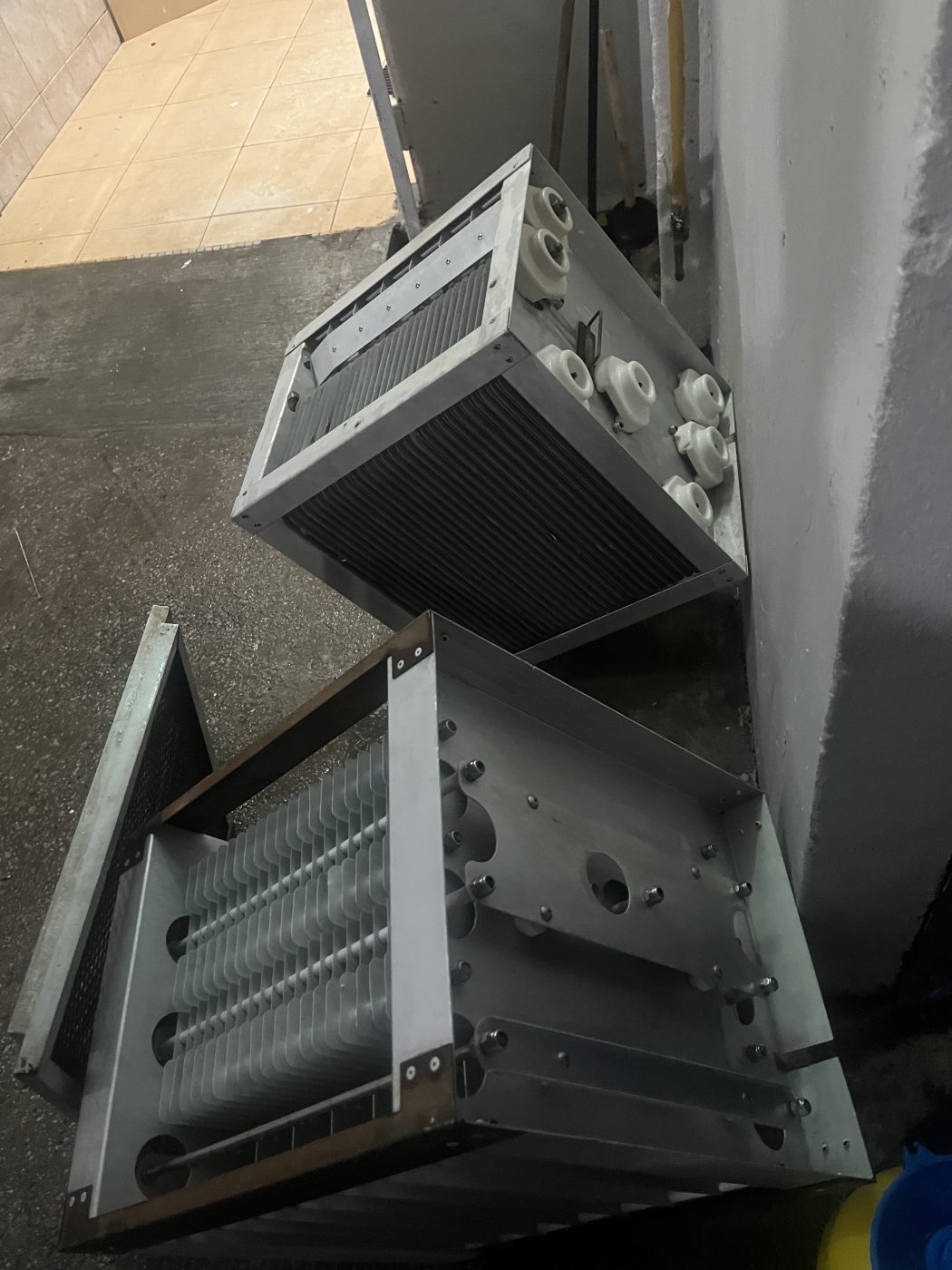
Neither method alone is the full answer. In our experience, chemical degreasing breaks down baked-on grease at a molecular level, while manual scraping removes the bulk first. Used together in the right order, they leave exhaust ducts genuinely clean — not just visually clean.
When kitchen operators ask us whether they need chemical degreasing or just a good manual scrape, we tell them the honest answer: it depends on the grease load, the duct geometry, and how long since the last proper clean. What we've never told anyone is that one method alone is always enough. Here's how we actually think about it on the job.
Manual scraping is exactly what it sounds like — a technician physically removing accumulated grease using scrapers, brushes and cloths. It's direct, it gives you immediate visual feedback, and for thick, solidified deposits it's often the fastest way to shift bulk grease quickly.
Chemical degreasing uses alkaline or solvent-based solutions — in our case, our own BC Air chemical series formulated specifically for commercial kitchen exhaust work — to break down grease at a molecular level. The chemistry penetrates layers that a scraper simply cannot reach: the thin carbonised film baked onto duct walls, the grease that has worked into weld seams, the residue coating fan blades and motor housings.
Think of it this way. Manual scraping removes the bulk. Chemical degreasing removes what the bulk was hiding.
This is where we see a lot of shortcuts taken, and where those shortcuts create real problems down the line.
Grease deposits inside exhaust ducts are the leading cause of commercial kitchen fires in Singapore. The issue is not just visible grease — it's the thin, oxidised layer that clings to every surface after the obvious deposits are scraped away. That layer is highly flammable. Manual scraping alone leaves it behind. We've opened ducts that looked clean to the eye and run a white cloth along the wall to show the client exactly what was still there.
SCDF and NEA both require kitchen exhaust systems to be maintained in a clean, grease-free condition. In practice, that means demonstrating that grease has been removed to a proper standard — not just that someone scraped the obvious lumps out. We always confirm the exact documentation requirement with the relevant authority before we sign off a job.
Even a relatively thin grease film on fan blades changes the blade profile. It adds weight unevenly, it disrupts airflow patterns, and over time it causes vibration and bearing wear. We've replaced motors that failed prematurely because the fan had been scraped but never properly chemically cleaned — the residue buildup went unnoticed until it caused an imbalance problem. Chemical degreasing is the only way to restore fan components to something close to their original surface condition.
Grease left on duct walls doesn't just sit there — it continues to oxidise and it harbours bacteria. Kitchens that complain of persistent cooking odours even with the exhaust running are often dealing with dirty ducts, not an undersized fan. A proper chemical degrease, done thoroughly, removes the source of the odour rather than just diluting it with airflow.
When we take on a kitchen exhaust cleaning job, whether it's a single restaurant hood or a full central kitchen duct network, we follow a consistent sequence:
Realistically, kitchen staff can and should clean grease filters and grease traps regularly — that's good daily practice and it reduces the load on scheduled professional cleans. But duct interiors, fan assemblies and anything downstream of the filters? That requires confined space awareness, the right chemical products used correctly, and knowledge of what you're looking at when you open a duct. We've been called in after well-meaning in-house attempts that left chemical residue in ducts, damaged fan components, or simply moved grease from one surface to another without removing it.
The other practical issue is access. Most commercial kitchen duct runs have limited inspection hatches, and getting proper coverage in a duct network without knowing how to work around the geometry takes experience. We fabricate and fit additional access panels where needed — something that's not straightforward to do without sheet metal capability on hand.
There's no single answer that applies to every kitchen. A high-volume wok kitchen producing heavy smoke and grease needs more frequent attention than a light-use café kitchen. As a general working guide, we typically see professional exhaust cleaning needed anywhere from every one to three months for heavy-use operations, to every six months for lighter use. We always recommend an initial inspection to assess the actual grease load rather than going by a calendar alone. What matters is the condition of the system, not the date on the last service sticker.
Yes, when the right products are used at the right concentration and rinsed off properly. Our BC Air chemical series is formulated for commercial kitchen exhaust surfaces including stainless steel. Where we have any doubt about a surface — older ductwork, galvanised sections, coated panels — we test on a small area first. We've never had a chemical damage issue on a job we've handled, and we're not going to start by rushing the process.
Yes. We provide a service report for every exhaust cleaning job. If your premises requires documented maintenance records for inspection purposes, we make sure the paperwork reflects what was actually done. We always confirm the exact format and content required by the relevant authority for your specific premises type before the job.
We've dealt with this situation more than once. A heavily blocked duct isn't just a cleaning job — it's a fire hazard that needs to be treated seriously. In these cases we typically combine chemical treatment with mechanical removal, and we inspect for any structural issues or fire damper problems that may have developed alongside the grease buildup. If duct sections need to be replaced or access panels fabricated, we handle that in-house rather than calling in another contractor.
Often yes, depending on the kitchen layout and the scope of work. We plan cleaning schedules around your kitchen's operating hours wherever possible. For large duct networks or systems that haven't been properly cleaned in a long time, some downtime is unavoidable — but we'll tell you that upfront rather than after we arrive on site.
If grease is reappearing unusually fast, the system is either undersized for the current cooking load, has reduced airflow due to a mechanical issue, or the previous clean didn't go deep enough. We check airflow performance as part of our post-clean inspection. If we find the exhaust rate has dropped, we'll tell you whether it's a fan issue, a filter issue, or a design issue — and what it would take to fix it properly.
We design, clean, repair and maintain commercial kitchen exhaust systems across Singapore — on 24/7 standby.